Most of the honey on Irish supermarket shelves comes from the other side of the world. The jar might say “produce of EU and non-EU countries,” which tells you almost nothing except that the contents have been blended from wherever was cheapest that season. There is no beekeeper named on the label. No landscape. No season. No reason to trust that what is inside has anything to do with Ireland at all.
When people ask me about local honey, this is where I start. Not with what local honey is, but with what it is not.
What “local” actually means for honey
A jar is genuinely local when you can trace it to a specific apiary, in a specific landscape, worked by a named beekeeper. That is a higher bar than it sounds. “Irish honey” on a label means the honey was extracted in Ireland - but the bees could be working imported monocultures, the honey could be blended across dozens of hives from several counties, and the beekeeper may have no direct relationship with whoever buys the jar.
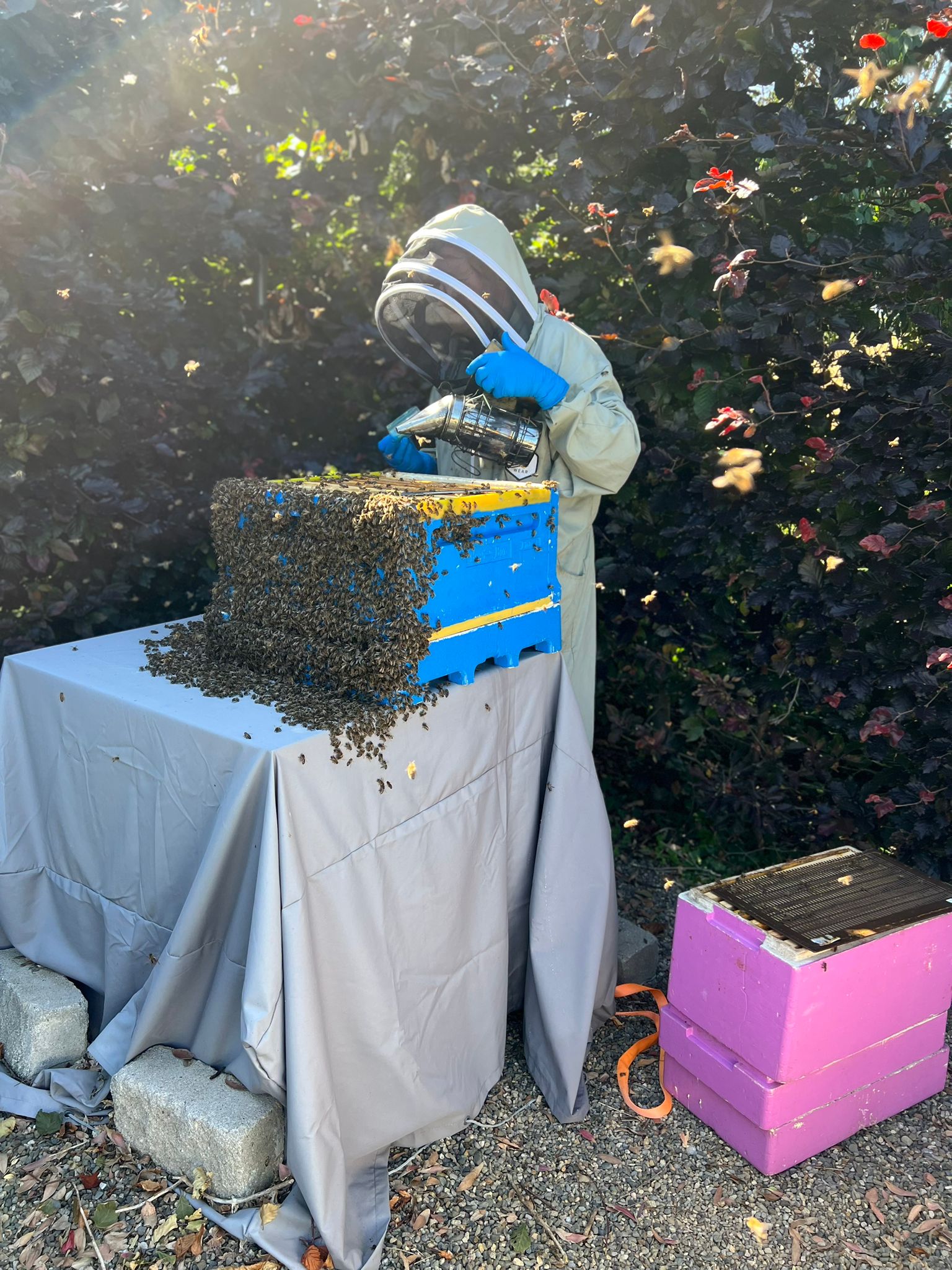
When I sell honey at Carlingford markets, or from the gate here at Mullabane, the person buying it can ask me anything: which batch, which flowers were dominant that season, why the heather honey has such a bold, aromatic flavour while the clear honey is mild and light. I can answer because I pulled every frame myself. Every jar has a batch number and a harvest date. That traceability is not a marketing idea. It is just the natural result of one beekeeper working one place.
Genuinely local means a short, honest chain: bees, beekeeper, and the person who uses the honey. Nothing in between.
Why it matters that honey tastes of somewhere
Honey made from a single landscape in a single season has a character that blended honey cannot replicate. This is the same reason wine from two different hillsides tastes different, or why cheese made on the farm tastes different from the same recipe made in a factory. The raw material carries the place into the jar.
The Cooley Peninsula gives me several distinct honeys across a single year, because the bees are drawing from several distinct habitats. Bell heather from the mountain slopes above Mullabane comes back to the hive as a dark, bold, aromatic honey with an almost port-like depth - a world away in flavour from the mild clear honey that comes from the hedgerow blossom below. That heather honey is one of the most distinctive things the Cooleys produce, and it is a good example of how much landscape shapes flavour.
The ivy, which blooms in autumn, gives a pale, firm, mildly aromatic honey that sets hard in the jar - harvested late in the year when most people assume beekeeping is finished. The ivy harvest is its own strange season, and the honey it produces is unlike anything you will find on a supermarket shelf.
If you buy local honey in Ireland from a single-origin producer, you are buying something that reflects exactly what was flowering near that apiary in that particular season. That will never be the same twice, which is both the challenge and the point.
Supporting one maker, not a supply chain
There is a difference between buying local honey and buying Irish honey. Both matter, but they are not the same thing.
When you buy local honey in Ireland from a small producer selling direct, the money goes directly to the person who built the hives, managed the bees through winter, lifted the supers, extracted and filtered the honey, and labelled every jar. There is no distributor, no blending facility, no national brand taking a margin. The price you pay keeps that beekeeper working that landscape for another season.
For a solo operation like mine, that direct relationship is not just a nice idea. It is how the whole thing stays viable. I am not scaling up. I am not sending honey to a warehouse. The honey I sell at the gate at Mullabane or at the Carlingford markets is the honey from my hives, from this season. When it is gone, it is gone until the next harvest.
That is worth understanding before you reach for a jar labelled “Irish” in a supermarket and assume you are supporting a local beekeeper. The gap between supermarket honey and single-origin Irish honey is wider than the label suggests.
The labelling gap - what Irish consumers need to know
Ireland’s honey labelling rules are changing. Until recently, a jar could legally be labelled “blend of EU and non-EU honeys” with no further detail. That phrase could mean one small percentage of European honey and the rest from Argentina, China, or Ukraine - blended and heated to a consistent colour and pourability.
New rules coming into effect in June 2026 require country of origin to be listed in descending order of weight, with percentages. That will make it harder to hide behind vague blending language, and easier for consumers to see what they are actually buying.
But labelling changes will not automatically replace the habit of reading the label. The best shortcut is still to know your beekeeper. If you can talk to the person who made it - at a farmers market, at the farm gate, or at a market stall in Carlingford - you already have better provenance information than any label can give you.
Understanding what blended EU honey labelling actually means is a good starting point if you want to be a more confident buyer.
Single origin is not the same as organic
A word that causes confusion: “organic.” Local, raw, single-origin honey is not necessarily certified organic, and organic certification does not automatically mean local provenance or artisan production.
My honey is raw and unblended. It is never heated beyond ambient hive temperature. It is never filtered aggressively - just coarse-filtered to remove wax. It is not certified organic, because that certification requires complete control over a five-kilometre radius around the hive - an impossible standard in a real landscape where the bees work hedgerows, wildflowers, and neighbouring farms. What I can tell you is exactly what went into each jar, which batch it came from, and which season it was pulled from the hive.
The difference between raw and processed honey goes deeper than the organic question, and it matters more for the actual taste and character of what is in the jar.
What to look for when you want to buy genuinely local Irish honey
Not all honey sold at a farmers market is local in any meaningful sense. Here is what actually tells you something:
A named beekeeper. Not just a brand. A real person, ideally one you can speak to directly.
A harvest date, not just a best before. A jar with a batch number and harvest date has been traced from a specific extraction. A jar with only a best-before date could be from anywhere, any season.
A specific location. Not just “Irish honey” - an actual address or named area. Cooley Peninsula, or Galtee Mountains, or the Dublin hills. Place-specific honeys taste different from each other, and a maker who can name the place is someone who understands why.
No heating claim, or an explanation of raw. Mass-produced honey is heated to delay crystallisation and make it pour consistently. Raw honey crystallises at different rates depending on its flower source. If a jar has been sitting runny for two years, that is a question worth asking.
A small run. If a producer is selling at national scale from dozens of counties, the word “local” is doing a lot of heavy lifting. Genuine small-batch honey runs out. There are good seasons and hard ones.
A note on the Cooley Peninsula
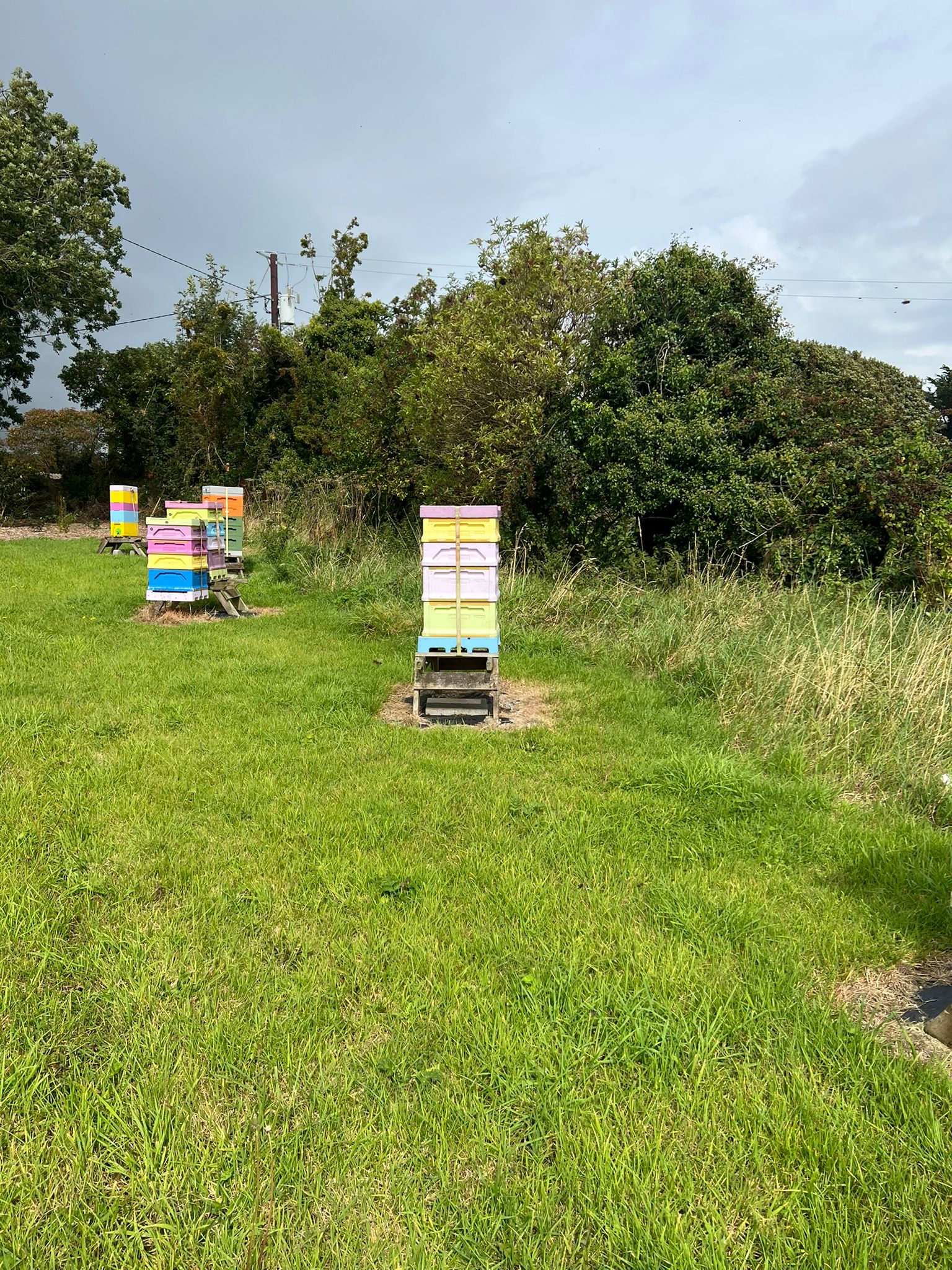
I get asked, sometimes, what the Cooley Mountains are. They are not a family. They are a real landscape - a dramatic north Louth peninsula bounded by Carlingford Lough to the south and the Newry River to the north, with mountain moorland above and sheltered fields and hedgerows below. The Cooleys are one of the reasons the heather honey from here is so distinct: the bell heather grows at altitude, on open slopes, undisturbed.
There is more on what a beekeeper’s year looks like on the Cooley Mountains, and what the landscape actually sends back to the hive across the seasons.
It is worth knowing, because when you buy a jar of Peninsula Honey, you are buying a specific harvest from a specific hill. That is what local means.
FAQ
Is all Irish honey produced locally?
No. Irish honey means the honey was extracted in Ireland, but it may use imported bees or be sold by a business that sources from multiple counties and blends across batches. For genuinely local honey, look for a named apiary with a specific location and a beekeeper you can contact directly.
Does local honey taste different to supermarket honey?
In most cases, yes - significantly. Single-origin Irish honey from a named apiary carries the flavour of the flowers the bees worked in that season. Heather honey from the Cooley Mountains has a bold, aromatic character completely unlike the mild, neutral taste of a blended supermarket jar. If you are curious what the difference looks and tastes like, this comparison goes into more detail.
Why does my local honey crystallise?
Crystallisation is a sign that honey is real and unprocessed. High-glucose honeys like ivy honey crystallise quickly and firmly. Others, like clear blossom honey, stay runny longer. Heat-treated supermarket honey has been processed specifically to delay this. The full explanation of crystallisation is worth reading if you have ever thrown out a jar thinking it had gone off - it had not.
What is the best way to find genuine local Irish honey?
Farmers markets, farm gates, and artisan food markets are the most reliable route. County shows and beekeeping association events are another. If you are in north Louth or visiting Carlingford, Peninsula Honey is sold direct from Mullabane and at Carlingford-area markets. The Co. Louth local honey guide has more on where to find producers in this area.
If you want to try single-origin honey from the Cooley Peninsula, you can find out more about the current harvest on the homepage. Collection is from Mullabane, Carlingford, and at local markets.