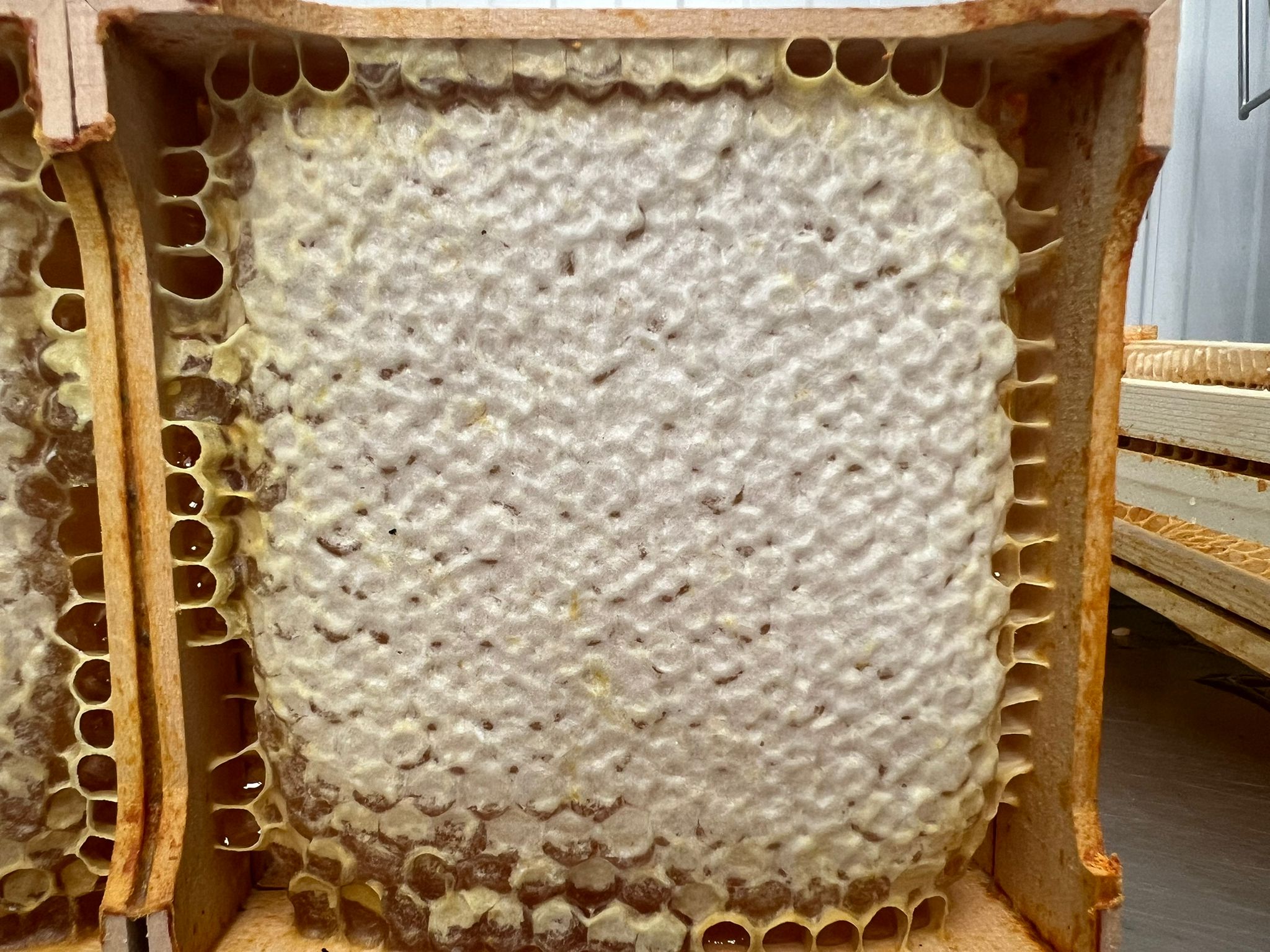
Pick up a jar of my Ivy honey in November and you might assume something has gone wrong. It is pale, almost white, and firm enough that a spoon stands upright in it. It looks nothing like the golden runny honey most people grew up with. The truth is the opposite of what it looks like: that solid set is one of the clearest signs the honey is exactly as it came from the hive.
Crystallisation is not a flaw. It is what real, raw, unprocessed honey does.
Why does honey crystallise?
Honey is mostly sugar - around 70 to 80 percent - dissolved in a small amount of water. That ratio is extreme: far more sugar than the water can hold in stable solution over time. So the sugars gradually come out of solution and form crystals. It is basic chemistry, and it is irreversible without heat.
The two main sugars in honey are glucose and fructose. Glucose is the less soluble of the two - it separates out of solution first and forms the crystal structure you see when honey sets. Fructose stays liquid longer. The balance between those two sugars, which varies with the source flowers, is what determines how fast a honey crystallises and how firm it sets.
Raw honey crystallises faster than processed honey because it still contains pollen grains, trace wax, and microscopic particles from the hive. These give the glucose crystals somewhere to start forming - what scientists call nucleation sites. Heavily filtered commercial honey has had most of those particles removed, which is why it can sit on a supermarket shelf looking perfectly clear for months. There is nothing for crystals to latch onto.
So when you find a jar of raw honey has set solid, that is the hive doing what it always does. It is a sign of something real, not something spoiled.
Which honeys set fastest - and how?
Not all honeys crystallise the same way. The flower source matters enormously, and the differences between varieties can be striking.
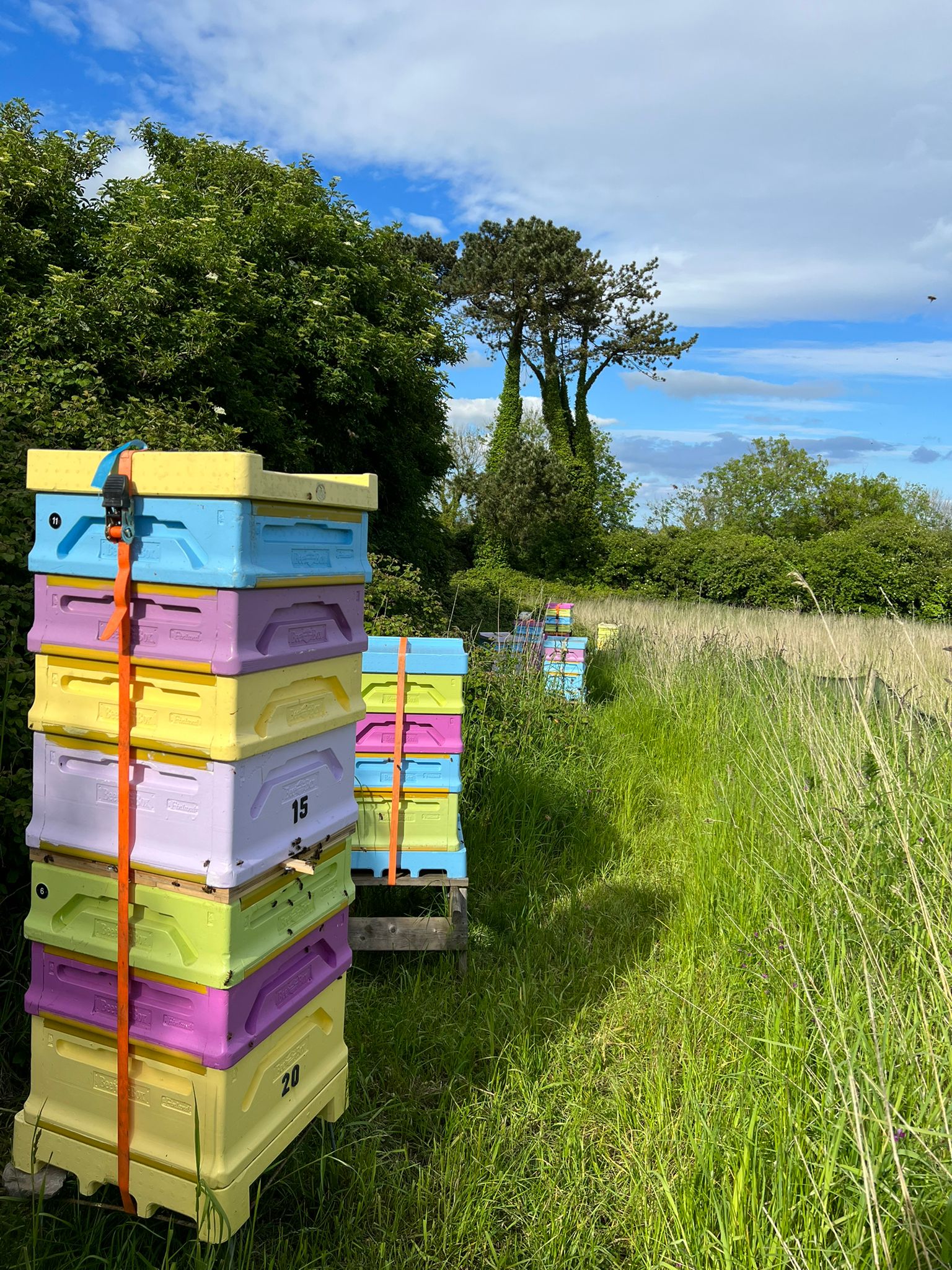
Ivy honey sets hard and pale - sometimes within the comb itself before I have even extracted it. Ivy nectar is high in glucose relative to fructose, which is why it moves so fast and sets so firm. The colour shifts from the faint gold of fresh extraction to a near-white as the crystals form. The texture is dense and smooth, almost like very soft fudge. If you have read anything about why ivy honey sets the way it does, that glucose ratio is the core of the story.
Heather honey crystallises naturally over time like any raw honey. My Heather comes from bell heather (Erica cinerea) on the Cooley slopes, and it extracts, pours, and spoons like normal honey - it has no unusual gel set. (You may have heard that LING heather, a different plant, makes a famously gel-like honey. That is ling, not bell. Mine is bell heather and behaves like ordinary raw honey.) What makes my Heather stand out is its flavour, not its texture: dark amber, bold, aromatic, and complex. If you want to understand it better before buying, the heather honey guide goes into the flavour in more detail.
Clear honey - my everyday golden jar - is a blended-season wildflower honey that sets more slowly than Ivy. It stays runny longer because its sugar balance leans further toward fructose.
Soft Set is made to crystallise in a controlled way: seeded with fine crystals during production to give it a smooth, spreadable set from the start. It never goes rock solid the way Ivy does.
Does crystallised honey go off?
Honey does not go off. It is one of the few foods that genuinely does not spoil when stored correctly. The low water content and natural chemistry make it inhospitable to bacteria and mould. Honey thousands of years old has been found in Egyptian tombs still intact.
Crystallisation changes the texture but nothing else of substance. The flavour, the character, the raw qualities - all present. Ivy honey crystallised in the jar is the same honey it was on the day I extracted it. The crystal form is actually more stable than liquid honey, less prone to fermentation if any moisture ever gets in.
If you see white foam or bubbling at the top of a jar, that is different - that can be a sign of fermentation, usually caused by moisture getting into the jar. But a firm, uniform set with no off smell is simply raw honey doing its natural thing.
How to soften crystallised honey
If you want your honey runny again, it is straightforward - the only thing that matters is keeping the temperature gentle. Heat above about 40 degrees Celsius starts to damage the enzymes and aromas that make raw honey worth buying in the first place. A lot of the warmth and complexity in heather or ivy honey can be dulled by overheating.
The method I use: stand the sealed jar in a bowl of warm water - warm enough that you can comfortably hold your hand in it, not hot enough to be uncomfortable. Leave it there, replacing the water as it cools, and give the jar a stir every ten minutes or so as it loosens. A small jar of Ivy honey usually softens within twenty to thirty minutes this way. Larger or harder sets take longer - up to forty-five minutes is normal.
Do not use a microwave. It creates uneven hotspots that can overheat part of the jar while leaving the rest solid, and those temperature spikes are hard on the delicate aromatics. The slow warm-water bath is worth the extra time.
One note on Heather honey: it will crystallise over time like the others, and you can soften it the same gentle way. But its aromatics are especially delicate, so the less heat the better. Often it is enough to take it out of the fridge if you store it there, let it reach room temperature, and stir it. Keeping heat to a minimum protects the aromatics that make it worth using on a cheese board or stirred through cream.
A note on storage
Honey crystallises faster in cool conditions and more slowly at room temperature. The fridge speeds up crystallisation - store your jars in a cool cupboard instead, away from direct heat or sunlight.
Do not store honey in direct sunlight or near an oven. Light and sustained warmth gradually degrade the flavour and colour over time, even without raising the temperature to the point of obvious damage.
Storing your jars properly also means keeping the lid on tight. Honey is hygroscopic - it absorbs moisture from the air. Leaving the lid off or loose can introduce enough water to trigger fermentation in a honey that would otherwise last indefinitely. How to store honey properly covers this in full if you want the detail.
FAQ
Is crystallised honey safe to eat? Yes. Crystallised honey is the same honey in a different physical state. It has not spoiled, gone off, or changed in any way that matters. Spread it, stir it into something warm, or soften it in a warm water bath - all fine.
Why is my honey white? White or very pale honey is nearly always a sign of crystallisation. The white colour comes from the way light scatters off the tiny glucose crystals, not from any change in the honey itself. Ivy honey does this most dramatically - freshly extracted it is pale gold, and by midwinter it is close to white. It is still exactly as it came from the hive.
Does raw honey crystallise faster than supermarket honey? Yes, and that difference is worth understanding. Raw honey contains pollen, wax particles, and other natural material from the hive, all of which give glucose crystals somewhere to form. Commercial honey is ultra-filtered to remove those particles, which delays crystallisation. If your honey never sets, that is a reasonable indicator of heavy processing. What raw honey actually is explains the difference clearly.
Can I re-liquefy honey more than once? You can, but each time you apply heat you risk degrading the aromatics slightly. If you are buying raw honey because you want the full flavour, it is worth buying a variety that suits how you use it - Soft Set if you want something always spreadable, Clear if you want something that stays runny longest. Repeatedly softening and re-setting a jar is not the best way to enjoy it.
Every jar from the Cooley Peninsula comes with a batch number and harvest date on the label - so you know the season it came from, not just the type. If you want to try the range and see which set suits you, the current harvest is available for local collection at Mullabane, Carlingford, and at markets in the area. The Soft Set is a good place to start if you are not sure.