If you have been looking for honey Co. Louth actually produces - raw, single-origin, made by one beekeeper from hives on a specific hillside - this is where to find it, and what to expect when you do.
Most honey on Irish supermarket shelves is blended from several countries, heated for easy bottling, and tastes more or less the same in every jar. Real local honey from this part of Louth is a different thing entirely. It tastes of the landscape, it changes with the season, and you can trace it to one address.
What “local honey” actually means in Co. Louth
The word local gets used loosely. A well-known brand with its packaging plant in Drogheda is not the same as honey made by a beekeeper keeping hives in the county. The distinction matters because genuinely local honey - made from the forage of a specific place - carries the flavour of that forage. You can taste the difference.
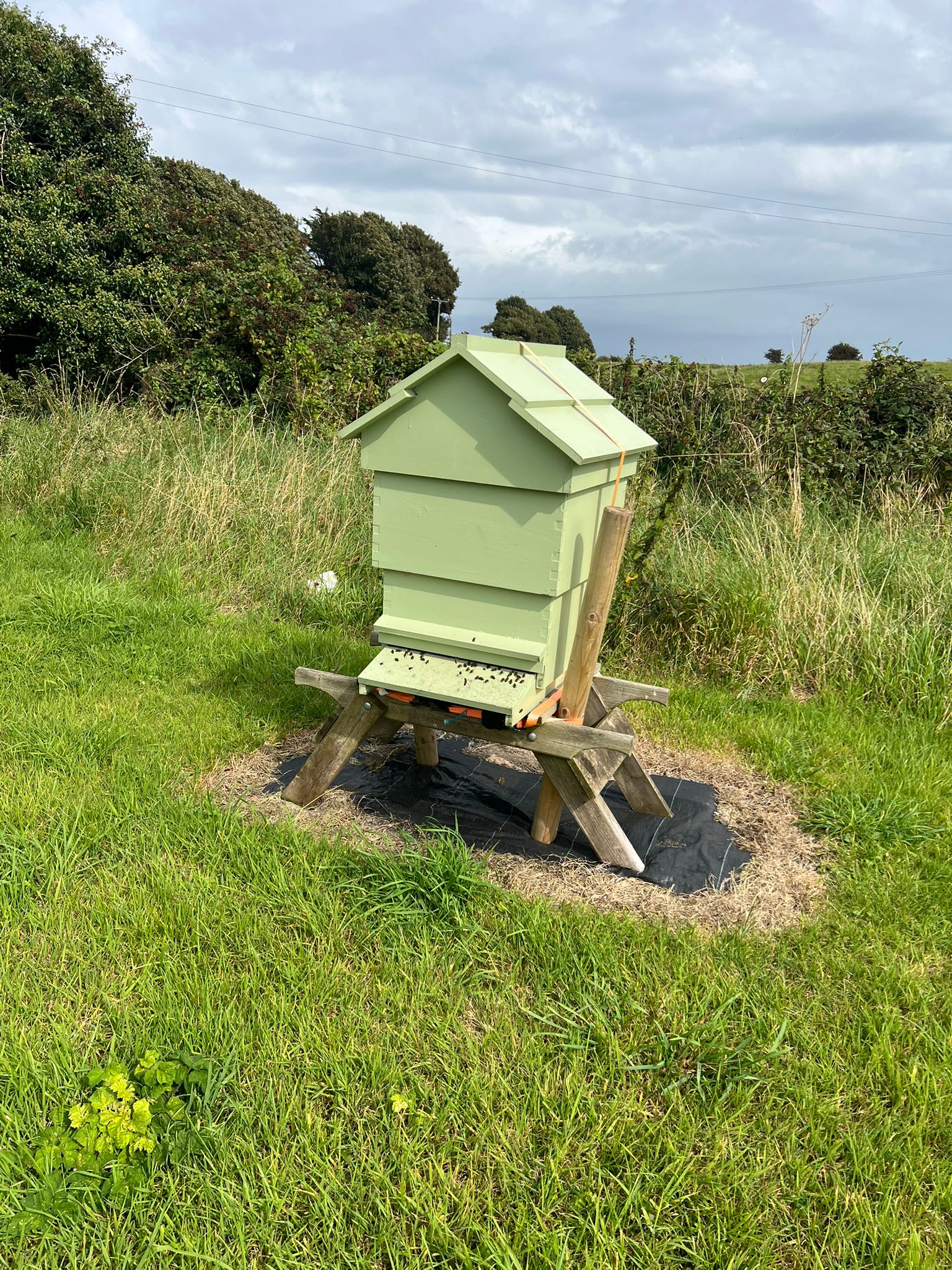
Co. Louth is a varied landscape: the flat farmland of the south, the hedgerow fields and townlands of the midlands of the county, and then the Cooley Peninsula in the north, rising into heather moorland above Carlingford Lough. Each of those landscapes would produce a different honey. My bees work the Cooley ground - mountain heather at altitude, wildflowers in the sheltered fields below, ivy from the hedgerows in autumn. That range of forage is why I produce several distinct honeys across a single year, rather than one generic jar.
If you want to understand what single-origin honey from this landscape actually involves, that post goes into it in more detail.
Buying from Mullabane: farm gate collection
The most direct way to buy Peninsula Honey is to collect it from Mullabane, above Carlingford. I sell direct for local collection, which means you contact me, we arrange a time, and you collect from the source.
There is no shop front, no queue, no middleman. You get the honey at the same price as the market, and you can ask me whatever you like about the batch - what flowers were in that particular harvest, how long it has been since extraction, which variety might suit what you have in mind for it.
Every jar is batch-numbered and harvest-dated, so you always know exactly what you are getting. The batch number ties back to a specific harvest: the hives, the season, the point in the year when the bees sealed the frames. That level of traceability is something you will not find on a supermarket shelf.
If you are coming to Carlingford anyway - visiting the village, walking the Táin Way, or spending a weekend on the peninsula - collecting from Mullabane adds about ten minutes to your journey and takes you into the foothills with a view of the lough.
Carlingford-area markets
I bring honey to markets in the Carlingford area through the season. The market is where most people try Peninsula Honey for the first time: you can taste before you buy, ask about the different varieties, and pick based on what you are actually going to use the honey for at home.
Market availability is seasonal and not guaranteed every week, so if you are making a special trip, it is worth checking before you travel. The Carlingford local food guide has more on the wider food scene in the village if you are planning a day out.
Markets are also where I meet the people who become regulars. Someone buys a jar of Clear on a Saturday and comes back three weeks later for the Heather. That pattern happens often enough that I have come to think of the market stall less as a transaction and more as the start of something.
The range: what you will find
At any given point in the season I will have some combination of the following:
Clear honey - the everyday golden runny jar. The most versatile of the four and the one most people reach for first.
Soft Set - smooth, spreadable, pale. If you want honey that stays where you put it on toast, this is the one.
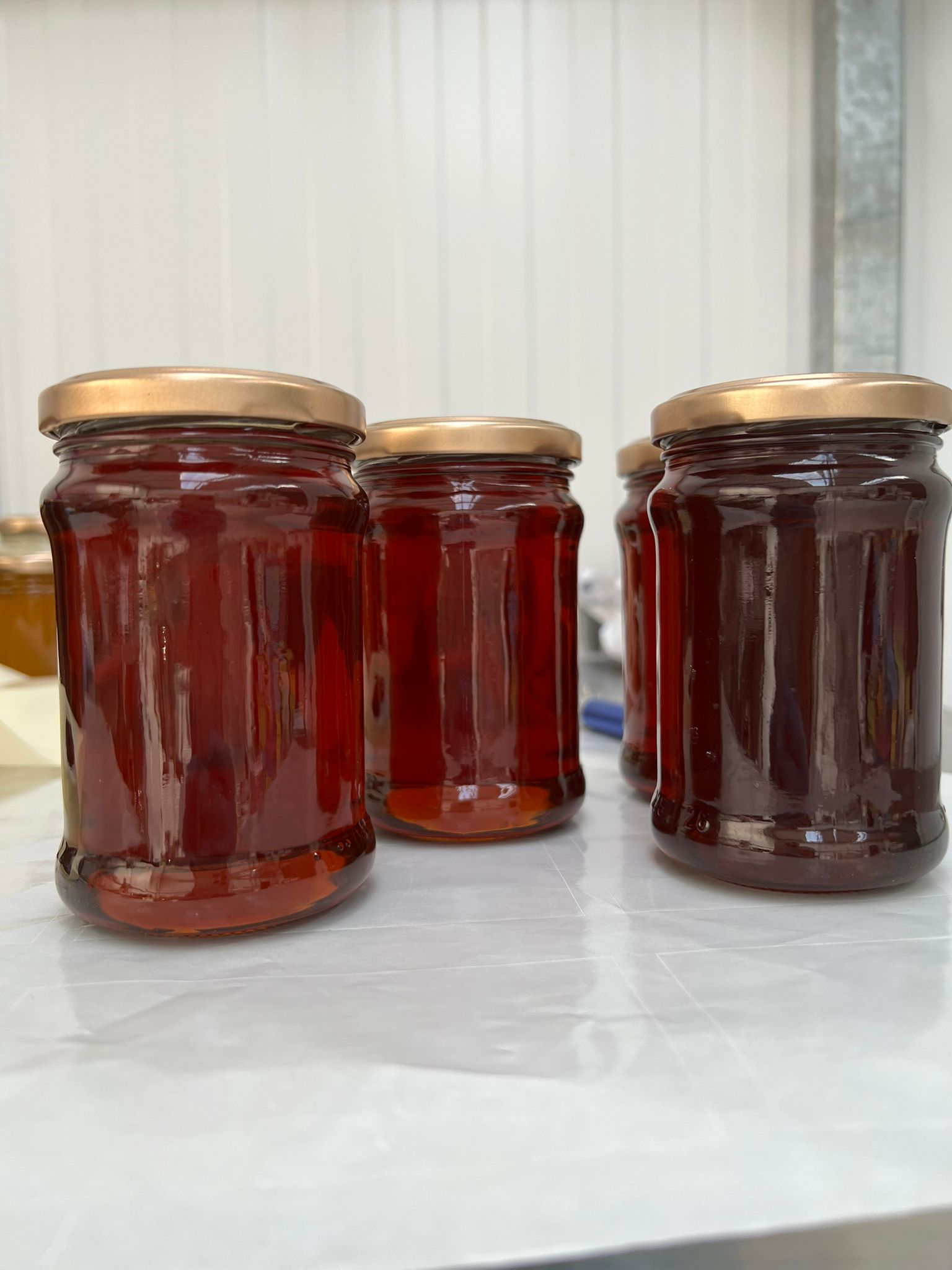
Heather honey - dark, bold and aromatic, with an almost port-like depth. From bell heather on the Cooley slopes, it pours and spoons like normal honey, and its distinctiveness is all in the flavour. What heather honey tastes like is something I have written about in detail, because it is genuinely hard to describe quickly.
Ivy honey - the autumn harvest. Pale, firm, mild, with a faint aromatic edge. Ivy sets hard, which surprises people who have only ever bought runny honey. Why ivy honey sets the way it does comes down to the specific sugars in ivy nectar.
Beyond the four jarred honeys, I also produce comb honey in sections, cut comb, and chunk - honey exactly as the bees built it, wax and all. What comb honey actually is is worth reading before you buy, especially if you have not tried it before.
Not everything in the range is available at all times. Heather and ivy are seasonal and limited. If you are after a specific variety, it is always worth contacting me before making a trip.
Why buying direct matters for this kind of honey
I do not ship nationally. That is not an accident or a gap in the business - it is a choice. Peninsula Honey is a single-origin product made in small batches by one beekeeper. Selling it locally and direct keeps it connected to the place it comes from.
It also means the honey you buy has not spent weeks in a warehouse or travelled hundreds of miles since extraction. Raw honey is stable - it does not need refrigeration and stores well if you keep it correctly - but freshness from extraction to your jar still makes a difference to the flavour of the more delicate varieties.
Buying local also means you can ask questions. What makes real honey different from the blended supermarket version is not complicated to explain, but it is easier to show someone at a market stall than to write on a label. How to tell if honey is real is worth reading if you want to know what to look for in any honey you buy, not just mine.
A note on other honey in Louth
There are other beekeepers in Co. Louth. The Irish Beekeepers’ Association has a directory, and beekeeping clubs in the region - including the Louth Beekeepers’ Association - are a useful starting point if you want to find someone closer to where you live in the county.
The Louth Honey Show, which I have competed in since 2019 (winning the Most Points shield that year), is held annually and is a good opportunity to meet local beekeepers and see the range of honey produced in the county. If you want to understand what peer-judged standards actually look like in Irish beekeeping, the show is worth a visit.
The point is not that Peninsula Honey is the only local honey in Louth - it is that when you buy from a named beekeeper who tells you which hives, which season, and which flowers, you are getting something meaningfully different from a commercial blend, wherever it comes from.
FAQ
Do you do postal or national delivery? No. Peninsula Honey is sold for local collection at Mullabane and at Carlingford-area markets. There is no postal service. If you are outside Louth and want a jar, the most practical option is to collect when you are in the area.
Can I order a specific variety in advance? Yes. If you want a particular honey - Heather, Ivy, or comb - it is worth contacting me before you visit, as not every variety is available at all times. Seasonal varieties like Heather can sell out before the next market.
What is the difference between your Clear honey and soft set? Clear is the golden, runny jar - pours easily, dissolves in a hot drink, drizzles over most things. Soft set is smooth and spreadable, stays on a spoon, and does not run off toast. Both come from the same Cooley bees and the same forage. The difference is in how the honey is processed after extraction.
How long does the honey keep once I open it? Honey does not expire in any meaningful sense. Raw honey will crystallise over time - a natural process, not a sign it has gone off. Warmth will re-liquefy it. If you find a jar has set hard in the cupboard, that is the ivy nectar doing what ivy nectar does.
If you want to buy honey Co. Louth produces at its most local - raw, single-origin, batch-numbered and made by one beekeeper on the Cooley Peninsula - the home page has everything you need to get in touch and arrange a collection.