Carlingford is one of those places that gets into you. An afternoon wandering the medieval lanes, lunch with the lough in front of you, a walk up toward Slieve Foye if your legs are willing. And then the question on the way back to the car: is there anything worth bringing home?
There is. The trick is knowing what to look for - and what actually travels.
Carlingford food gifts worth the luggage space
The town has earned a genuine food reputation. Carlingford oysters are the obvious headline: the lough’s cold, clean water gives them a sweetness and a faint mineral edge that flat-packed alternatives cannot touch. The Carlingford Oyster Company can sell you a dozen to go if you are driving straight home. If you are heading to the airport, oysters are not the most practical passenger.
That is where Carlingford food gifts that are also practical gifts start to matter. Shelf-stable, carry-on friendly (in a checked bag, at least), genuinely made here, and not something you can pick up in any Irish motorway service station. Honey ticks every box.
Honey travels and keeps - facts worth knowing
Raw honey does not go off. Its low water content and natural acidity stop spoilage in its tracks - a combination that keeps it stable for years without refrigeration or preservatives. A jar from the Cooley Peninsula, bought on a Saturday, is going to be perfectly fine in December.
For air travel: honey counts as a liquid under airport security rules, so jars larger than 100ml go in your checked bag. A 250g or 500g jar packed in a zip-lock bag inside a jumper is completely fine. No refrigeration needed at home - a kitchen cupboard away from direct heat is ideal. Crystallisation is natural and not a problem; it just means the honey is doing what pure honey does.
What makes Cooley Peninsula honey worth bringing home
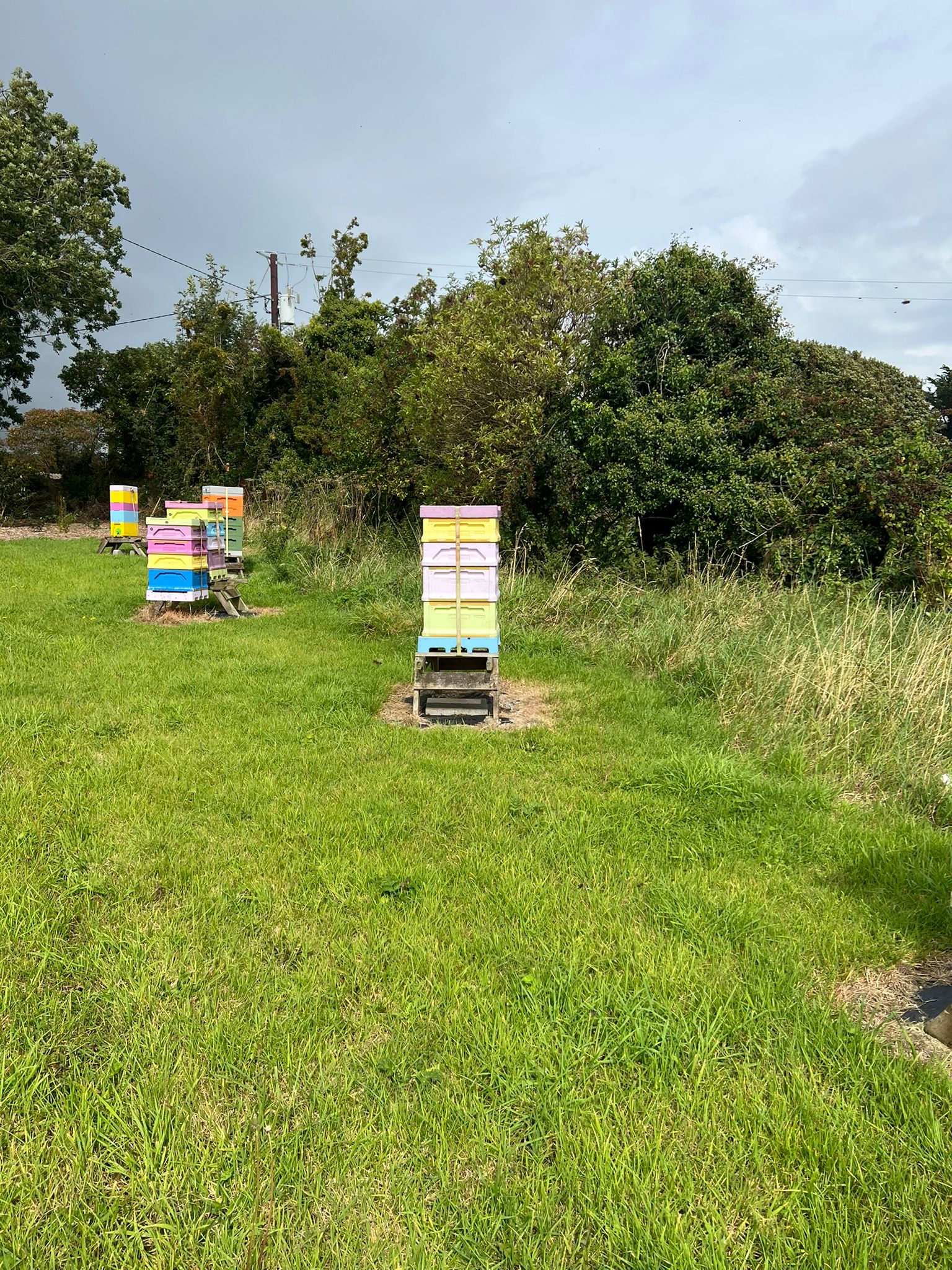
The peninsula above Carlingford is specific terrain. Bell heather on the mountain slopes, wildflower hedgerows below, ivy growing thickly along the stone walls, the lough to the south. My bees at Mullabane forage all of it, and the honey tastes different depending on what was flowering when I extracted it.
You can read more about what makes Cooley honey different from any other Irish honey - the short version is that single-origin honey from one known address tastes of a place, not of a category.
These are not interchangeable jars. The four honeys in the current range each have a distinct character:
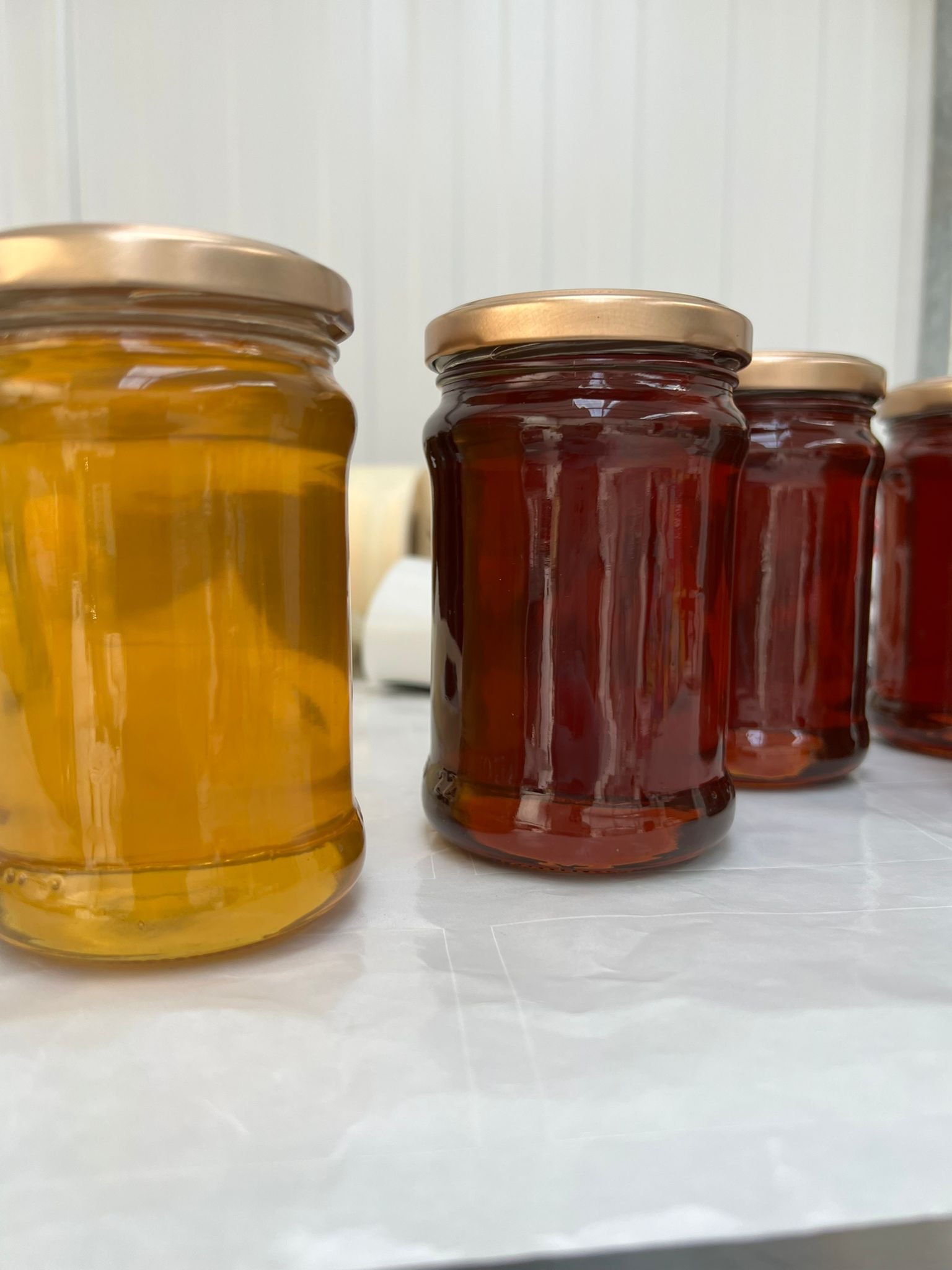
Clear is the everyday golden runny honey - the one that works on everything, from porridge to brown bread. Mild, floral, honest. If someone in your household is unconvinced about raw honey, start here.
Soft Set is the same Clear honey whipped to a spreadable, pale texture. It goes into a teaspoon or onto toast without running. Practical and popular.
Heather is what the Cooley Mountains taste like in late summer. Dark, bold and aromatic, with an almost port-like depth - the boldest jar in the range. From bell heather on the slopes, it pours and spoons like normal honey and crystallises naturally over time. On a cheese board it is at its best, or stirred through thick cream. Heat diminishes its aromatics, so cold or room-temperature uses suit it. If you want to understand what Irish heather honey actually tastes like, this guide to heather honey covers the character properly.
Ivy sets hard and pale with a mild, slightly aromatic quality and a faint menthol edge. An autumn harvest honey. It can look different in the jar - firm, almost waxy - which surprises people who expect all honey to be runny and amber. That is not a fault; ivy honey sets hard because of its fructose-to-glucose ratio, and a hard set pale jar is the sign of the genuine article.
There is also comb honey - sections, cut comb, and chunk - when available. Nothing about comb honey has been processed. The wax is edible. It is honey at its most direct.
Thinking about who you are buying for
If you are picking up a jar for yourself, the question is taste preference. People who like a gentle, versatile honey usually want Clear or Soft Set. People who are interested in single-variety honeys and have already moved past the basics tend to go for Heather. First time trying raw Irish honey? Clear is the obvious starting point - mild, honest, and it works on everything.
For a gift, the Heather jar makes an impression because the story is right there in the jar: a specific flower, a specific mountain, a specific season. It is not a generic food gift. Every jar carries a batch number and harvest date, so the recipient knows exactly when it was made and from which harvest.
Awards were won at peer-judged shows - the 2019 Louth Honey Show Most Points shield, and two firsts, a second and two thirds at the County Dublin Beekeepers Association Honey Show in 2021. These are not marketing stickers. They are assessed by experienced beekeepers on taste, clarity, set, and technical criteria. That gives a gift some grounding that a nicely labelled jar on a shelf cannot.
Where to find it in and around Carlingford
Peninsula Honey is sold at local markets in the Carlingford area. If you are not sure what is available on a given day, the best approach is to contact me directly. I sell direct for local collection at Mullabane, and I would rather point you in the right direction than have you leave empty-handed.
For visitors coming from Belfast, Dublin, or further afield, the Cooley Peninsula is worth planning time around rather than treating as a quick detour. If you are curious about the broader local food picture, the Carlingford local food guide covers more ground than honey alone.
A few honest questions answered
Can I bring honey in my hand luggage on a flight? Honey is treated as a liquid, so containers over 100ml must go in your checked bag. A standard jar will not make it through security in a carry-on unless it is the small travel size. Pack it in your main bag, wrapped in something soft, and it will travel without any trouble.
Does raw honey go off? No. Properly sealed and stored at room temperature, raw honey keeps indefinitely. The harvest date on the jar is there for traceability and interest, not because the honey expires after it. Crystallisation can happen - it is natural and harmless; warm the jar gently in a bowl of hot water if you want it runny again.
How is this different from supermarket honey? The main differences are blending, heating, and origin. Most supermarket honey is blended from multiple countries and heat-treated to delay crystallisation and make it easier to handle at scale. Raw single-origin honey is extracted without heat and not blended with anything. The label on a Peninsula Honey jar tells you the flower source, the harvest date, and the batch number - supermarket honey rarely tells you any of that.
What is the difference between the four honeys? Flower source and season. Heather is a mountain monofloral with a dark, bold, aromatic character. Ivy is an autumn honey, pale and firm. Clear is a multi-flower runny honey from the hedgerow season. Soft Set is the same Clear honey in a spreadable texture. They are made in the same apiary by the same bees - they taste different because the flowers were different.
If you are heading to or from Carlingford and want to pick up a jar, get in touch to check what is available. The honey is sold direct - no courier, no platform - and that is how it stays traceable from the hive to your kitchen.