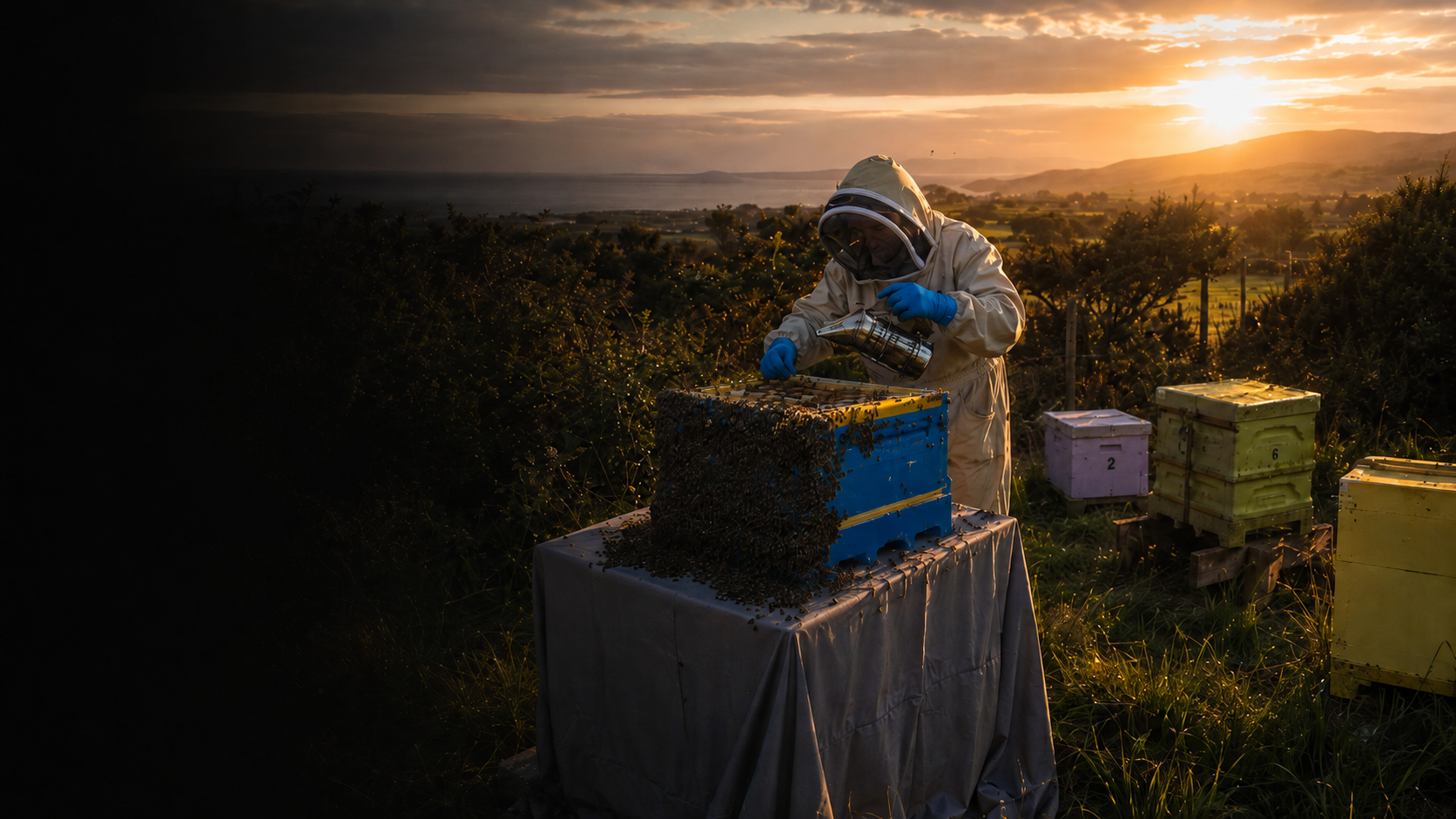
Mullabane sits in the foothills of the Cooley Mountains, above Carlingford Lough. It is a specific landscape: open heather moorland at altitude, sheltered hedgerow fields below, and the lough to the south. Each of those habitats sends something different back to the hive.
The landscape is in the jar
Bell heather from the mountain slopes gives a dark, bold, aromatic honey with a deep, almost port-like flavour. Ivy from the autumn landscape gives a pale, firm, mild honey. Spring blossom from the fields below gives the year’s lightest, most floral honey.
That is what single-origin means. The honey tastes of where it came from, and it changes with the season and the flowers. It is the opposite of a blended honey made to pour and taste the same every time.
Why place changes the taste
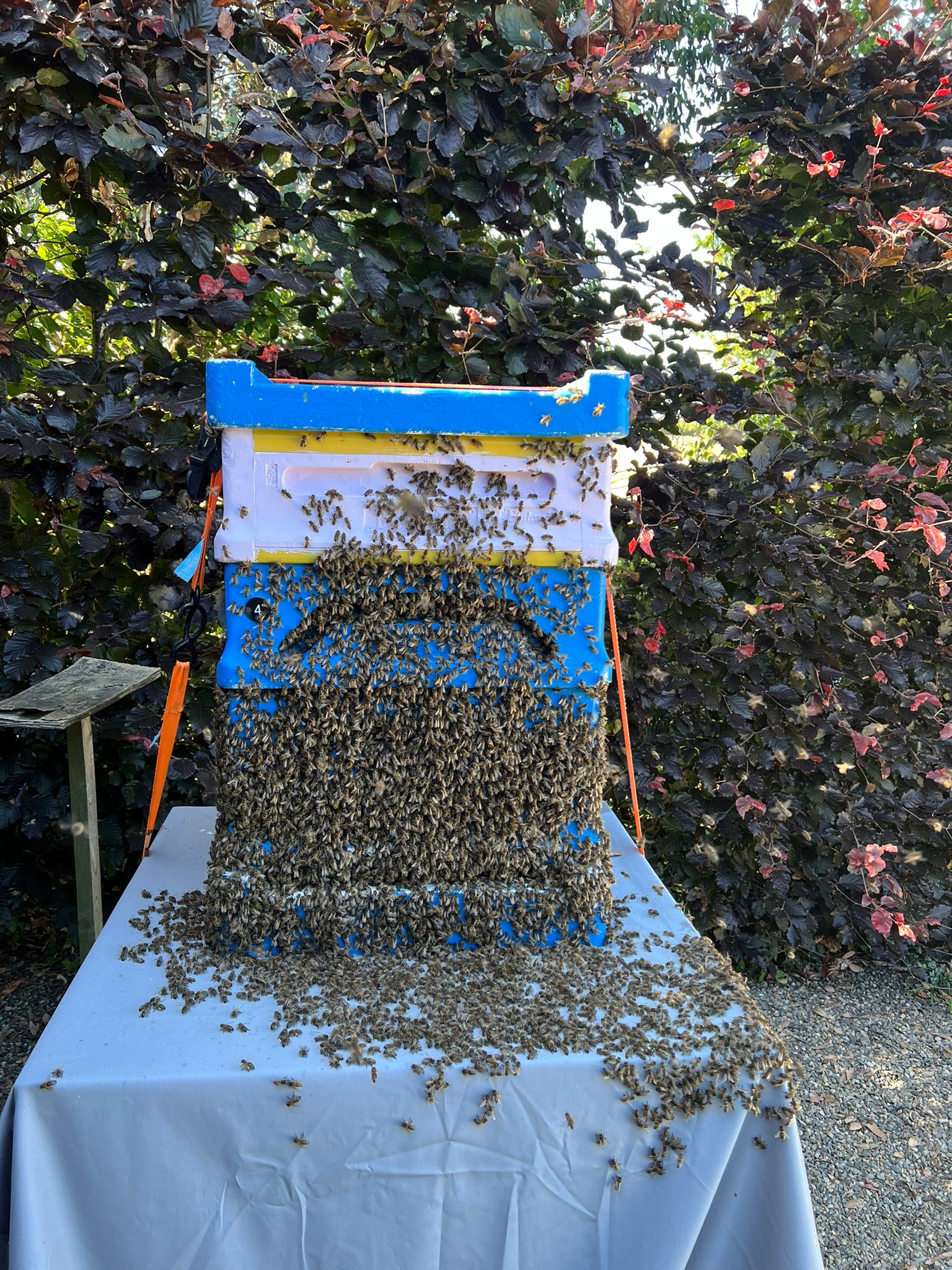
Real honey tastes of somewhere. Bell heather from the Cooley slopes tastes nothing like spring blossom from the hedgerows. The same beekeeper, the same bees, the same peninsula, and yet several distinct honeys across a single year, because the bees are working different ground in different seasons.
No other honey producer comes from this exact landscape. The character of every jar comes from what is flowering here, on this peninsula, in this season.
Traceable to one address
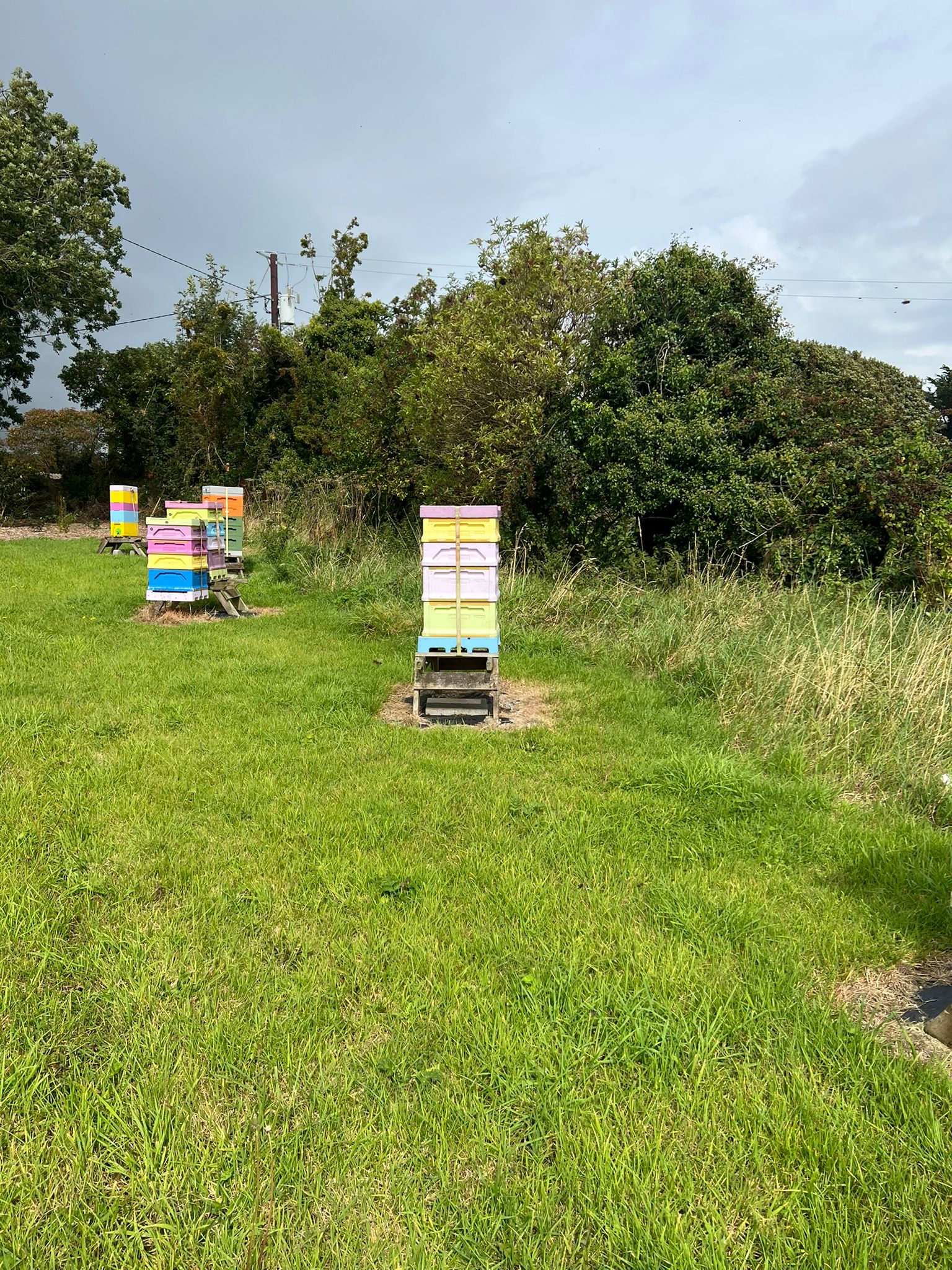
Every jar is raw, unblended and unheated, with a batch number and harvest date on the label. It is sold direct for local collection at Mullabane, Carlingford, and at markets in the area.