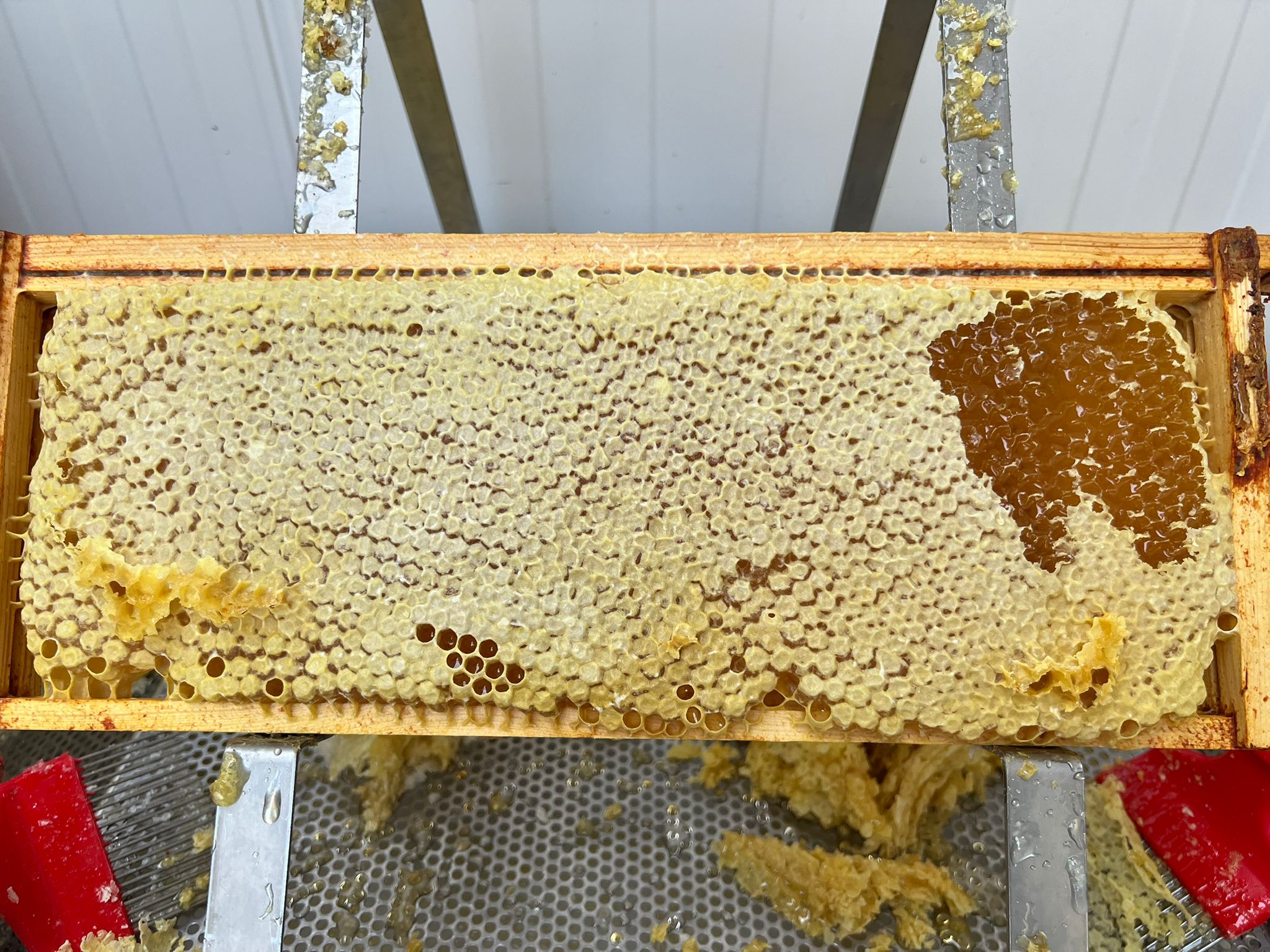
Ask most people what is raw honey and they picture something old-fashioned or obscure. In practice, it is simply honey that has gone from the hive to the jar with as little interference as possible - not heated, not blended, not stripped of what makes it interesting. It is what honey was before large-scale processing turned it into a uniform, pourable product.
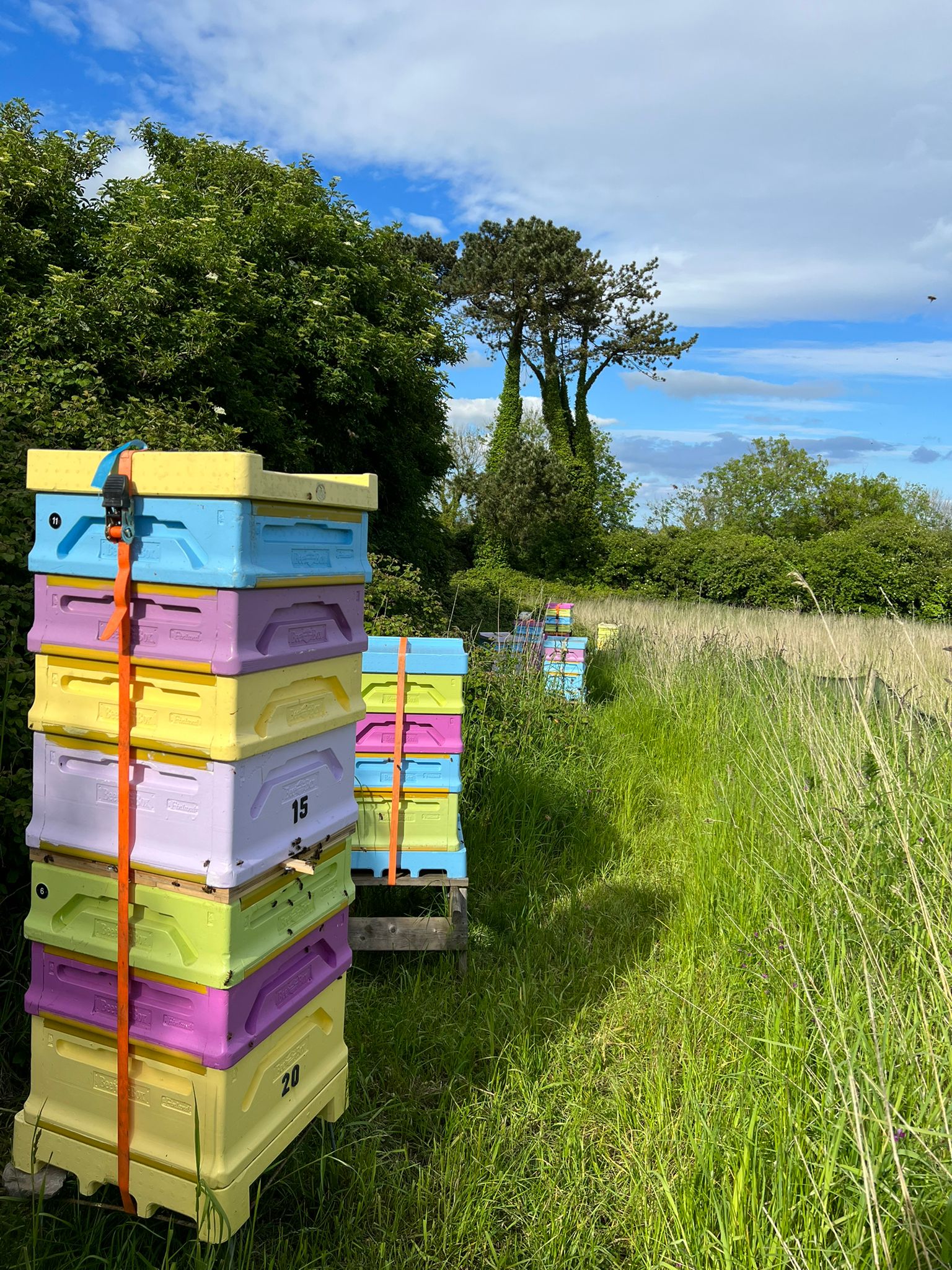
I keep bees on the Cooley Peninsula, above Carlingford Lough. Every jar I produce is raw. That is not a marketing decision - it is just how I work, because heating or blending the honey would erase the very thing that makes it worth buying in the first place.
What “raw” actually means
Raw honey is honey that has not been pasteurised or significantly heated after leaving the hive. It is strained to remove wax and debris, but nothing more. The sugars, enzymes, pollen, and aromatic compounds that the bees built into the honey remain intact.
Processing - in the commercial sense - typically involves heating honey to around 70°C or higher. This makes it flow easily through pipelines, kills any yeast that might cause fermentation, and extends shelf life. It also liquefies any crystals that have formed, so the honey arrives at the supermarket shelf looking uniform and clear.
The trade-off is that heat reduces the enzymes bees add during honey-making - compounds like diastase, which breaks down starch, and glucose oxidase, which the bees use to help preserve the honey. It also flattens aroma. Heather honey, for example, has a bold, complex smell that softens noticeably with heat. There is no recovering it once it has gone.
Raw honey may also be unfiltered, meaning that traces of pollen remain. Pollen is one of the ways beekeepers and researchers can verify where a honey actually came from - it is the botanical fingerprint in the jar.
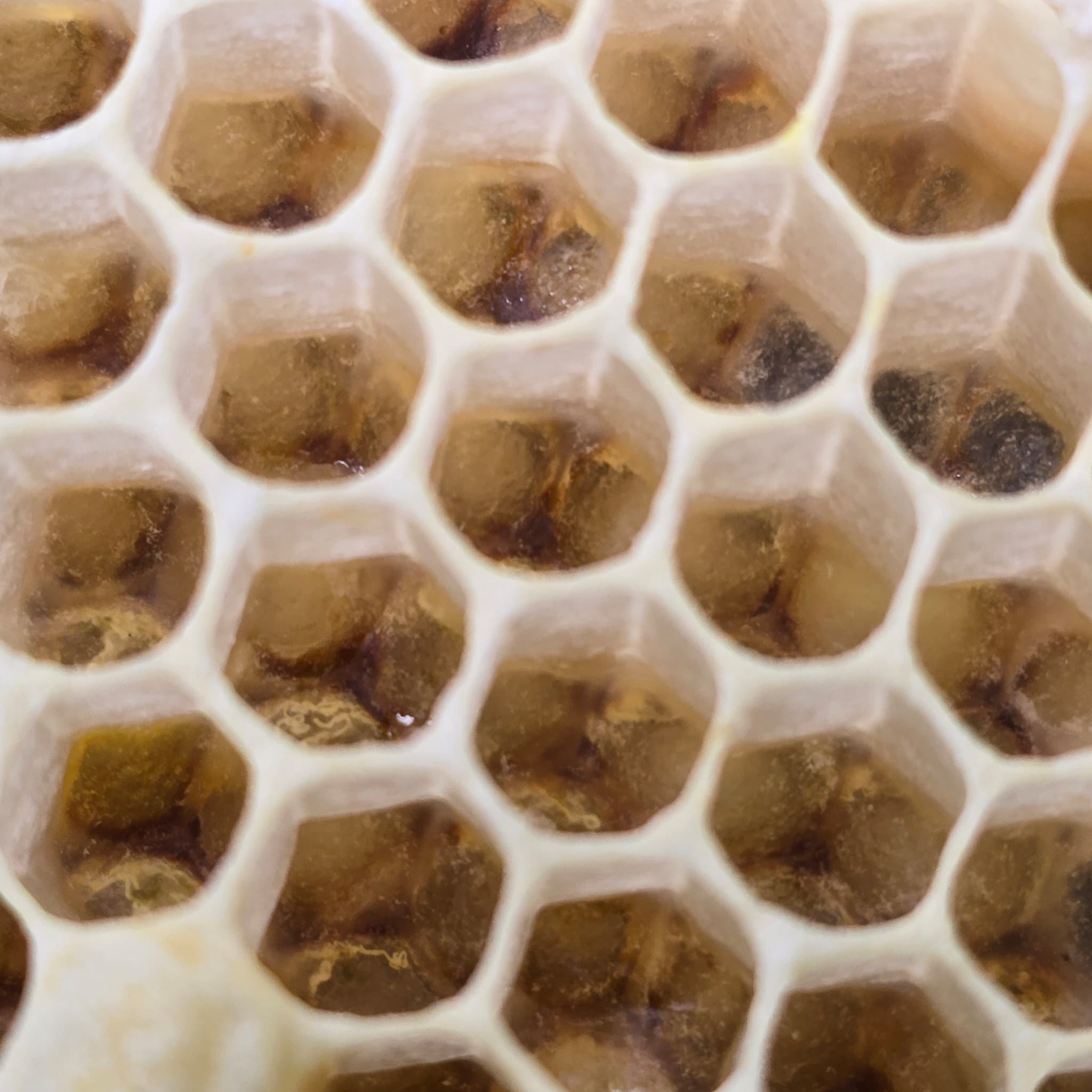
Why raw honey looks different from what you find in most shops
Most honey in Irish supermarkets is blended. The label often reads “a blend of EU and non-EU honeys.” That phrase means exactly what it says: honey from different countries, possibly different harvests, mixed together to a consistent flavour and consistency. If you want to understand what that label covers, there is a plain-language explanation of EU and non-EU honey blending worth reading before you next pick up a jar.
Blended honey is also usually heat-processed to make the blending easier and the result more stable. The product that reaches you may have started as dozens of different honeys from different climates, flowers, and harvests. By the time it is bottled, the individual character of any of them is largely gone.
Raw single-origin honey is the opposite. It comes from one beekeeper, one landscape, one harvest. It tastes of where it came from, and it changes with the season and the flowers the bees were working. That variability is not a flaw - it is the point. What makes Cooley Peninsula honey different from blended supermarket honey is precisely this: you can trace it to one address, one apiary, one person.
Why raw honey crystallises - and why that is fine
Crystallisation is the single thing that confuses people most about honey. A jar goes grainy or sets solid, and people assume it has gone off. It has not.
Honey is a supersaturated sugar solution - there is more sugar dissolved in the water content than the water would naturally hold. Given time, some of that sugar comes out of solution and forms crystals. Glucose is the sugar that crystallises first, because it is less soluble in water than fructose. Honeys with a higher glucose-to-fructose ratio crystallise faster.
This is why different honeys behave so differently. My Ivy honey, harvested in autumn when the bees have been working ivy blossom, sets hard and pale within weeks of extraction - ivy nectar is high in glucose. My Clear honey, which reflects the mixed summer forage of the Cooley Peninsula, stays liquid for much longer.
Heather honey from Erica cinerea - the bell heather on the Cooley slopes - crystallises naturally over time like any raw honey, and it pours and spoons normally. (Ling heather, Calluna vulgaris, is the different plant known for an unusual gel-like set - but my bees work bell heather, not ling.) What makes bell heather honey special is its flavour: dark amber, bold, aromatic, and complex, with a long, almost port-like finish that you will not find replicated in a blended honey. You can read more about what heather honey actually tastes like and how to use it.
Crystallisation is a sign of real, unprocessed honey. It is one of the simplest ways to tell that what you have is genuine. Processed honey that has been heavily filtered and heat-treated can sit liquid for years because the “seed” particles - pollen grains, tiny wax particles - that trigger crystallisation have been removed. If you want to know more about how to tell if honey is real, crystallisation behaviour is one of the things worth looking at.
How raw honey varies from jar to jar
Raw honey is not one thing. It changes with the flowers, the season, and the landscape the bees are working. Two jars from the same apiary, harvested six weeks apart, can look and taste completely different.
On the Cooley Peninsula, the bees move through a sequence of forage across the year. Spring and early summer bring hedgerow blossom, clover, and wildflowers from the sheltered fields below Mullabane. Late summer brings heather from the mountain slopes. Autumn brings ivy, which the bees work hard right up until the cold comes.
Each of those sources produces a honey with its own character. The Clear honey is light and golden, mild enough to use every day. The Soft Set is the same base honey, but stirred at the right moment to create a smooth, spreadable texture. The Heather is dark, bold and aromatic, with a depth of flavour that makes it unlike anything you get in a shop. The Ivy sets pale and firm, with a gentle, slightly menthol edge.
None of them are made to taste the same each year. The bees go where the flowers are. A dry summer changes which plants bloom and when. A wet September may shift the heather harvest. That is how it should be.
A note on “unheated” and what temperature matters
Bees keep the inside of the hive at around 35°C during summer. That is the reference point for “unheated” raw honey - the honey should not be exposed to temperatures significantly above what it would experience in a healthy hive.
In practice, raw honey is often gently warmed to around 40°C to make straining easier without damaging what is in it. Anything above roughly 45-50°C starts to affect enzymes and aroma compounds noticeably. Pasteurisation happens at 70°C or above. The difference matters, and it is why beekeeper-produced raw honey and commercially pasteurised honey are genuinely different products, not just differently marketed versions of the same thing.
Every batch of Peninsula Honey carries a batch number and harvest date on the label. That is how you know what you are getting - not a vague jar of “pure Irish honey,” but a specific harvest from a specific season on the Cooley Peninsula.
Frequently asked questions
Does raw honey go off?
Pure honey, raw or processed, does not spoil in the usual sense. Its low water content and natural acidity make it inhospitable to most bacteria. Archaeologists have found honey in Egyptian tombs still intact after thousands of years. The key is keeping moisture out - a tightly sealed jar stored in a cool, dry place will last indefinitely. If raw honey absorbs moisture (from a wet spoon, for instance) it can ferment, which is a different thing.
Is crystallised honey still raw?
Yes. Crystallisation is a physical change, not a chemical one. The honey has not degraded or gone off - the glucose has simply come out of solution. You can return it to a runny state by sitting the jar in warm water (not hot - keep it below 40°C to preserve the raw quality). Or you can eat it as it is. Crystallised honey spreads cleanly on bread and has a pleasant, fudgy texture.
How is raw honey different from organic honey?
These are two separate things. “Organic” refers to what the bees forage on and how the beekeeper manages the hive - certified organic honey comes from apiaries where the forage within flight range meets organic standards and no synthetic treatments are used. “Raw” refers only to how the honey is handled after harvest - whether it has been heated or heavily processed. A honey can be organic and heavily processed, or raw but not certified organic. They are independent claims.
Can I cook with raw honey?
Yes, though it is worth knowing that heat will reduce some of the aromatic character that makes raw honey interesting. For anything that does not involve high heat - drizzled over cheese, stirred into yogurt, spread on toast, mixed into a dressing - raw honey is ideal and the flavour comes through fully. If you are baking or adding honey to a hot dish, the heat of cooking will affect it regardless of whether it started raw or processed, so using a milder honey for cooking and saving the raw single-origin for cold uses makes sense.
If you would like to taste the difference for yourself, Peninsula Honey is available for local collection at Mullabane, Carlingford, and at markets in the area. Each jar is batch-numbered and harvest-dated, so you always know exactly what you are getting.