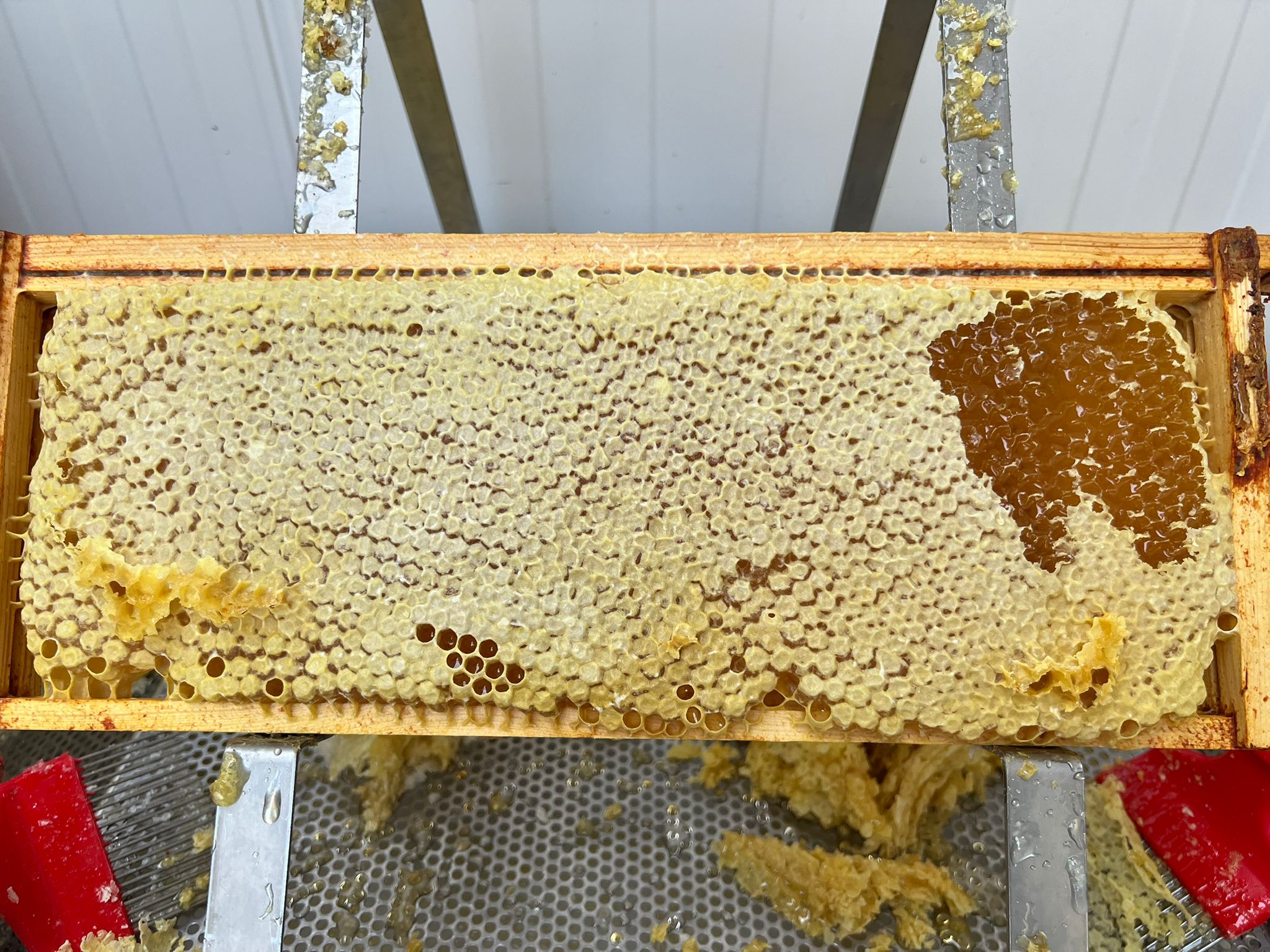
Lift a piece of cut comb and hold it up to the light. The cells are sealed under thin white wax, and the honey inside is exactly as the bees left it - not touched by an extractor, not heated, not filtered through anything. That is what comb honey is. It is honey in the form the bees intended.
Most people encounter honey as a liquid in a jar. Comb honey is something else. What is comb honey, exactly? It is honey still inside the wax cells the bees built and filled themselves, sold just as it was taken from the hive. The wax is edible. The honey never left the comb. Nothing was added and nothing was taken away.
There are three distinct forms of it - sections, cut comb and chunk - and they are worth knowing apart.
Sections: the traditional form
A section is a small self-contained frame, usually square or round, that sits inside the hive super. The bees build their comb directly into it, fill the cells with honey, and cap them with wax. When the season is done, the whole thing comes out of the hive intact - comb, honey and all - ready to be presented as it is.
Square wooden sections were the classic form in Ireland and the UK for generations. In the early 1950s, records show that two and a half million wooden sections were being shipped to Ireland annually for comb honey production - which tells you how common it once was. Round plastic sections (often called Ross Rounds after the beekeeper who refined the design) came later and are still used today. The advantage of a section is that the comb has never been cut or handled. It arrives at the table completely whole.
Sections are the most demanding form of comb honey to produce. The bees have to be persuaded to draw out comb in a small, awkward container rather than on a standard frame, and they are often reluctant. A strong nectar flow is usually needed to get them started. For that reason - and because the wooden section largely gave way to cut comb over the decades - they are less common now than they once were. When you do find them, they are something.
Cut comb: the everyday form
Cut comb is probably what most people mean when they picture comb honey today. The bees build and fill their comb on standard frames inside the super, and once the frames are capped and ready, the beekeeper cuts the comb free and divides it into pieces - usually squares or rectangles - which are packaged in clear containers.
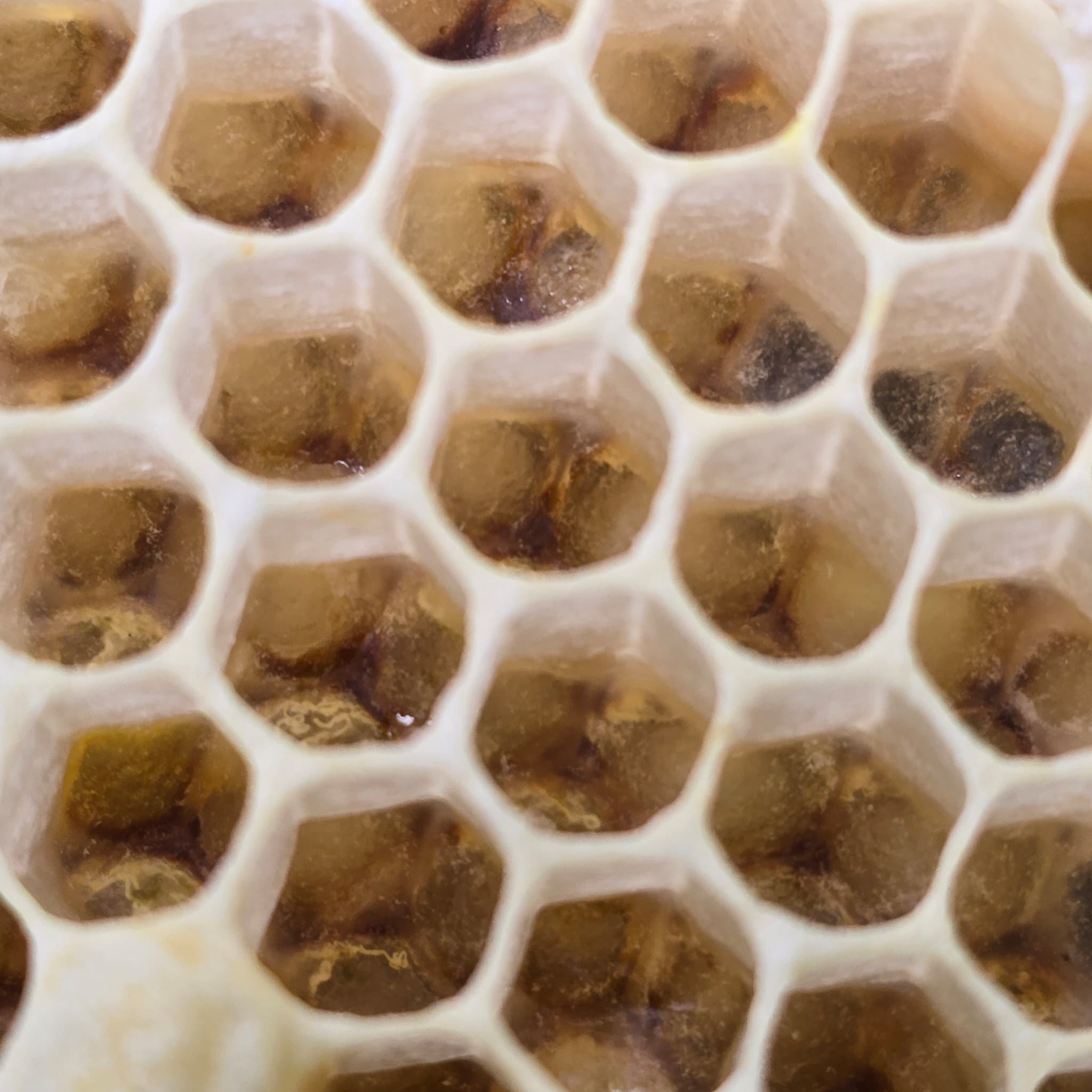
The process requires thin foundation, or no foundation at all. Regular wired foundation is too tough to eat comfortably; what you want is comb with a fine, tender wax that gives easily. The bees draw it out during a good nectar flow, pack it with honey, and seal each cell with a thin layer of fresh white wax. That white capping is a signal the honey is ready - the bees only seal a cell when the moisture content is right.
Cutting is done with a sharp hot knife or dental floss, working carefully to keep the cells intact. A little honey always seeps from the cut edges, so the pieces drain on a rack overnight before they go into a box. Freeze them after harvest - even briefly - to eliminate any wax moth eggs that might be present. Then they are ready.
The result is a piece of honeycomb that carries the full character of whatever the bees were working: the colour, the aroma, the flavour, all locked inside wax cells that have never been broken. If you want to know what raw honey actually means at its most direct, cut comb honey is the clearest possible answer.
Chunk honey: both in one jar
Chunk honey is a jar that holds a piece of cut comb sitting in extracted liquid honey. The comb is placed in the jar first, then runny honey is poured around it to fill the space. You get the visual appeal of the honeycomb and the convenience of liquid honey in the same container.
It is a practical way to present comb honey - especially for anyone who is curious but unsure whether they want a full block of comb. The liquid honey in the jar will often take on traces of beeswax aroma from contact with the comb, which gives it a slightly different character from honey extracted and jarred alone.
What makes comb honey different from a jar of honey
With extracted honey, the beekeeper puts the frames into a centrifuge - the extractor - which spins the honey out through the uncapped cells, leaving the comb behind. That comb can then be returned to the bees to use again. The honey is collected, filtered, sometimes gently warmed to make it flow, and jarred.
With comb honey, none of that happens. The honey never leaves the wax. There is no extractor, no filter, no heating. The comb is lifted from the hive and goes directly to the consumer. It is as close to taking honey straight from the hive as it is possible to get.
This also means that every batch of comb honey is specific to one harvest. Once the comb is cut, there is no more of it until the bees build and fill again next season. It is inherently seasonal and, because it takes good timing and a strong nectar flow to produce well, it is always made in smaller quantities than extracted honey.
How to eat comb honey
The wax is perfectly edible. It softens as you chew, and the honey floods out of the cells. Some people swallow the wax; others spit it out, like a piece of mild natural chewing gum. Both are fine. There is no right way.
A few approaches that work well:
- Lay a piece on a warm slice of sourdough or a plain cracker and let the honey melt slightly into it
- Serve alongside cheese - hard aged cheeses like a mature cheddar or a good blue work especially well with the sweetness of the comb cutting through the salt
- Break a small piece over plain yogurt with some toasted oats
- Put it on a board for people to help themselves, with fruit and bread beside it
If you are serving Peninsula Honey’s comb alongside one of the jarred varieties, try it next to the Heather honey. The heather has a bold, aromatic quality and a thick set that pairs particularly well with the waxy, chewy texture of comb - they come from the same landscape, the same season, the same bees.
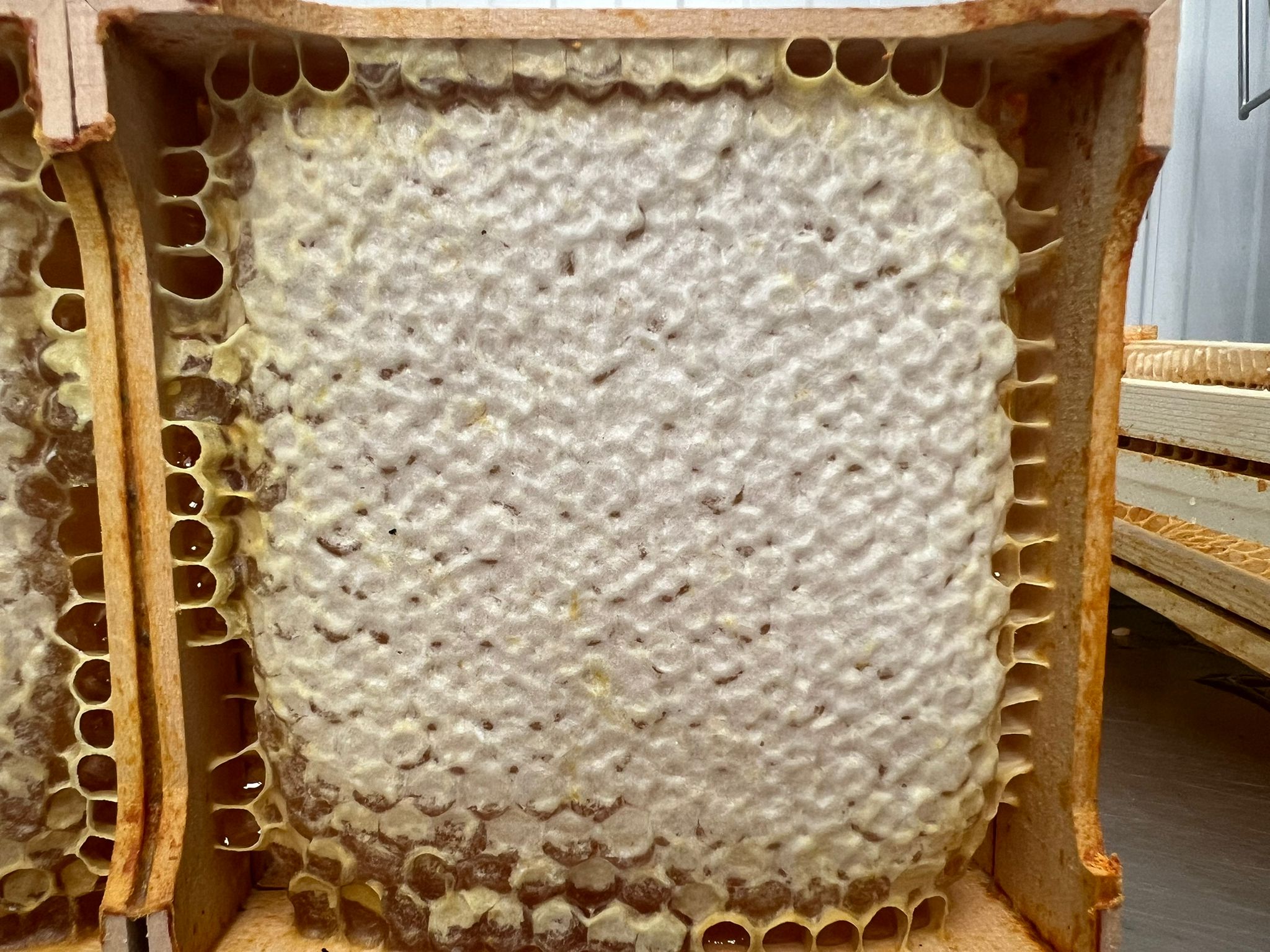
Comb honey from the Cooley Peninsula
On the Cooley Mountains, the main summer nectar flows come from bell heather at altitude and wildflower meadows lower down. That is what my bees are working when comb honey is at its best - the months when the flow is strong enough to draw out fresh white comb quickly and pack it tight.
Comb honey from this landscape carries whatever the bees were foraging. A piece cut in late summer from a heather flow will taste and smell different from one taken during the spring blossom. The wax itself holds the scent of the hive. You do not get that from a jar of extracted honey - or not in the same way.
Because the Cooley Peninsula is a specific place with a distinct mix of habitats - mountain heather, shoreline flora, hedgerow fields - the comb honey it produces is genuinely different from comb made on flat agricultural land. There is more variety in what the bees are drawing from, and that shows in the flavour.
A few questions people ask
Can you eat the wax? Yes. Beeswax is food-safe and passes through the digestive system without any issue. It softens as you chew and has a mild, slightly floral taste of its own. Most people find it pleasant, or at least inoffensive.
Does comb honey crystallise? The honey inside the cells can crystallise over time, just as any raw honey will. If it does, the texture changes but the flavour does not. You can gently warm the comb in a bowl of warm water to soften it, though the wax may lose some of its shape if it gets too warm. Better to eat it fresh and at room temperature. For more on why honey crystallises, this post on the topic covers it properly.
How long does it keep? Store comb honey in an airtight container at room temperature, away from direct sunlight. Honey itself keeps indefinitely - there is archaeological evidence of honey surviving in sealed vessels for thousands of years. The comb is best enjoyed within a year of harvest, while the wax is at its most tender.
Is chunk honey the same as comb honey? Chunk honey contains comb honey - a piece of it sits in the jar. The liquid honey around it has been extracted separately. So it is not quite the same thing as cut comb on its own, but the comb itself is the same product.
Comb honey is not always easy to find, and when it is made in small quantities by one beekeeper working one landscape, it goes quickly. If you are looking for comb honey from the Cooley Peninsula, see what is available this season. When it is gone, it is gone until the bees build again.