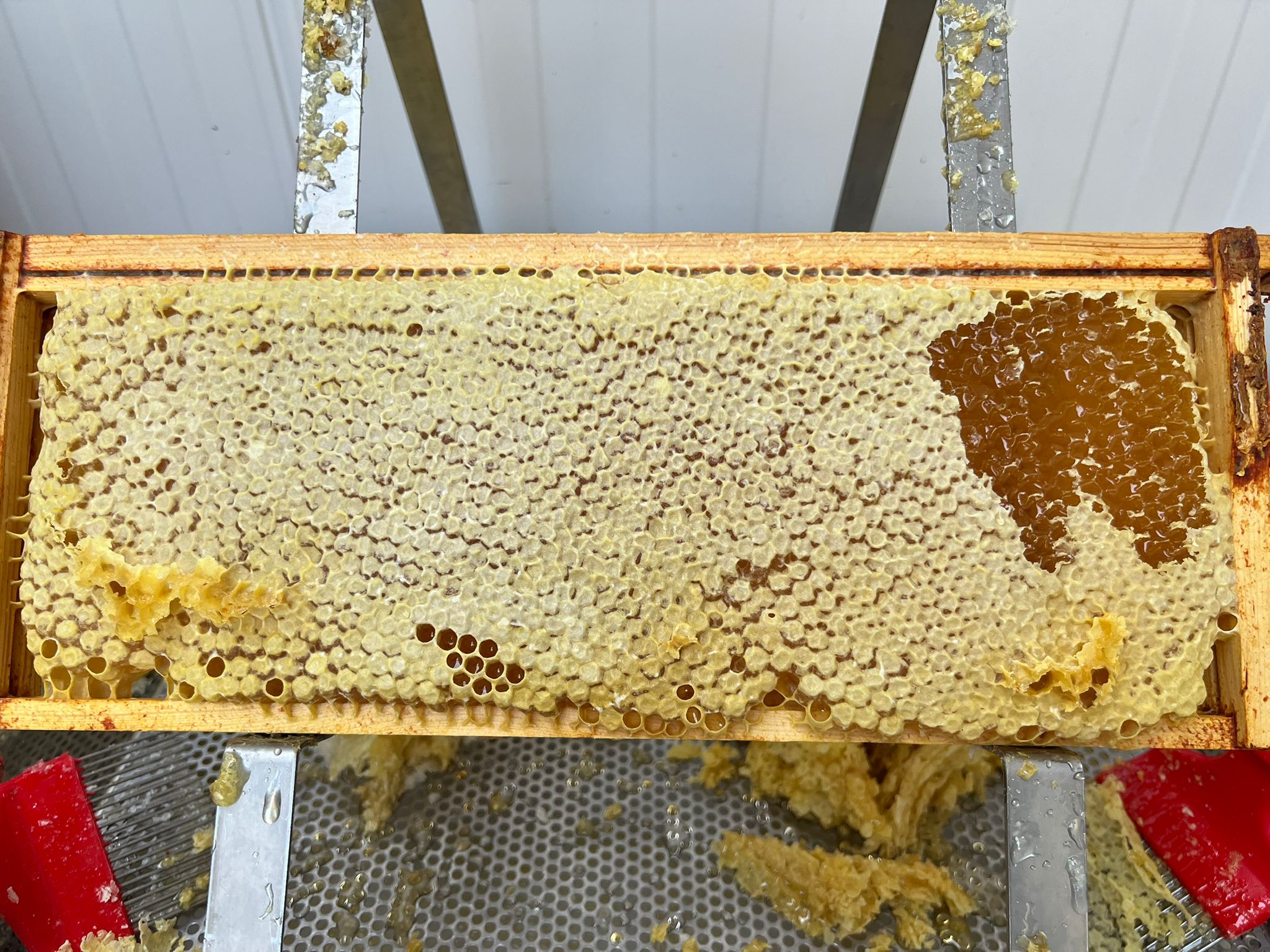
People sometimes assume honey is just honey - a golden jar that tastes much the same whether it came from a hive in Louth or a warehouse in Eastern Europe. Walk through a food market anywhere in Ireland and ask a few beekeepers what is in their jars, and the real picture is far more varied and more interesting than that.
What honey is produced in Ireland depends on where in the country you are, what is in flower, and what season you are in. Ireland’s landscape - wet, mild, botanically rich, with an unusually long ivy season - produces honeys that do not taste like anything made elsewhere. Here is a straightforward guide to the main types, the bees behind them, and how to make sure what you are buying is the real thing.
The main honeys produced by Irish bees
Heather honey
This is the one people seek out. Bell heather flowers from mid-July through August on the bogland and moorland slopes of mountains across Ireland - the Wicklow hills, the west of Ireland, Donegal, and here on the Cooley Mountains above Carlingford Lough. Bees work the heather hard for a short window, and the result is a honey unlike anything else.
Bell heather honey crystallises naturally over time like any raw honey, and it pours and spoons normally. (Ling heather, a different plant, is the one known for an unusual gel-like set - but that is ling, not the bell heather worked here.) The character of bell heather honey is in its flavour, not its texture.
The taste is dark amber, bold and aromatic, with a floral depth, a slight resinous quality, and a long, almost port-like finish. It is not a mild honey. It suits a strong cheese, a drizzle over oat-based dishes, or stirred through cream. Heat dulls those aromatics, so the no-cook uses are where it really shines - enjoy it cold or at room temperature.
On the Cooley Peninsula, I harvest heather honey from hives positioned on the mountain slopes, where the bell heather grows in open moorland above the lough. Each batch carries the character of that specific ground.
If you want to understand heather honey properly before you buy, the guide to heather honey in Ireland covers what to look for and what to avoid.
Ivy honey
Ivy is one of the most important late-season nectar sources in Ireland, and it produces a honey with a character entirely its own. The common ivy (Hedera helix) flowers from late September into November - well after most other nectar sources have finished. For bees, it is a last chance to build winter stores. For beekeepers, it is one of the trickiest crops to manage.
Ivy honey sets very hard and very pale, often almost white, within days of being extracted. It crystallises so rapidly that if a beekeeper does not get it out of the comb quickly, it will set solid in the frames and become impossible to extract. Handled well, the result is a firm, smooth, spreadable honey with a mild flavour and a faint aromatic quality - slightly menthol, slightly floral, nothing like heather.
It is an autumn honey - specific to that part of the year when the hedgerows are still alive but everything else has wound down. At Peninsula Honey, the ivy harvest comes last, before the hives settle into winter.
For a closer look at why ivy honey behaves so differently from others, this piece on ivy honey setting hard and pale explains the science behind it.
Wildflower and clear honey
Most of what Irish beekeepers produce across the main season - roughly April through August - falls into what is broadly called wildflower or clear honey. This is honey gathered from whatever mix of flowers is available: hawthorn, dandelion, clover, blackberry, sycamore, phacelia, and the hedgerow blooms that shift through the season. The resulting honey is typically golden, runny or lightly set, and varies in colour and taste depending on where and when it was taken.
Irish wildflower honey can range from pale and floral in spring to deeper amber and more full-flavoured by high summer. In a year with a good clover flow, it will be light and sweet. In a wetter season where the bees were mainly working hedgerow blossom, it will have more body.
At Peninsula Honey, what I sell as Clear honey is the everyday golden jar - raw, unblended, unheated, taken from the hive at its natural consistency. It is not a lesser honey. It is a record of what was in flower in this particular landscape during that particular harvest.
Wildflower honey varies more year to year than monofloral types like heather - the blend of flowers changes with the season, the weather, and what is in bloom nearest the hives.
Soft set honey
Soft set is not a floral type so much as a texture. It is honey that has been allowed to crystallise in a controlled way, producing a smooth, spreadable consistency somewhere between butter and set yoghurt. It spreads evenly on bread without tearing, which makes it one of the most practical everyday honeys.
The base nectar can be wildflower or any of the main Irish sources. The texture comes from seeding the honey with finely crystallised honey and keeping it at a low temperature while it sets. Raw soft set honey retains all the enzymes and characteristics of unheated honey - it is simply a different texture.
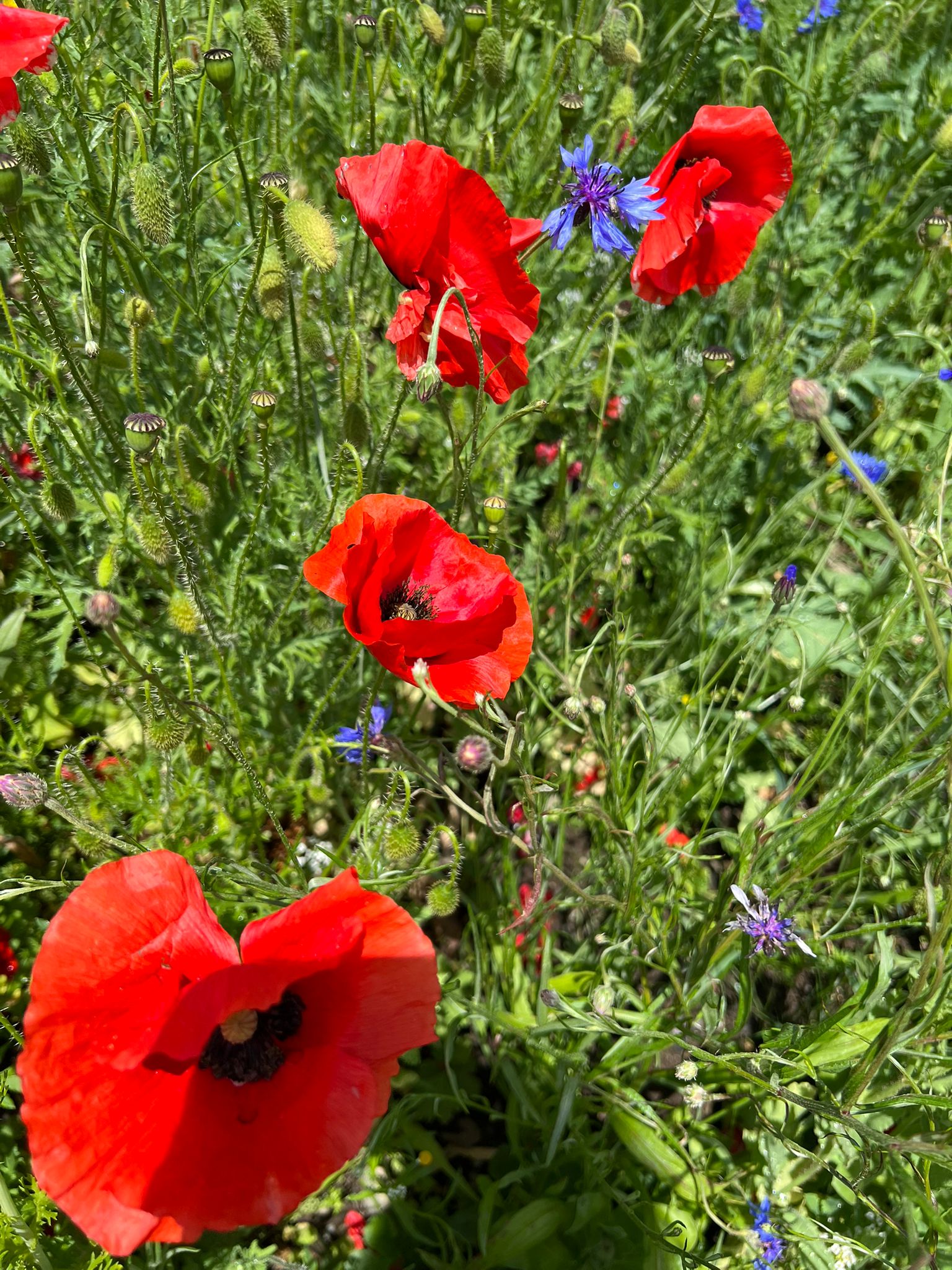
The bee behind Irish honey: Apis mellifera mellifera
The native Irish honeybee is Apis mellifera mellifera - the northern European dark bee, sometimes called the black bee. DNA analysis has confirmed that nearly 98% of honeybees in Ireland today belong to this subspecies. That is remarkable given how much imported queen stock has moved through the country over the decades.
This bee evolved in northern Atlantic conditions and is well-suited to Irish weather in ways that imported strains are not. It builds up slowly in spring - matching the pace of a cool Irish season - forages from February through late October, and handles long damp winters without the losses that warmer-climate strains can suffer.
The native bee is also under real pressure. The Varroa mite (Varroa destructor) has been the single biggest threat to colonies since it arrived in Ireland. Organisations like the Native Irish Honey Bee Society work to conserve and breed the best examples of the subspecies. Buying from a small Irish beekeeper who keeps native bees is, quietly, part of that effort.
What about clover honey? And rapeseed?
Two other significant sources. Clover is widely grown in Ireland and gives a light, clean honey that is popular with lowland beekeepers - mild flavour, fine crystal set over time. Rapeseed (oilseed rape) produces large volumes quickly but crystallises extremely fast, often in the comb, setting pale and firm with a mild taste. Both are more typical of agricultural lowland areas than of mountain-based beekeeping.
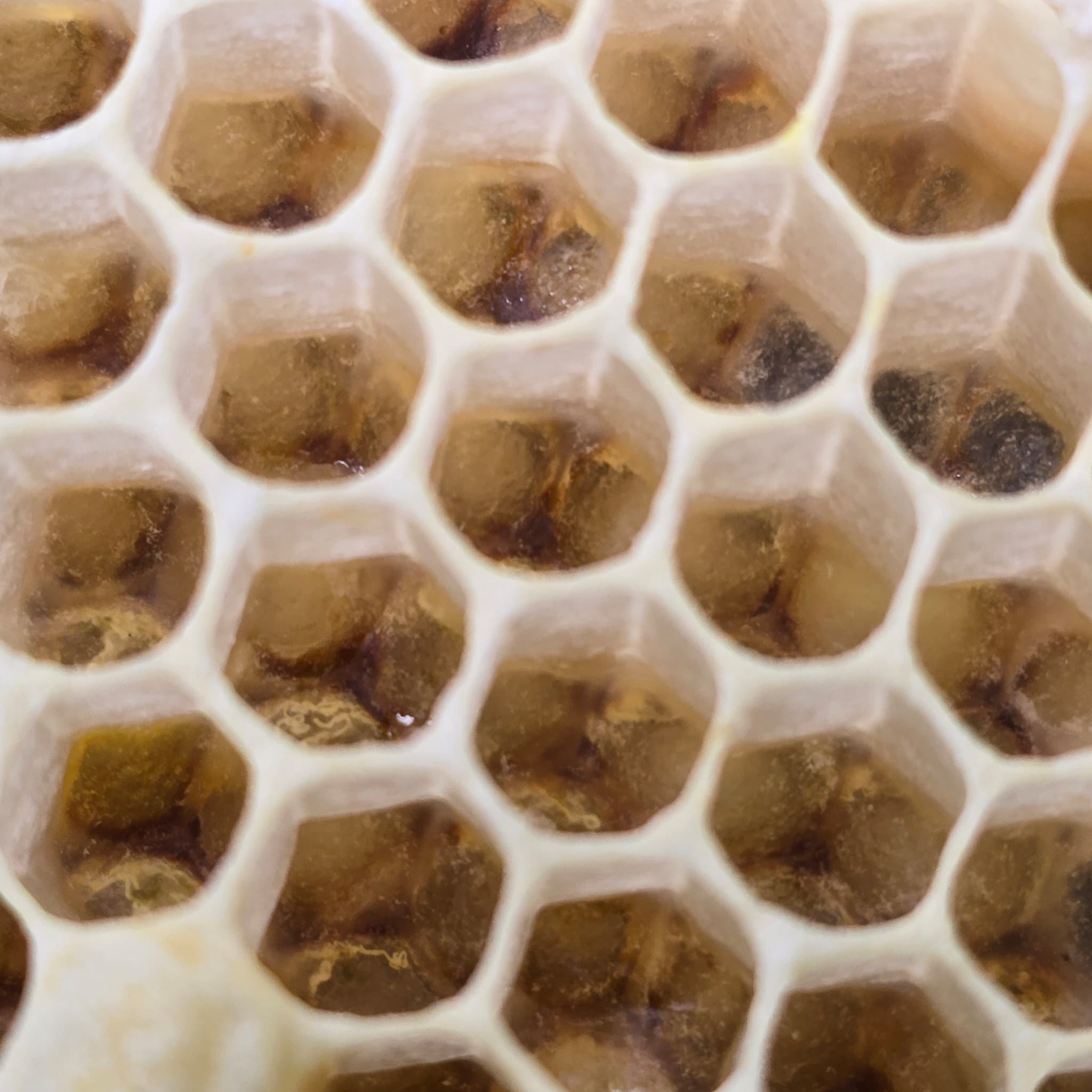
How to buy genuinely Irish honey
This is where it pays to read carefully.
A lot of honey sold in Irish supermarkets carries a label that says “Blend of EU and Non-EU Honey.” That phrase can mean almost anything. There is currently no requirement to state what percentage of the jar came from Ireland, or from anywhere specific. The blend could contain mostly honey from outside Europe, with a small amount of EU honey to justify the label. Regulation is changing - from June 2026, country-of-origin rules will require blends to list all countries in descending order of volume - but single-origin Irish honey from a named beekeeper is still the clearest guarantee.
When you want to be sure:
- Look for a named beekeeper and a named location. Not just “Co. Louth honey” but a real apiary address.
- Look for a batch number and harvest date. These tell you someone is keeping records and taking the provenance of the jar seriously.
- “Raw” on a label should mean the honey has not been heated above hive temperature. Some producers use the term loosely - if there is any doubt, ask.
- Buying direct from the beekeeper - at a market, from the farm gate, or through their own website - removes any ambiguity.
How to tell if honey is real covers these practical checks in detail, including what to look for on a label before you buy.
Every jar from Peninsula Honey carries a batch number, a harvest date, and my name. It is collected from hives on the Cooley Peninsula and sold locally - for collection at Mullabane, Carlingford, and at markets in the area. There is no national distribution, which means every jar is traceable to a specific season and a specific part of this landscape.
FAQ
Is Irish honey better than imported honey?
Not automatically. Origin does not guarantee quality - an Irish beekeeper can produce poor honey just as a beekeeper abroad can produce excellent honey. What matters is whether the honey is raw, unblended, properly harvested, and labelled honestly. Irish honey that meets those standards does have the advantage of coming from a landscape you can visit and a beekeeper you can talk to. That traceability is genuinely worth something.
Can you get honey from the Cooley Mountains?
Yes - the Cooley Mountains are the foothills above Carlingford Lough in Co. Louth, and Peninsula Honey is based there. The heather on those slopes goes into the heather harvest each August. It is not widely distributed, which is the point - it is a single-origin honey from a specific and named place.
Why does Irish honey sometimes set solid in the jar?
Crystallisation is a natural property of real honey, not a flaw. All honey will eventually crystallise - some quickly (ivy, rapeseed), some more slowly (bell heather, wildflower). If your jar of Irish honey has gone firm, it is doing exactly what raw unprocessed honey does. Why honey crystallises explains the process and how to soften it if you prefer it runny.
What is the difference between raw Irish honey and supermarket honey?
Mainly heat treatment and blending. Most supermarket honey is heated and filtered to stay liquid on the shelf for longer. Raw honey is not heated above natural hive temperature, which preserves the enzymes, pollen, and full flavour of the original nectar. The difference is clear in the taste.
Ireland makes some genuinely distinctive honey - heather from the mountain slopes, ivy from the autumn hedgerows, wildflower from the long growing season, and soft set from patient controlled crystallisation. What makes any of it worth buying is traceability: knowing where it came from, who kept the bees, and how it was handled from hive to jar.
If you are curious about what the Cooley Peninsula produces across the year, visit the Peninsula Honey page, where you will find the current jars available for local collection at Carlingford.