Open a jar of heather honey for the first time and the smell alone is a surprise. It is rich, earthy, a little smoky, with a floral sharpness underneath. Before you have even tasted it, you know this is not the pale, neutral honey in a squeezy bear from the supermarket shelf.
Then you taste it, and the depth of flavour tells you something about itself. This is the boldest jar in the range.
What heather honey actually tastes like
The flavour is bold and full - tangy, aromatic, with a long finish that lingers after you swallow. Compared with a light floral honey, heather sits at the other end of the scale. Less sweet overall. More complex. There is an earthy depth to it, and a faint bitterness in the aftertaste that is not unpleasant at all - it is what makes the flavour last.
The aroma is what stops people first. It carries the moorland in it: something between a dried wildflower and a peat fire, with a brightness that cuts through. If you have ever walked across a heather-covered hillside in late summer and stopped to notice the smell, you will recognise it.
It is one of the most distinctive honeys produced anywhere in Ireland or Britain, and once you know it you do not confuse it with anything else.
Why heather honey tastes so different
This is the thing that stays with most people, and it is worth explaining properly.
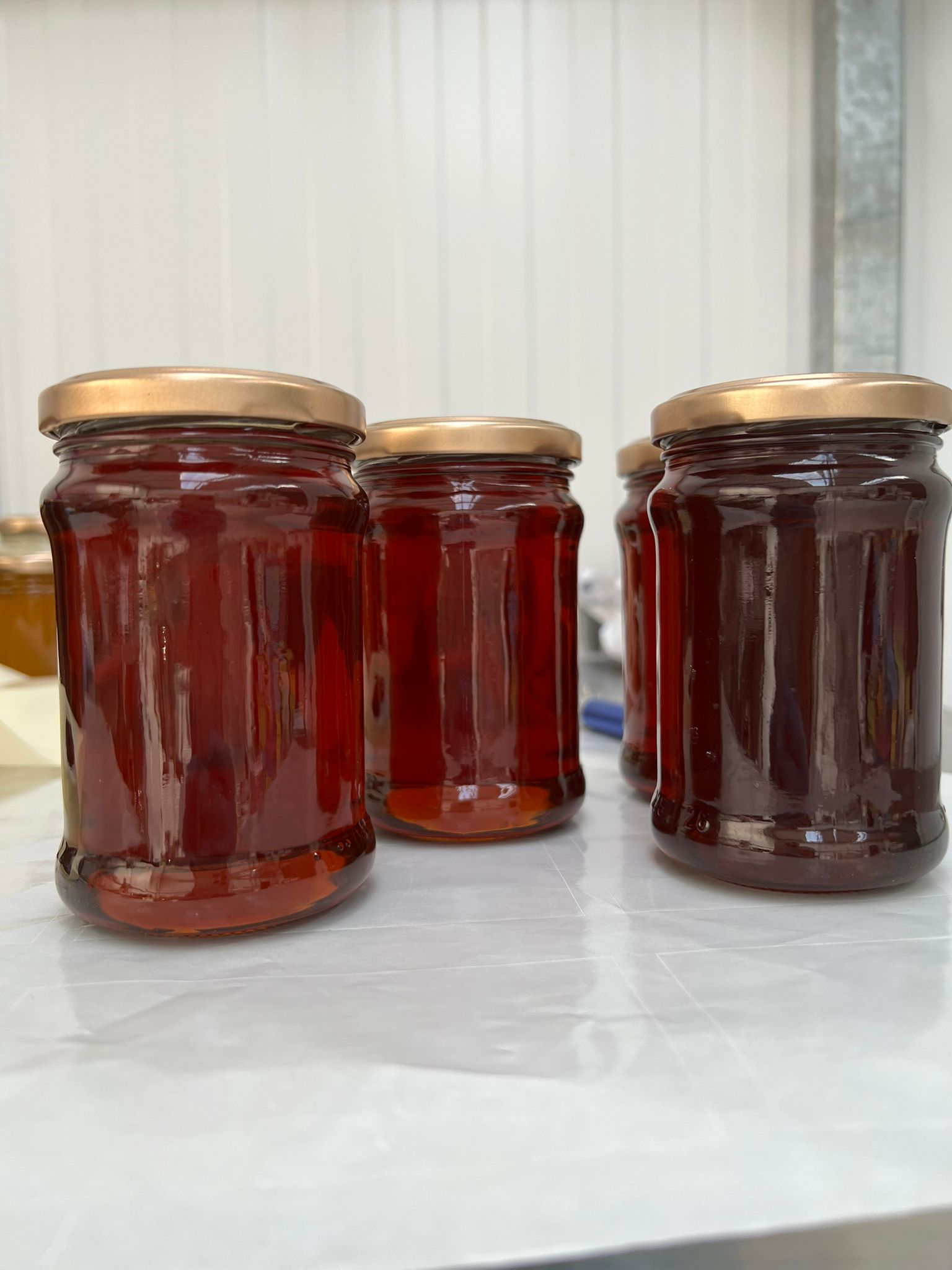
My heather honey comes from bell heather (Erica cinerea), the flower that turns the open slopes of the Cooley Mountains purple in summer. It is a dark amber honey, almost reddish in the right light, and the flavour has a port-like depth to it: bold, complex, slightly resinous, with a long finish that lingers after you swallow. There is nothing neutral about it.
That depth is the whole point. Where a light floral honey gives you clean sweetness and not much else, bell heather gives you layers - the earthy moorland aroma, the faint pleasant bitterness in the aftertaste, the resin and the florality sitting alongside each other. It is the boldest jar I make.
You may have read that LING heather (Calluna vulgaris), a different plant, produces a famously gel-like honey that has to be handled in unusual ways. Mine is not that. Bell heather honey extracts, pours, and spoons like normal honey, and it crystallises naturally over time like any raw honey. Its distinctiveness is its flavour, not its texture.
What it is not suited to is heating. The aromatics that make heather honey worth seeking out are delicate, and even gentle warming flattens them. Raw and unheated is how it should reach you, and cold or room-temperature is how you should use it.
If you want to read more about how raw honey differs from what most of us grew up eating, the post on what raw honey actually is covers the basics.
Bell heather versus ling heather
There are two types of heather that matter to beekeepers in Ireland: bell heather (Erica cinerea) and ling heather (Calluna vulgaris).
Bell heather is what my bees work. It flowers through summer on the open slopes, and it produces a honey that is dark, reddish, and bold in flavour. It extracts normally, pours and spoons like any honey, and crystallises naturally over time. Its character is all in the taste.
Ling heather is the other one, and it behaves quite differently. Its honey has a gel-like set that does not spin out easily in a centrifuge - it is the heather honey people are usually thinking of when they describe an unusual texture. That is ling, not bell. My honey is bell heather, so it does not have that property at all. The two flowers are easy to confuse by name, but the honeys are not the same.
What they share is the moorland character in the flavour. Bell heather carries the aroma and depth of the slopes it came from, and that is exactly what makes it worth seeking out.
From the Cooley Mountains
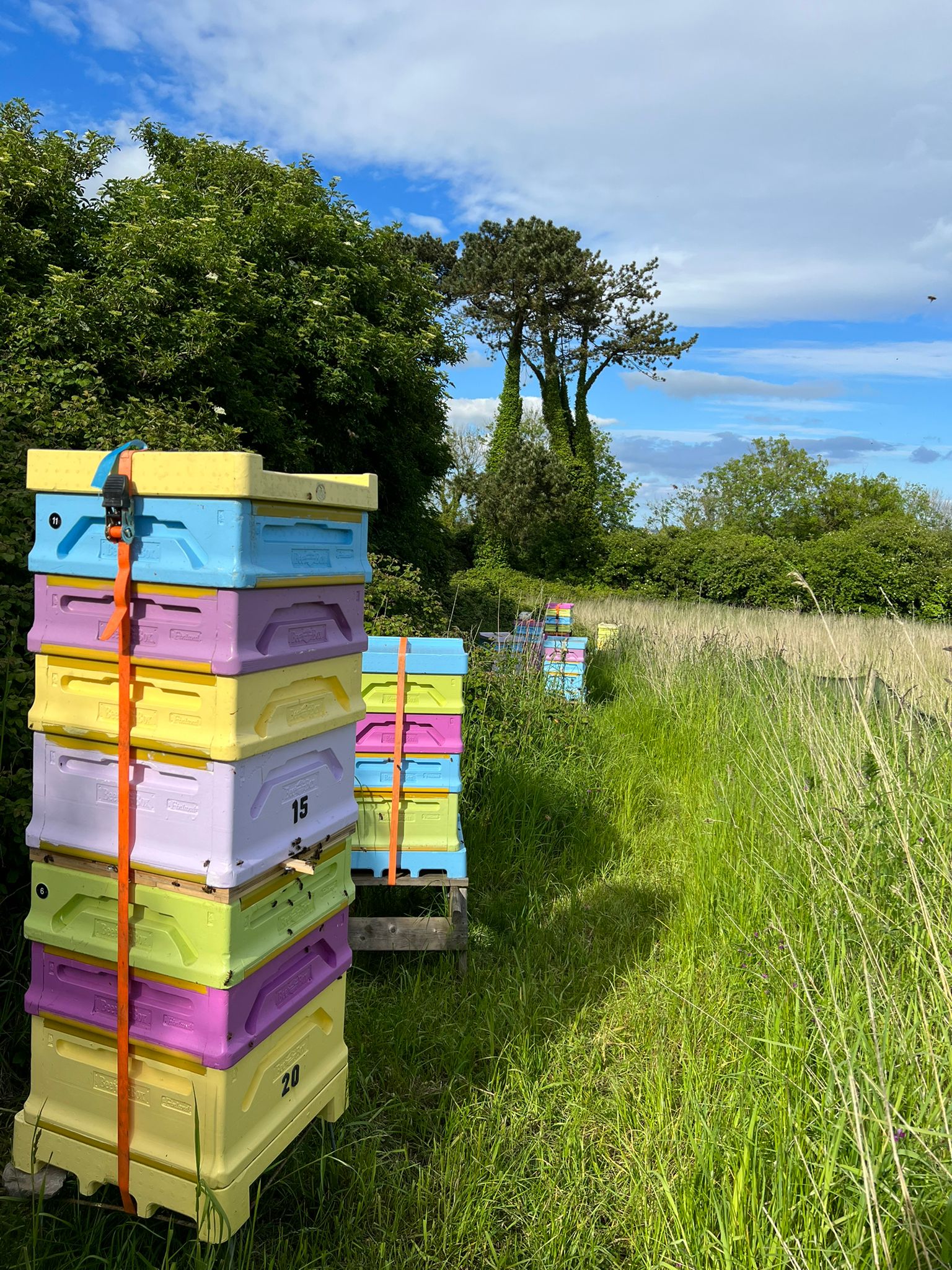
My bees work the slopes of the Cooley Mountains above Carlingford Lough. In summer, when the bell heather is fully open on the higher ground at Mullabane, the hives fill with that dark, aromatic honey that is impossible to mistake for anything else.
The landscape matters here. Cooley Peninsula honey carries its location in the flavour because the bees are foraging one specific place: mountain heather above, sheltered hedgerow fields below, and the lough to the south. There is nothing blended or averaged about it. Each batch reflects where those bees flew that season.
Every jar is raw and unheated. The aromatics that give heather honey its character are the first casualty of warming, so I do not warm it. It goes from the hive to the jar as it is.
How to use heather honey
Because heather honey should not be cooked, the best uses are all no-heat. That turns out to be a long list.
On a cheese board. Heather honey is one of the best things to put next to a strong blue cheese - the earthiness and slight bitterness in the honey cuts through the fat and richness in a way that a milder honey cannot. It works well with aged hard cheeses too: a mature Irish cheddar, a sharp gouda. Spoon it directly from the jar onto the board and let people help themselves.
Stirred through cream. Take a bowl of lightly whipped cream and stir a spoonful of heather honey through it. The honey ribbons through without fully blending, carrying its dark aromatic depth into the cream. Serve with fruit, with oat biscuits, or with a plain sponge cake. This is one of my favourite uses for it.
Over porridge. A spoon of heather honey stirred into hot porridge just before eating is excellent - the heat from the porridge is gentle enough that the aromatics do not disappear, and the honey brings a depth that white sugar does not come close to.
On sourdough or oatcakes with butter. Nothing else needed. The honey is interesting enough to be the whole point of the bread. If you want to make the oatcakes from scratch, there is a recipe for heather honey oatcakes that pairs them well.
With yogurt. Thick natural yogurt with a spoonful of heather honey spooned over the top. The bitterness in the honey contrasts well with the sharp acidity of a good plain yogurt.
A small spoon or honey dipper is all you need to serve it. The flavour is bold enough that a little goes a long way.
A note on pairing heather honey with different foods
A few things to keep in mind.
Strong flavours work with heather honey, not against it. This is not a honey to use where you want a neutral sweetness - it will assert itself. Mild soft cheeses tend to get lost next to it. Rich, aged, or funky flavours stand up to it well.
A strong herbal or peated whiskey alongside heather honey on a board brings out the moorland character in both. This is not a delicate honey; it has the confidence to sit beside food that has flavour of its own.
If you want a honey that disappears into the background and just sweetens, heather is not what you are looking for. Try the Clear honey from the Cooley Peninsula instead - it is the everyday golden runny jar that is versatile without being plain.
Frequently asked questions
What makes heather honey taste so different?
The flavour. My heather honey comes from bell heather on the Cooley slopes, and it is dark amber, bold, aromatic, and complex, with a slightly resinous, almost port-like depth and a long finish. It pours and spoons like normal honey and crystallises naturally over time like any raw honey - the distinctiveness is all in the taste, not the texture. Enjoy it cold or at room temperature, because heat dulls the aromatics.
How is heather honey different from regular honey?
Most everyday honey is runny, mild, and made from a blend of sources. Heather honey is single-flower (or predominantly so) and bold in flavour. The taste is earthier and more complex, with a longer finish. It is typically rarer and more expensive than blended honey because the season is short and production is small-scale. You can read more about the difference between raw and supermarket honey if you want a fuller picture.
Can I heat heather honey in baking or cooking?
You can, but the aromatics will reduce significantly with heat. The flavour that makes heather honey worth seeking out is best preserved cold or at room temperature. If you are using honey for baking, the everyday Clear honey is a better choice. Save the heather for no-cook uses where the full flavour comes through.
When does heather bloom in Ireland?
Bell heather, the source of my heather honey, comes into flower from early summer on the open slopes. Ling heather, a different plant, flowers a little later, from late July through September. The timing varies with altitude and the year - a wet summer can cut the season short.
Finding heather honey
Genuinely good heather honey is not something most supermarkets carry. The short season and the small-scale production of most heather honey beekeepers mean it does not scale in the way that mass-market honey does.
If you are in the Carlingford area, the heather honey is available directly from the apiary at Mullabane for local collection, and at markets in the area. Each batch is numbered and harvest-dated, so you know exactly which season you are opening.
For anyone curious about the range - heather honey alongside soft set, ivy, and clear - a look at the full harvest gives a sense of how the year moves and what to expect from each jar.
Come to it cold, with an open mind about flavour. That is the only preparation you need.