Pick up a jar of honey in Ireland and the label will often say “wildflower” or “mixed blossom”. Pick up one of mine and it says “Heather” or “Ivy”. That difference is not just naming - it is a completely different approach to what honey can be.
Here is what those words mean in practice, and why the distinction matters once you start paying attention to how honey actually tastes.
What is monofloral honey?
Monofloral honey - sometimes called single origin honey - comes predominantly from the nectar of one flowering plant. Not exclusively. Bees do not take instructions, and they will visit other flowers if they are available. But when the dominant plant in a hive’s foraging range is in full bloom, that nectar dominates the honey. The flavour, the colour, the texture, and the way it sets in the jar all reflect that one source.
For a honey to be considered genuinely monofloral, pollen analysis (palynology) typically needs to confirm that a significant proportion of the pollen present - often cited as around 45% for many floral types, though this varies by species - comes from one source. In practice, a well-positioned hive during a strong bloom can produce honey that is far more concentrated than that.
In Ireland, true monofloral honeys are rare because the landscape is so varied. Heather and ivy are two of the only plants that bloom in sufficient density and duration to produce a reliably single-source harvest. Both grow abundantly on the Cooley Mountains. Both have their own distinct character - and that character is not subtle.
What is wildflower honey?
Wildflower honey - also called polyfloral or mixed blossom honey - comes from whatever flowers the bees can reach across the season. Clover, hawthorn, blackberry, dandelion, meadowsweet, bramble, willow herb: the bees move across a shifting mix of sources, and the honey reflects all of them. No single flower dominates.
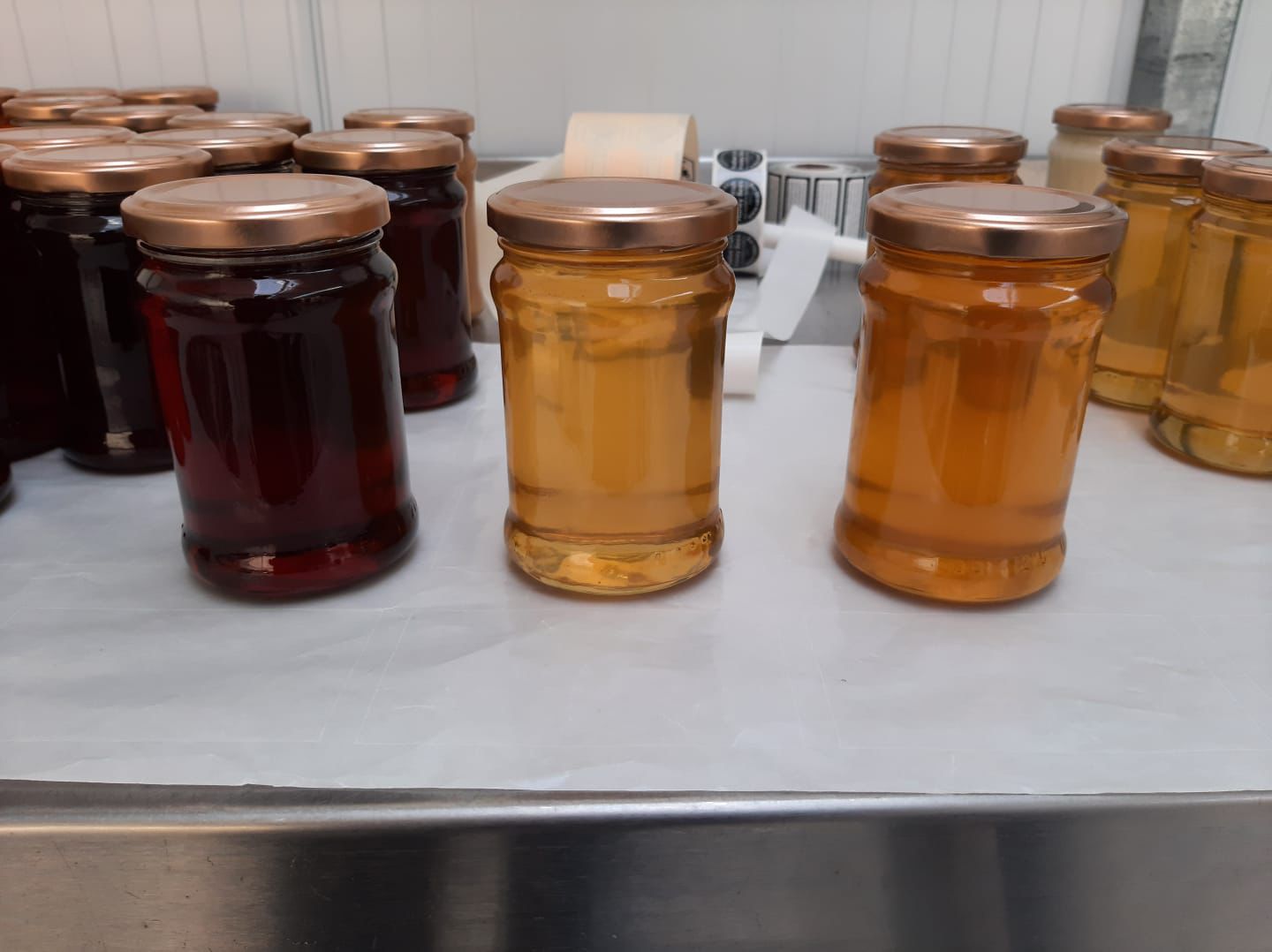
That is not a flaw. Wildflower honey can be full of flavour and character, especially raw and unblended from a producer who lets it speak for itself. My Clear honey - the everyday golden runny jar - sits closer to this end of the spectrum. It draws from the hedgerow and field flowers below the mountain: lighter, floral, gentle on the palate. Good for everything from a morning spoonful to stirring through porridge or drizzling over a ripe pear with a piece of hard cheese.
What wildflower honey does not have is the sheer intensity of a true single-origin jar. That comes from concentration.
Why single-origin honey tastes of somewhere specific
The flavour compounds in honey originate in the nectar. Nectar from heather contains a very different suite of aromatic molecules than nectar from clover, from ivy, or from hawthorn. Those molecules survive in raw, unheated honey. When you heat honey in processing, many of them break down. When you blend batches from multiple sources or multiple regions, they average out into something milder and more neutral.
A raw, single origin honey from one place and one season keeps all of that intact.
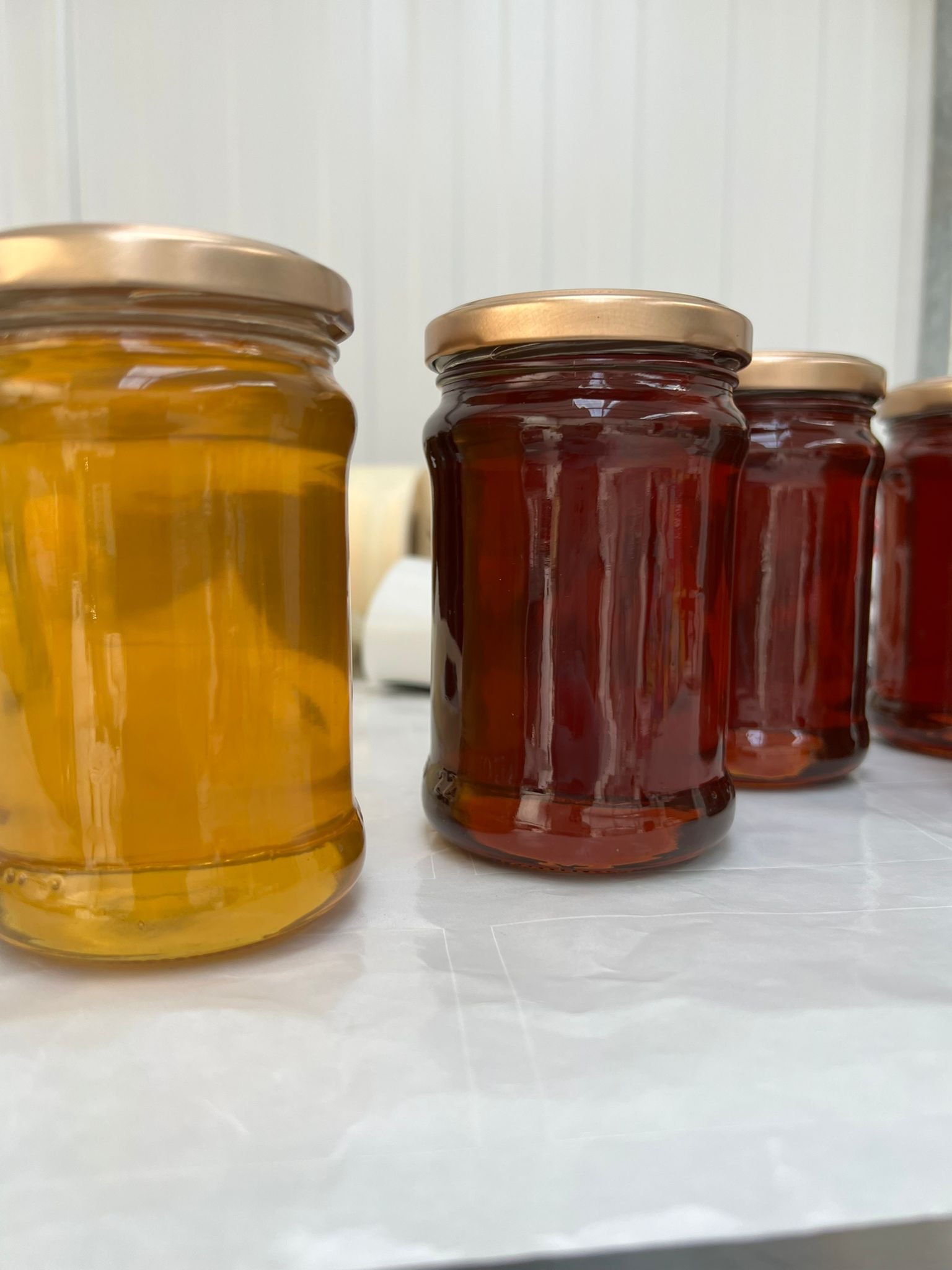
Heather honey from the Cooley Mountains is a good example. Bell heather (Erica cinerea) grows on the open slopes above Mullabane through high summer. The bees work it hard during those weeks when not much else is flowering at altitude. The resulting honey is dark amber, bold, aromatic, and slightly resinous, with an almost port-like depth and a long finish that you will not mistake for anything else. It is the boldest jar in the range. It extracts normally, spins from the comb and pours like any honey, and over time it crystallises naturally as raw honey does. A note worth making: ling heather (Calluna vulgaris) is the heather famous for a thick, jelly-like, thixotropic set, but that is a different plant. Peninsula Honey is bell heather, so it behaves like normal honey - the distinctiveness is all in the flavour. Spread it cold on warm bread and it melts in. Stirred through thick cream or set beside a strong cheese, it holds its character against bold flavours.
Heat dulls the aromatics, so it is best enjoyed cold or at room temperature, and I never use it in anything cooked. Its best uses are the ones that let the aromatics stay alive: a cheese board, a cold drizzle, stirred through yoghurt or cream.
Ivy honey is the other end of the season. Common ivy (Hedera helix) flowers in autumn when almost nothing else does - September into October on the Cooley Peninsula - and it is a lifeline for bees building their winter stores. The nectar crystallises so rapidly that the honey can begin to set while it is still in the comb, which is why ivy honey always comes out of the hive pale and firm. Mine sets hard and pale, with a mild, slightly aromatic, faintly mentholated flavour that is quite unlike heather. Where heather is bold and assertive, ivy is cool and clean. Both are single-origin honeys, but tasting them side by side, they could be from different counties.
You can read more about what drives those differences in What makes Cooley Peninsula honey different, and if you want to go deeper on why honey crystallises differently depending on its nectar source, Why Does Honey Crystallise? covers the science plainly.
The terroir question
Terroir is a word borrowed from wine, and it applies to honey just as honestly. It means the taste of a place: the specific combination of soil, climate, plant life, and season that makes one thing taste different from another thing that seems, on paper, to be the same.
Single origin honey from the Cooley Peninsula is not interchangeable with heather honey from, say, the Wicklow Mountains or the Connemara bogs. The heather plant is the same species, but the altitude, the coastal air from Carlingford Lough, the timing of the bloom relative to other summer flowers - all of that influences what the bees collect and in what proportion. Every harvest is traceable to one address, one beekeeper, one season. That is what makes the batch number and harvest date on the label mean something. It is not decoration.
This also means that single-origin honey varies year to year. A cool, wet August can shorten the heather season. A warm autumn can extend the ivy bloom. Those changes show in the jar. I think that is a feature, not a problem - it means what you are tasting is real.
Monofloral or wildflower - which should you choose?
It depends what you want from the honey.
For everyday use - stirring into tea, spreading on bread, drizzling over fruit - wildflower or clear honey is often the more practical choice. It is gentler, more versatile, and works well in most recipes where honey is one ingredient among several. If you are thinking about soft set vs runny honey for everyday spreading, that is a useful comparison worth reading.
For tasting honey as its own thing - the way you might taste a good cheese or a glass of wine from a named vineyard - a monofloral honey from a specific place and season gives you something to pay attention to. The heather has a boldness that holds up against strong flavours. The ivy has a pale, clean character that works well alongside mild ingredients. Both are worth trying without combining them with anything else first.
If you are buying honey as a gift and want something that feels genuinely considered rather than generic, single-origin makes the story easy to tell. The person who receives a jar of Cooley heather honey with a batch number and harvest date on the label knows they are holding something specific. The best Irish honey gifts piece has more thoughts on choosing between the varieties for gifting.
FAQ
Is all Irish honey wildflower honey?
Most of it is, yes. Ireland’s landscape is a patchwork of hedgerow, pasture, and garden, and most Irish beekeepers’ hives draw from a wide range of sources across the season. True monofloral Irish honeys - heather, ivy - require the bees to be positioned in or near a single dominant crop during its flowering window.
How can I tell if a honey is genuinely monofloral?
Look for a specific flower name on the label, a harvest date, and a producer who explains where the hives were. Pollen analysis is the scientific standard, but a beekeeper who is transparent about their location and season is telling you the same thing more simply. A honey that just says “Irish honey” or “mixed blossom” will not tell you much beyond the country of origin.
Does monofloral honey taste stronger?
Usually, yes - though “strong” is not quite the right word. It tastes more distinct. Heather honey is bold and aromatic. Ivy honey is mild but very clean and specific. Clear or wildflower honey tends to be rounder and more general in flavour. None is better in every situation; they are just suited to different uses.
Does my heather honey pour?
Yes. Peninsula Honey is made from bell heather (Erica cinerea), which behaves like any normal raw honey - it pours and spoons freely and crystallises naturally over time. You may be thinking of ling heather (Calluna vulgaris), a different plant whose honey has a famous thick, jelly-like thixotropic set. Mine is not that. The distinctiveness of bell heather honey is its bold, aromatic flavour, not its texture. What Does Heather Honey Taste Like? covers this in more detail if you are curious.
If you want to taste the difference between monofloral and wildflower honey from the same small corner of Ireland, the current harvest is available for local collection in Carlingford. Details on the homepage.