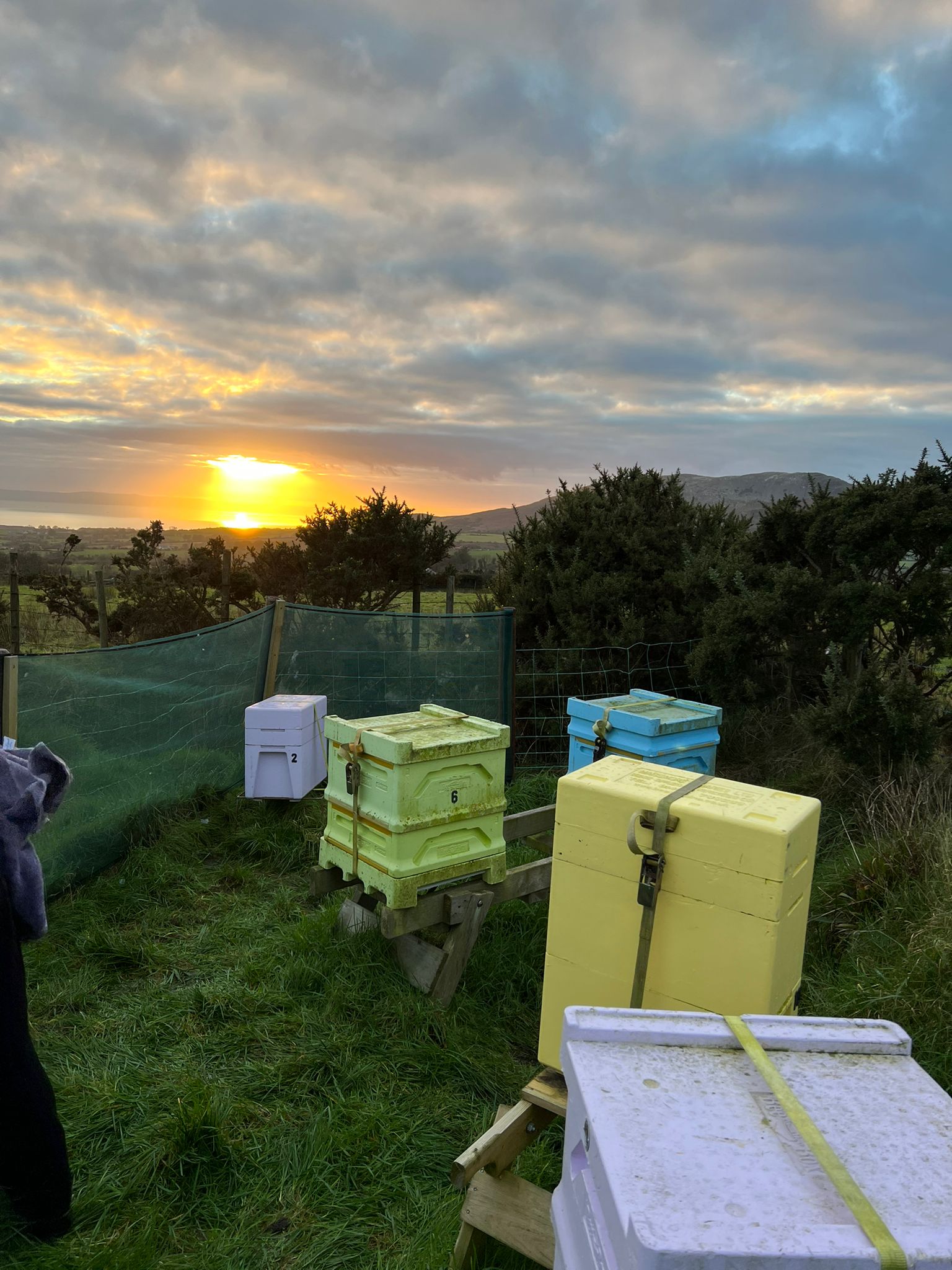
The hives sit above Carlingford Lough, in the foothills of the Cooley Mountains, on the peninsula that gives this honey its name.
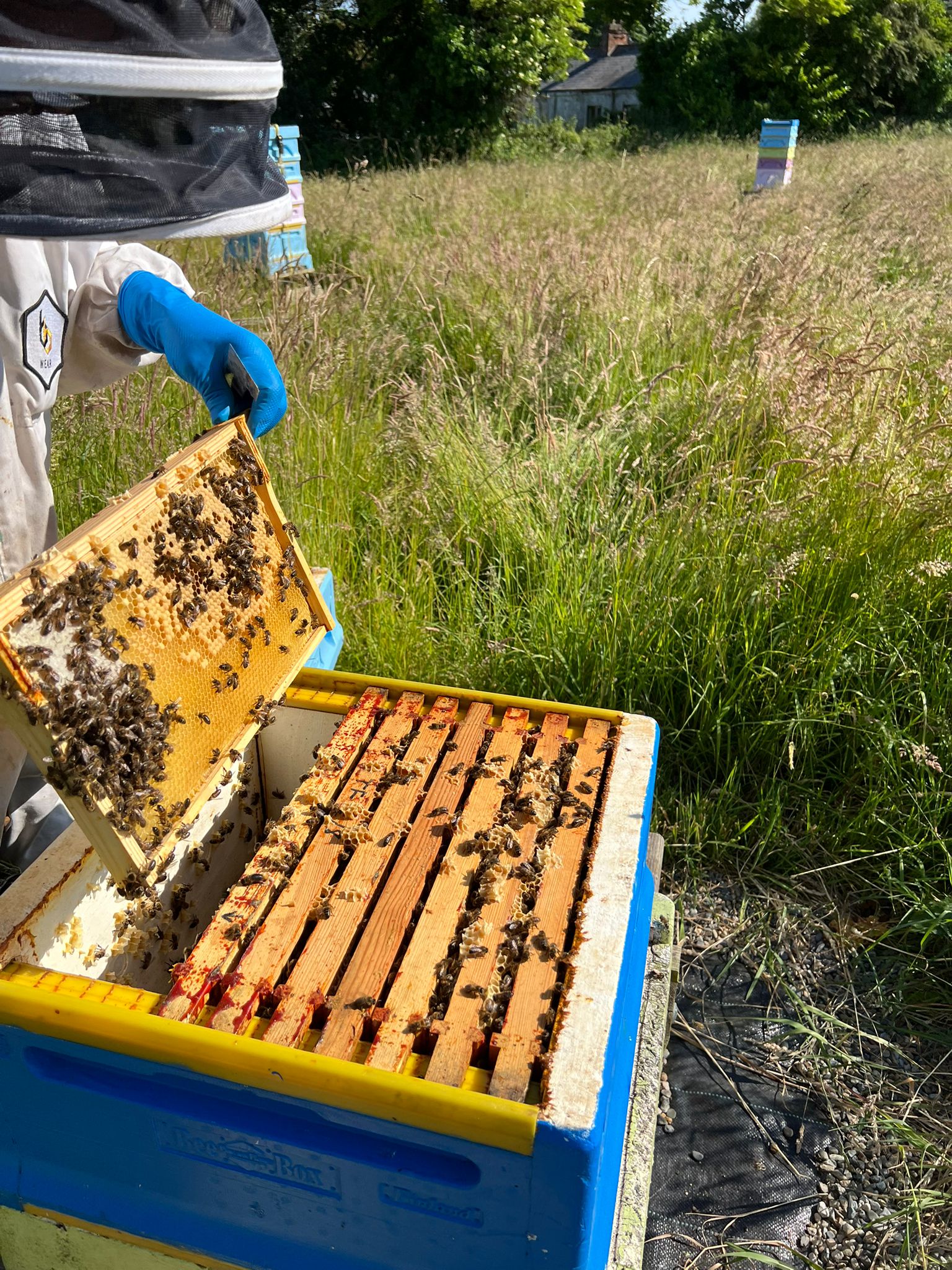
I have been keeping bees here at Mullabane for years. The bees do not travel. They forage the bell heather on the mountain slopes, the wildflowers in the hedgerows, the ivy along the walls, and the spring blossom in the fields below. What they find in a season goes into the jar. That is the whole operation.
One beekeeper, one peninsula
There is no wholesaler, no distributor, no warehouse. I keep the bees, I extract the honey, and I pack the jars. When you order, it comes from me. That is the entire supply chain, and it is the reason every jar carries a batch number and a harvest date. You know exactly what you are buying and where it was made.
The shows keep me honest
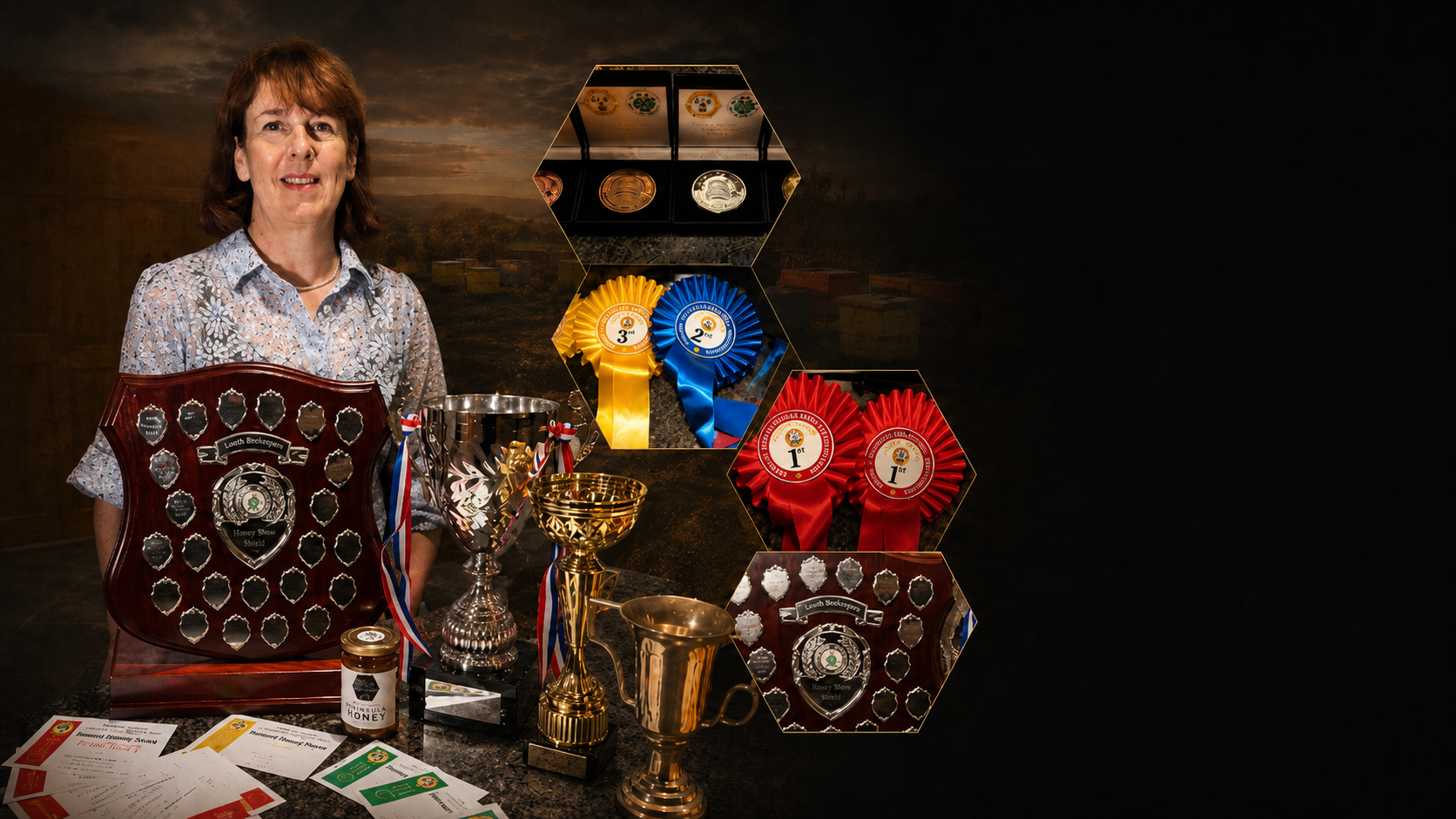
In 2019, Peninsula Honey took the Most Points shield at the Louth Honey Show. At the County Dublin Beekeepers Association Honey Show in 2021, it came home with two firsts, a second and two thirds across categories.
These are not marketing awards. They are judged by experienced beekeepers who assess honey on taste, clarity, set and a range of technical criteria. You cannot buy your way onto the trophy table. You have to actually make something worth tasting.
What goes in the jar
Nothing except honey. Every jar is raw, unblended and unheated. It is extracted from the frames and goes straight into the jar.
If your ivy honey has set hard and pale, that is not a fault. That is what pure ivy honey does. These are the signs you have the genuine article, not a processed blend made to look the same on every shelf.