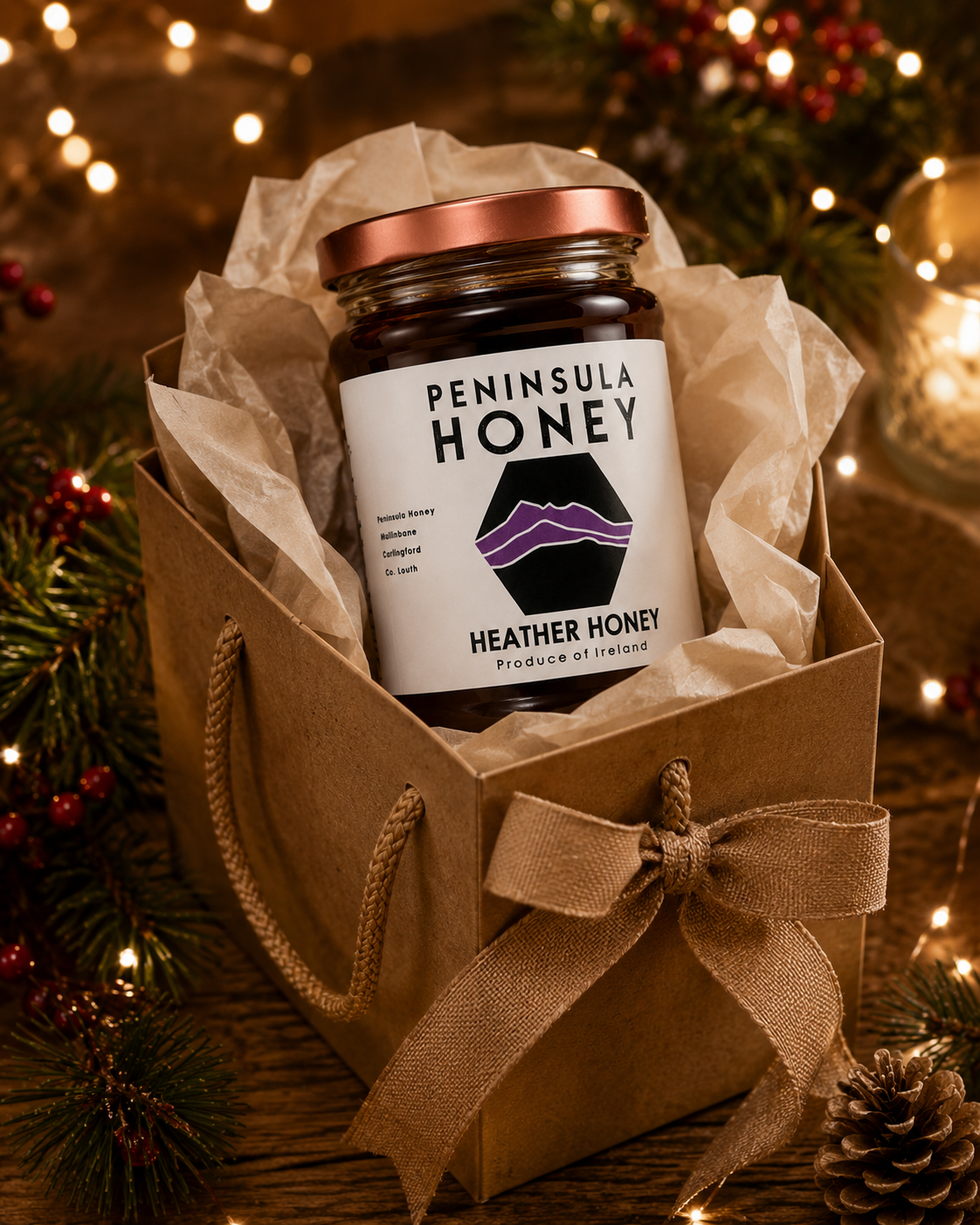
There is a particular kind of gifting problem that comes up a few times a year. The teacher who has been kind to your child all year. The friend who just moved into a new house. The host who fed you a brilliant dinner and will not hear of you bringing wine again. These are people who are not short of things. What they are short of is something genuinely worth receiving.
A jar of good honey - a jar from one Irish beekeeper, not a branded bottle from a service station or a hamper with a price sticker on it - lands differently. It is specific. It comes from a named place. And it tastes of something you cannot find anywhere else.
What makes honey a different kind of gift
Most local food gifts end up in a cupboard. Chutneys get opened at Christmas and forgotten. Fancy biscuits get eaten politely and never re-bought. But honey, the right honey, becomes part of someone’s morning. It gets used on the porridge, drizzled on the cheese board at the weekend, stirred into the yoghurt. It runs out. And when it runs out, they think about where to get more.
That is not something a candle does.
There is also something honest about honey as a gift. It is not dressed up. One jar, one beekeeper, one location, one season. No filler, no blend, no brand story pasted over a commodity product. If you want to understand what raw, unprocessed honey actually is, the short version is: the bees made it, the beekeeper extracted it gently, and it went straight into the jar. That is the whole chain.
The batch number and harvest date on every Peninsula Honey jar are not decoration. They mean the person you give it to can see exactly when and where that honey was made. That kind of traceability is rare in food at any price.
For the new homeowner
Honey has been a housewarming gift in one form or another across many cultures for a long time - the idea being that you wish the home something sweet. The Irish version of this tradition tends toward practicality: you bring something the person will actually use.
A jar of Cooley Peninsula honey works well here because it is a pantry staple, not a trinket. Clear honey - the everyday golden runny jar - goes with everything: toast, porridge, baking, salad dressing. Soft set is slightly firmer, spreadable straight from the jar, the kind of thing that becomes the default honey in a kitchen once someone tries it. Either one is useful from the first week in the new house.
If the new homeowner has any connection to north Louth or Carlingford - lives nearby, visits regularly, spent summers there - then the gift carries a second layer. It comes from a specific mountain above a specific lough. That kind of rootedness is something a scented candle cannot replicate.
For the teacher
End-of-year teacher gifts are one of the trickier social manoeuvres. You want to give something that is genuinely good without veering into the awkward. Chocolate boxes feel formulaic. A voucher is practical but impersonal. Alcohol is not always appropriate.
Honey sidesteps all of this. It is food, so it does not impose. It is not generic. And a jar from a small producer - batch-numbered, harvest-dated, from a named place on the map - communicates that you chose it rather than grabbed it.
Heather honey from the Cooley slopes is worth considering here if you want to give something a little out of the ordinary. Made from bell heather, it has a bold, dark amber, aromatic character with an almost port-like depth - it pours and spoons like any honey - and it is genuinely unlike anything from a supermarket shelf. For someone who already buys good food, it will be noticed. For someone who has not tried single-origin heather honey before, it is a proper discovery.
For the host who already has everything
The dinner party host problem. They cook well, they have a full drinks cupboard, their kitchen is already stocked. Flowers feel perfunctory. Wine is politely received and forgotten.
A jar of honey, particularly comb honey, is different enough to be interesting without being impractical. Honeycomb - whether a section in its wax frame, cut comb, or chunk honey in a jar - is the kind of thing people have read about but rarely buy for themselves. Eating it is simpler than it looks: onto a cheese board with a wedge of aged cheddar, or laid across warm bread, or served as a dessert alongside fresh figs and a small pot of cream. A host who enjoys feeding people will find a use for it immediately.
If you want something more straightforwardly useful, a jar of heather honey alongside a note suggesting it stirred through Greek yoghurt or served with a soft goat’s cheese at the cheese course - that is a gift with a suggestion built in, which saves the recipient the thinking.
Why local matters more than the label says
There is a version of “local food gift” that is mostly marketing. A fancy label, a vague reference to Irish hills, a jar that was actually blended from four countries and heat-treated into uniformity. What the “EU and non-EU honey” label on a supermarket jar actually means is worth knowing if you want to understand why single-origin honey is a different product entirely.
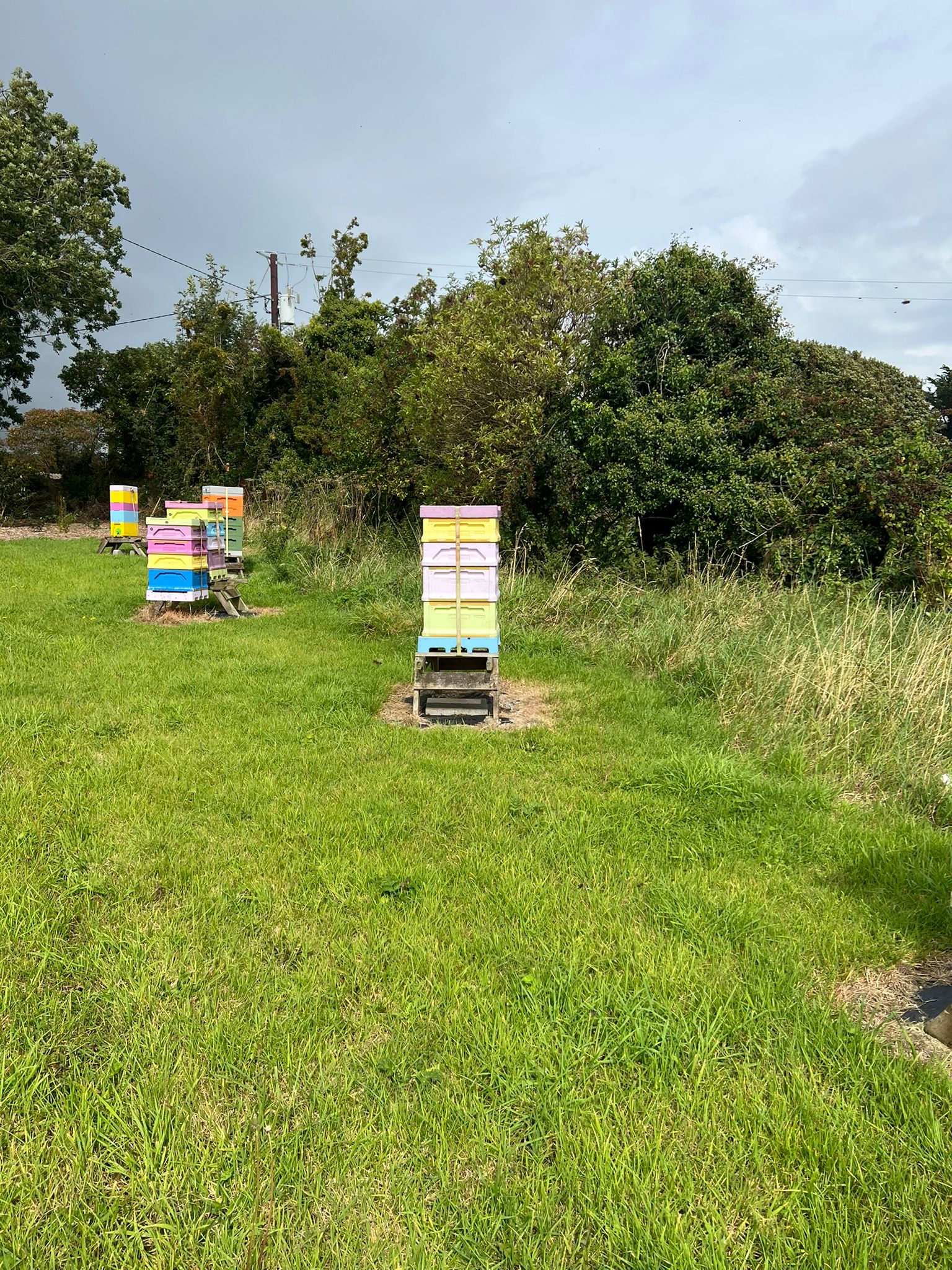
Peninsula Honey is one beekeeper, one peninsula, one season per batch. My bees work the heather on the Cooley slopes, the ivy in the hedgerows below, the wildflowers in the fields toward the lough. Those are distinct habitats and they produce distinct honeys - different in colour, set, and flavour depending on the season and what was flowering. That is what you are giving someone when you give a jar with a batch number on it.
The awards the honey has won - the Most Points shield at the 2019 Louth Honey Show, two firsts, a second and two thirds at the 2021 County Dublin Beekeepers Association Honey Show - were judged blind by other beekeepers. That kind of peer recognition is the most honest one there is.
A short note on occasion and quantity
Peninsula Honey is sold direct for local collection and at Carlingford-area markets. There is no national shipping. That means if you are in north Louth or visiting Carlingford, you can pick up a jar or two in person - which is, frankly, a pleasant excuse for a trip to one of the better-looking corners of Ireland.
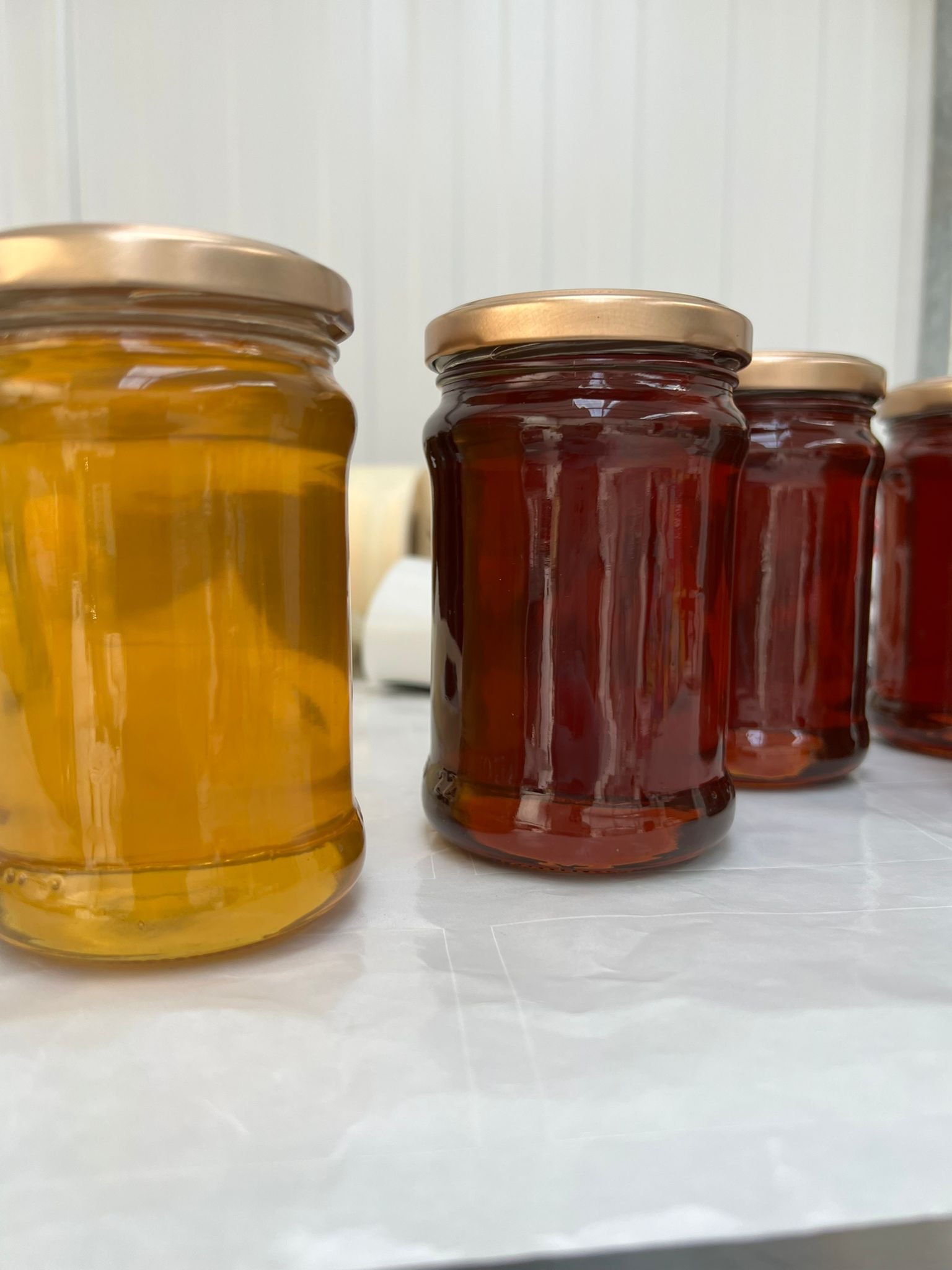
If you are buying as a gift for a specific occasion and want to give more than one variety - say, a jar of clear honey and a jar of heather alongside a piece of comb - that is enough to make a genuinely considered gift without needing a box or a ribbon.
Questions people ask before buying honey as a gift
Does honey need to be refrigerated, and will it keep? No refrigeration needed. Honey stored in a cool, dry cupboard will keep indefinitely. If it crystallises, that is a sign it is real - crystallisation is a natural property of genuine honey, not a defect. A short warm water bath will bring a runny honey back if needed, though heather honey is best left as it is.
Is one jar enough for a gift, or should I buy more? One jar is a perfectly good gift, particularly for a teacher or as part of a host gesture. Two jars - a contrasting pair like Clear and Heather - give the recipient a tasting comparison that a food-curious person will enjoy. Comb honey alongside a jarred variety is another option that feels considered without being excessive.
Which variety is best for someone who has never tried real honey before? Clear honey is the most approachable starting point - golden, runny, full of flavour without being intense. Choosing between the varieties depends on what the person usually eats, but Clear rarely misses with a new recipient. Heather is the one to give when you know the person already buys good food and will appreciate something more unusual.
Can I collect it in advance of a specific date? Yes - honey stores well and does not go off. Buying a jar a week or two ahead of a housewarming, an end-of-term date, or a dinner party is sensible. Just keep it in a cupboard away from direct sunlight and it will be in exactly the same condition when you give it.
If you are in the Carlingford area and want to see what is available from the current harvest, the homepage has current information. New batches are seasonal and quantities are limited - once a harvest is gone, it is gone until the bees produce the next one.
That, in itself, is worth something in a world of things that are always available.