Walk into any supermarket and you will find a shelf of golden jars, most of them labelled simply “honey”. Open one, taste it, and you get sweetness - but not much else. No particular floral note, no lingering aroma, no sense of where it came from. Then taste a raw, single-origin honey from a known place and a known beekeeper, and the difference is immediate. That gap is what the raw vs processed honey question is really about. It is about flavour - what survives processing, and what does not.
What “processed” actually means
Most commercial honey goes through two key steps before it reaches a jar: heating and fine filtration.
Heating is done to slow crystallisation and make the honey easy to pour and bottle at speed. The temperatures used vary - some processors heat to around 60°C, others flash-heat to 78-80°C for a minute or two before rapid cooling. Both work for the shelf and the bottling line. Both cost something in flavour terms.
Fine filtration removes pollen grains, wax fragments, and tiny air bubbles. It also removes the particles that speed up natural crystallisation, which is why commercially processed honey stays liquid for months. Cleaner to look at, but stripped of some of what gave it character.
There is nothing secretive about any of this. It is standard food processing, designed for consistency, shelf stability, and appearance. The point worth understanding is what it trades away.
What heat takes out of honey
Honey is not a simple sugar syrup. Fresh from the hive it contains somewhere around 180 identified compounds - volatile aromatic compounds, natural enzymes, organic acids, pollen, wax traces - and many of these are fragile.
Research has found that volatile aromatic compounds begin to degrade at temperatures above 40-45°C. At 60°C and beyond, the loss is more substantial: the specific compounds responsible for a honey’s floral, fruity, or resinous notes start to evaporate or break down. This is the temperature at which a heather honey stops smelling like heather. A linden blossom honey loses its lime-flower edge. A summer wildflower honey, with its layered character from dozens of different nectar sources, becomes milder and harder to distinguish.
What you are left with is still honey - still sweet, still food. But the flavour has been flattened. The distinctive notes of a particular place, a particular season, a particular set of flowers have been reduced to a background sweetness.
Why this matters for heather honey in particular
Of all the honeys I produce here on the Cooley Peninsula, the heather is the one where heat has the most to answer for.
Bell heather honey from the slopes above Carlingford Lough has a genuinely bold, dark amber, aromatic character - an almost port-like depth of flavour, slightly resinous, with a long finish that holds its own alongside strong cheese or a dark rye bread. It is the boldest jar in the range. It pours and spoons like any honey, spins normally from the comb, and crystallises naturally over time as raw honey does. (Ling heather, Calluna vulgaris, is a different plant whose honey has the famous thick, jelly-like thixotropic set - bell heather is not that, and its distinctiveness is all in the flavour.) Stir it through cream, spread it on warm bread, set it beside a strong cheese.
Heating changes that. Warm a heather honey past 45°C and you start to lose the aromatics that make it worth buying. The bold, almost resinous notes settle into something milder. So it is best enjoyed cold or at room temperature. A lot of what makes the Cooley heather honey worth seeking out is exactly what you would lose if you processed it.
I keep the honey unheated for the same reason I keep it unblended - because the character is the point. What heather honey actually tastes like is not something I can put back once it is gone.
What blending removes: traceability and character
Heating is one part of the story. Blending is the other.
The label “EU and Non-EU Blend” on a supermarket jar tells you a great deal. It tells you the honey came from multiple countries, multiple climates, multiple flower sources, and was combined into a consistent product. Consistency is a reasonable commercial goal. But it means the honey’s character comes from nowhere in particular. Understanding what that EU blend label really means is worth reading if you buy honey regularly.
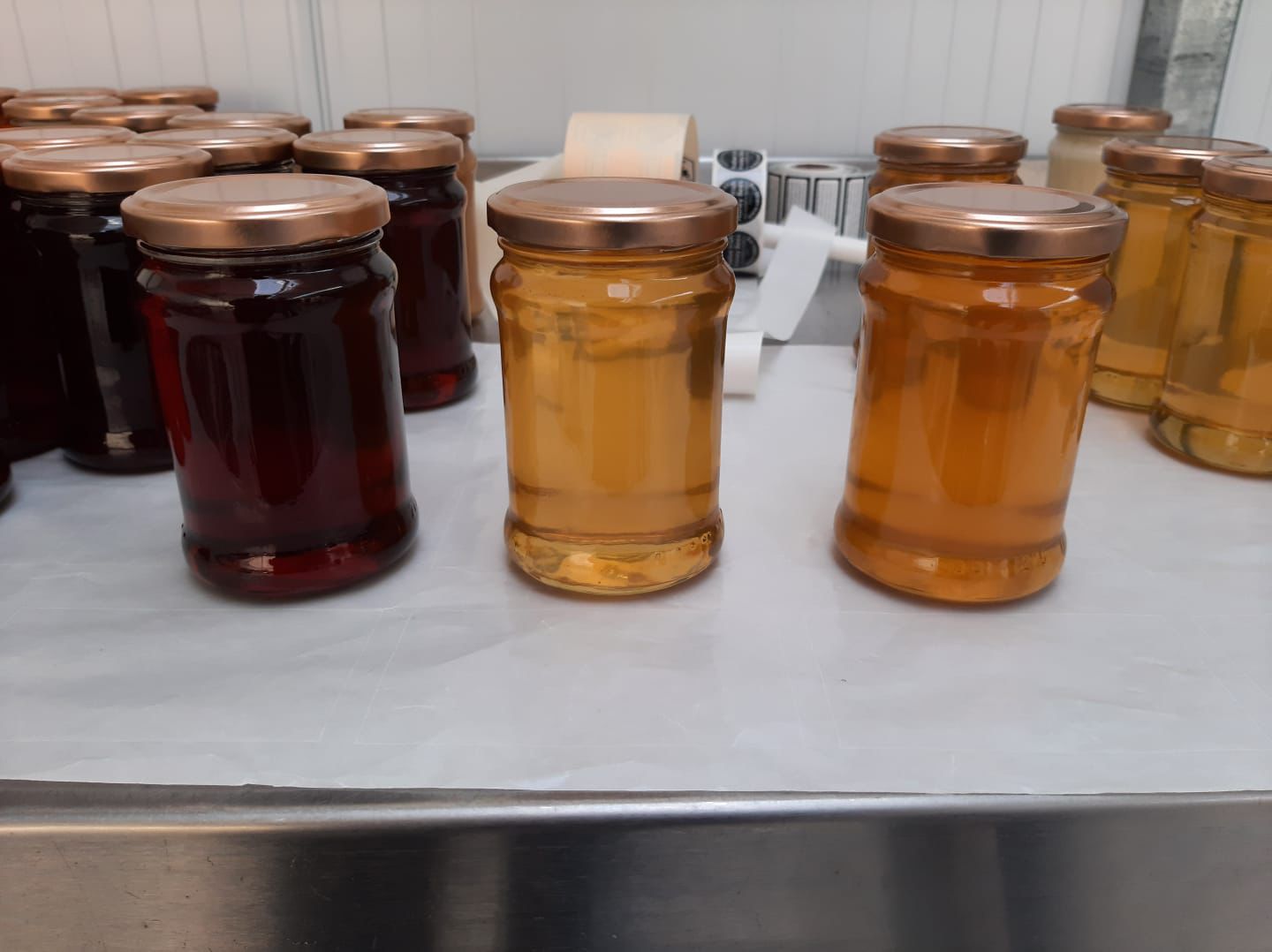
A raw, single-origin honey from one beekeeper does the opposite. Every jar carries a specific harvest - Cooley heather in late August, ivy in October, the clear runny honey from the summer flowers of the hedgerow fields below. Each has a different flavour profile because each comes from a different set of flowers in a different season. The batch number and harvest date on the label are not decoration. They are the record of a specific moment in one place.
That traceability is something processing cannot replicate, because once you blend and heat multiple sources together, the individual characters merge and the origin is gone.
Crystallisation: a note worth making
A lot of people see a jar of cloudy or crystallised honey and assume something has gone wrong. It has not. Crystallisation is what real honey does. Raw honey, especially unfiltered honey with its natural pollen content, tends to crystallise faster than processed honey - because nothing has been done to slow it down.
Ivy honey sets hard and pale, sometimes within days of jarring. The clear runny honey may take months. Heather honey pours from extraction and crystallises gradually over time like any raw honey. None of these are faults. Why honey crystallises is worth understanding if you are new to buying raw honey - it will save you binning a jar that is still excellent.
Gently warming a crystallised honey in a bowl of warm water - not hot, not the microwave - will bring it back to a pourable state without damaging its character.
What raw honey actually is
“Raw” is not a regulated term in Ireland or the EU, which means it can be used loosely. In practice, it means honey that has not been significantly heated and has been minimally filtered - usually through a coarse mesh to remove large wax pieces, but leaving pollen and fine particles intact.
A genuinely raw honey will often be cloudy or opaque. It may crystallise faster than you expect. It will vary from batch to batch and season to season. A simple guide to what raw honey is covers the definition in more detail if you want it.
What I can tell you from the hive side is this: doing nothing to the honey after extraction is not laziness - it is a deliberate choice. The honey comes out of the centrifuge, goes through a coarse filter, and goes into jars. That is the process. The aim is to put as little distance as possible between what the bees made and what lands in your kitchen.
FAQ
Does raw honey taste different from processed honey?
Yes, usually noticeably so. Raw honey retains the volatile aromatic compounds that give it its floral, fruity, or resinous character. Processed honey - particularly honey that has been heated to speed bottling or extend shelf life - loses some of those compounds, and the result tends to be milder and less distinctive. The difference is most obvious with a strongly characterful honey like heather or a fragrant wildflower blend.
Is crystallised honey still good?
Yes. Crystallisation is a sign of real, unprocessed honey - not a sign of age or poor quality. Commercial honey is often processed specifically to prevent it, which is part of why it stays liquid on a shelf for years. A crystallised raw honey is perfectly usable: spread it, stir it into warm food, or gently warm the jar to bring it back to a runny state.
Why does supermarket honey all taste the same?
Because it usually is the same. Most commercial honey is blended from multiple origins - often several countries - to achieve a consistent flavour and colour. The blending, heating, and fine filtration remove the individual characters that would otherwise distinguish one source from another. What you are left with is sweetness without a particular identity.
What does “single origin” mean in honey?
It means the honey comes from one place, one beekeeper, one set of bees working a specific landscape. The character of the honey reflects that particular landscape - the flowers available, the season, the altitude, the weather that year. My heather honey comes from bell heather on the upper slopes of the Cooley Mountains above Carlingford Lough. You would not confuse it with a Wicklow heather honey or a Scottish one. Place is in every jar.
If you want to taste what raw, single-origin honey actually is - before and after you read anything else about it - the current range from the Cooley Peninsula is a good starting point. Collected from one beekeeper, one peninsula, batch-numbered, harvest-dated. You can taste the difference before you have to understand it.