A customer at one of my Carlingford markets asked me this recently: “How do I know if honey is real?” She had picked up a jar in a supermarket that morning, read the label, and still could not work out where it came from or who made it. That question is worth taking seriously, because the answer is not always obvious, and the stakes are higher than they might seem.
About half the honey imported into Ireland is thought to be adulterated, diluted with sugar syrups, or mislabelled as to its country of origin. Research published in the Irish Times in 2024 found that a substantial proportion of honey on Irish shelves was likely sourced from countries not properly identified on the label. Ireland produces around 200 tonnes of honey a year and imports over 8,000 tonnes. Most of what sits in the average supermarket has travelled a long way, passed through several hands, and tells you very little about what is actually in the jar.
None of this means you need to become a honey scientist. A few simple checks, starting with the label and ending with how the honey behaves over time, will tell you most of what you need to know.
Start with the label
The label is the first test, and it is the most reliable one. A jar of real, traceable honey should be able to tell you at least this much:
- Where it comes from, specifically - not just “EU” or “a blend of EU and non-EU honeys”
- Who made it, or at least which producer or apiary
- When it was harvested or what batch it is from
- What the floral source is, if it is a single-source honey
A label that says “product of EU and non-EU countries” is telling you almost nothing. It means the honey was blended from multiple origins, probably to achieve a consistent flavour and a low price point. The countries involved are not listed. The proportion from each is not listed. Under EU rules in force until mid-2026, that vague wording is entirely legal. Newer regulations coming into force in June 2026 will require all blend countries to be listed in order of their proportion - a step forward, though the underlying incentive to blend cheaply will not change.
Understanding what “EU and non-EU honey” actually means is worth a few minutes of your time if you buy honey regularly.
What you want to see instead is something precise: a county, a farm, an apiary name. A harvest date, not just a best-before year. If the label can tell you where exactly the bees were foraging, and when, that is a good sign. If it tells you almost nothing, that is also informative.
Does it set?
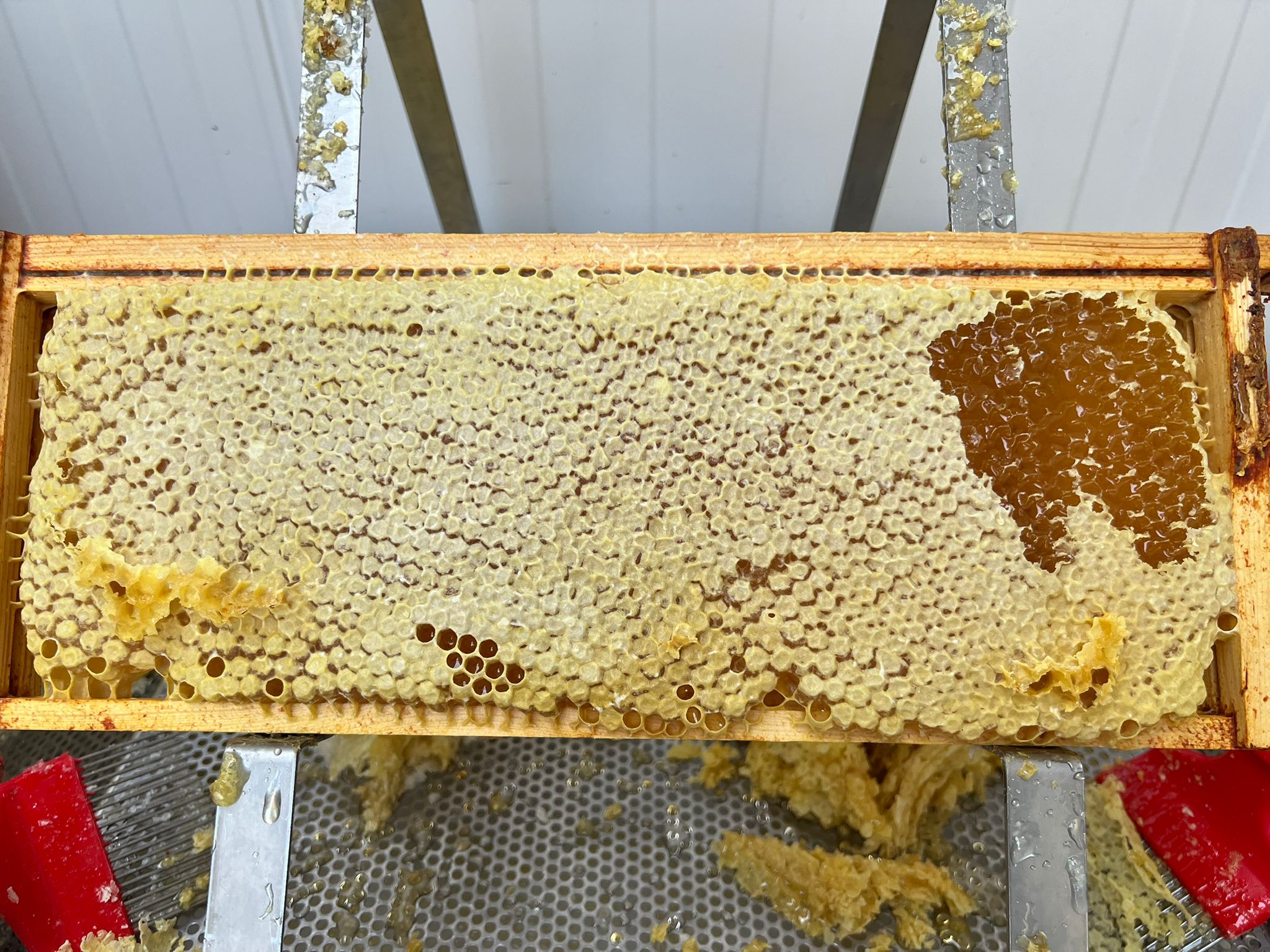
Honey crystallises. This is not a fault, a sign of poor quality, or evidence that something has gone wrong. It is what real, unprocessed honey does, because real honey contains glucose, which separates over time and forms crystals. The speed and texture of that set depends on the floral source.
Oilseed rape honey sets very quickly and firmly. Ivy honey, which I harvest in autumn on the Cooley Peninsula, crystallises almost immediately and arrives firm and pale. My heather honey, from bell heather on the slopes above Carlingford Lough, pours and crystallises naturally over time like any raw honey - its distinctiveness is its bold, aromatic flavour rather than any unusual texture. Clear honey from mixed wildflower sources tends to set more slowly, over weeks or months, into a coarser grain.
Why honey crystallises is a piece of basic honey science that most labelling does not bother to explain - which is a shame, because it would prevent a lot of perfectly good honey from being thrown out.
Honey that stays runny indefinitely is often a warning sign. Heavy processing, including heating to high temperatures, destroys the enzymes and disrupts the natural chemistry that causes crystallisation. A honey that never sets may have been processed to the point where little of the natural complexity remains. That said, some floral sources do produce honey with low glucose content that is slow to crystallise, so this is not an absolute rule. It is one signal among several.
Fake honey - glucose or fructose syrup sold as honey, which does exist in the market - will usually stay runny and thin. It will taste flat. It will not have much aroma. It will not have layers.
Single source or blended?
There is a meaningful difference between a jar labelled with a single floral source and a jar labelled as mixed or blended honey.
A monofloral honey - heather, ivy, rapeseed, clover - comes from bees that were foraging predominantly on one plant at one time. The flavour reflects that. My heather honey tastes nothing like my clear honey, even though the same bees and the same peninsula produced both. Heather is bold and aromatic, with a strong nose and a complex finish. Clear honey from the same hive, harvested at a different time of year, is lighter and gentler.
Monofloral versus wildflower honey covers this distinction in more depth.
Blended honey, by contrast, is made to be consistent. Different batches from different origins are combined to produce a product that tastes the same jar to jar, season to season. That consistency is a manufacturing feature, not a quality indicator. It tends to mean the individual character of any one source has been diluted out.
This is not automatically bad, but it does mean you cannot use the jar to tell you much about where it came from or how it was made.
The batch number and harvest date
A batch number on a jar of honey is a small but significant thing. It means the producer can tell you - or a food safety inspector can require them to tell you - exactly which hive, which season, and which processing run that jar came from. Traceability. Accountability. The ability to identify a problem, if one arises, and trace it back to its source.
Every jar I produce has a batch number and harvest date on the label. Not because the regulations require it at my scale, but because it is the only honest way to sell food. If someone asked me what batch they were holding, I should be able to tell them exactly what was happening at the apiary that week.
Harvest dates also tell you something about the honey’s character. Autumn honey from the ivy is different from summer honey from the heather. A date on the label is an invitation to know what you are eating, not just that you are eating honey.
A named maker changes everything
I am one beekeeper, working one peninsula, producing four honeys plus comb. That is a small operation, and that is the point. When you buy a jar from me directly, at the gate in Mullabane or at a market in Carlingford, you are talking to the person whose bees made it. You can ask me anything. What did they forage on? When was this batch harvested? How was this particular season?
That kind of accountability is not something you can manufacture. It is either there or it is not.
This is not me saying that only tiny producers make good honey. It is me saying that a named maker, whether a solo beekeeper or a small co-operative with transparent sourcing, is giving you something a blended, multi-origin jar simply cannot give you: a direct line between you and the person responsible for what is in that jar.
Where to buy local honey in Co. Louth has more on finding producers near you.
What the sensory checks can and cannot tell you
You will find guides online to testing honey with water (does it dissolve or sink?), with a flame, with iodine, with a thumb. Most of these home tests are unreliable. They may tell you something about texture or moisture content, but they cannot confirm that a honey has not been adulterated with a high-fructose syrup, because some syrups behave similarly to honey under these informal tests.
What your senses can tell you:
Smell it. Real honey has an aroma. Even a mild honey carries something - a faint floral note, a warmth. Heather honey has a bold, almost herbal nose that is unmistakeable. A jar that smells of very little is worth being curious about.
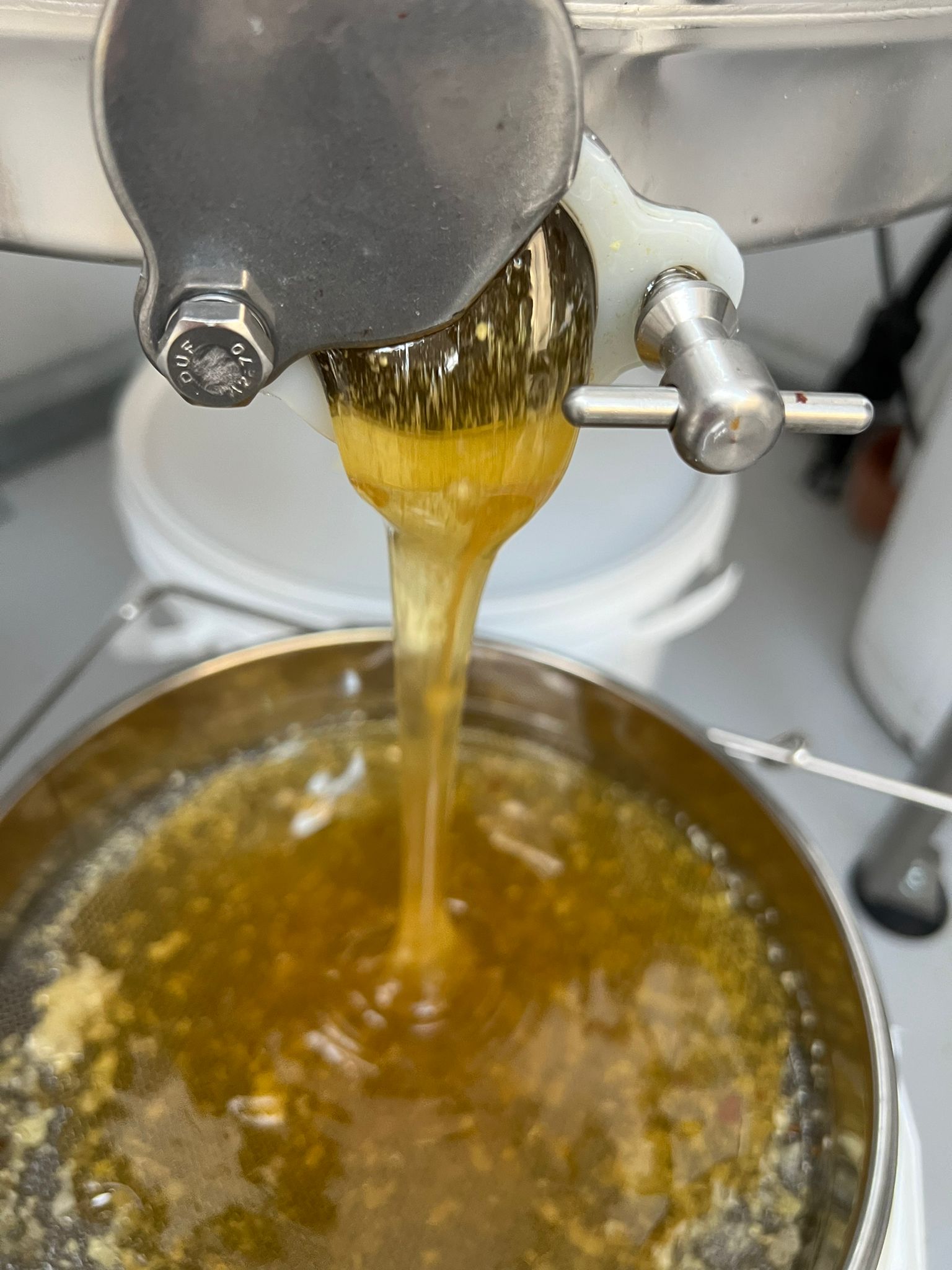
Look at it. Raw honey often contains trace amounts of pollen, beeswax, or propolis. A very clear, very uniform honey with no variation at all has usually been finely filtered. Fine filtration removes pollen, which makes the honey shelf-stable and easier to analyse for fraud - the pollen is the fingerprint that proves geographic origin.
Taste it slowly. Real honey has layers. A start, a middle, and a finish that can linger. Processed honey tends to be one-dimensional - all sweetness, nothing following on.
None of this replaces knowing your producer or reading a good label. But these sensory checks are a useful secondary layer, especially when you are buying from an unfamiliar source.
A few questions people ask
Does real honey go off?
No. Honey with the right moisture content (below about 20%) does not ferment and does not spoil. Archaeological digs have found honey in Egyptian tombs that was still intact thousands of years later. If honey smells fermented or has clearly changed character, it may have absorbed moisture over time - but even then, it can often be used in cooking.
Can I trust “organic” on a honey label?
Organic certification for honey is difficult to verify in practice, because you cannot control where bees forage. For honey specifically, a named beekeeper with a known landscape is a more reliable signal than an organic label alone.
Is darker honey more real than lighter honey?
Colour in honey relates to floral source and age, not to authenticity. Ivy honey is pale. Heather honey is amber. Both are as real as each other. Colour is not a test of genuineness.
Is it worth paying more for single-origin honey?
That depends on what you want from a jar of honey. If you want consistent sweetness for everyday use, blended honey will do it. If you want to taste somewhere - a specific landscape, a specific season - then single-origin is the only option. You cannot blend your way to the character of Cooley Mountain heather.
What traceability looks like in practice
I sell direct - for collection at Mullabane, or at markets around Carlingford. No national shipping. Every jar is raw, unheated, and unblended. The batch number on each jar ties back to a specific harvest, and the date tells you the season.
That is not marketing. It is just how small-scale, honest honey production works. The jar knows where it came from because I was there.
If you are looking for something you can buy with confidence and collect locally in north Louth, take a look at the current harvest. And if you want to understand more about what makes raw honey different from the processed alternative, the journal has more on that.