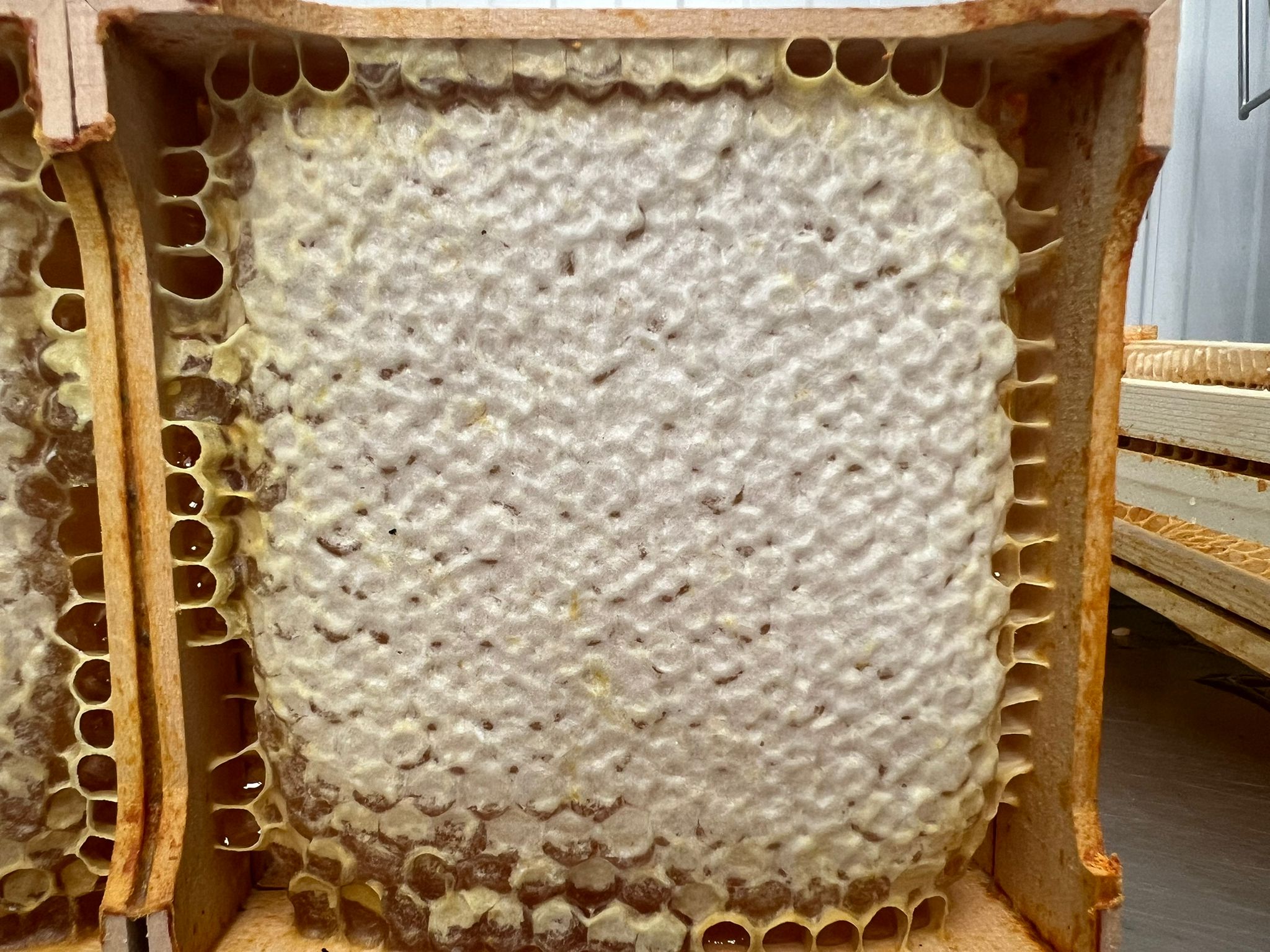
A jar of honey from the Cooley Peninsula comes with a batch number and a harvest date. That is not decoration. It tells you exactly when the bees worked those heather slopes or ivy hedgerows, and it means you can track the honey right back to a particular season and a particular place. Which raises a question I get asked at markets regularly: how do you actually look after it once you get it home?
The short answer is that honey is remarkably easy to store. But there are a few things worth knowing, especially if you are buying raw, unprocessed honey for the first time.
The basics of how to store honey
Keep it at room temperature, in a cupboard, away from direct light. That is genuinely all it takes. No fridge, no freezer, no special container. A tightly sealed glass jar at room temperature will keep honey in good condition for years.
The reason honey keeps so well comes down to its chemistry. It is low in water and high in sugar, which makes it a hostile environment for bacteria or mould. Properly stored, honey is one of the most stable foods there is - archaeologists have found honey in Egyptian tombs still edible after three thousand years. Your jar from a Carlingford market is not going to go off.
A few things to watch:
- Moisture is the only real enemy. Even a small amount of water introduced into the jar - from a wet spoon, for example - can create a pocket of diluted honey that may ferment over time. Always use a clean, dry spoon.
- Direct sunlight degrades honey gradually, breaking down its character over months. A dark cupboard is better than a sunny windowsill.
- The fridge will not harm honey, but it will make crystallisation happen faster. There is no reason to refrigerate it.
Why your honey sets in the cupboard
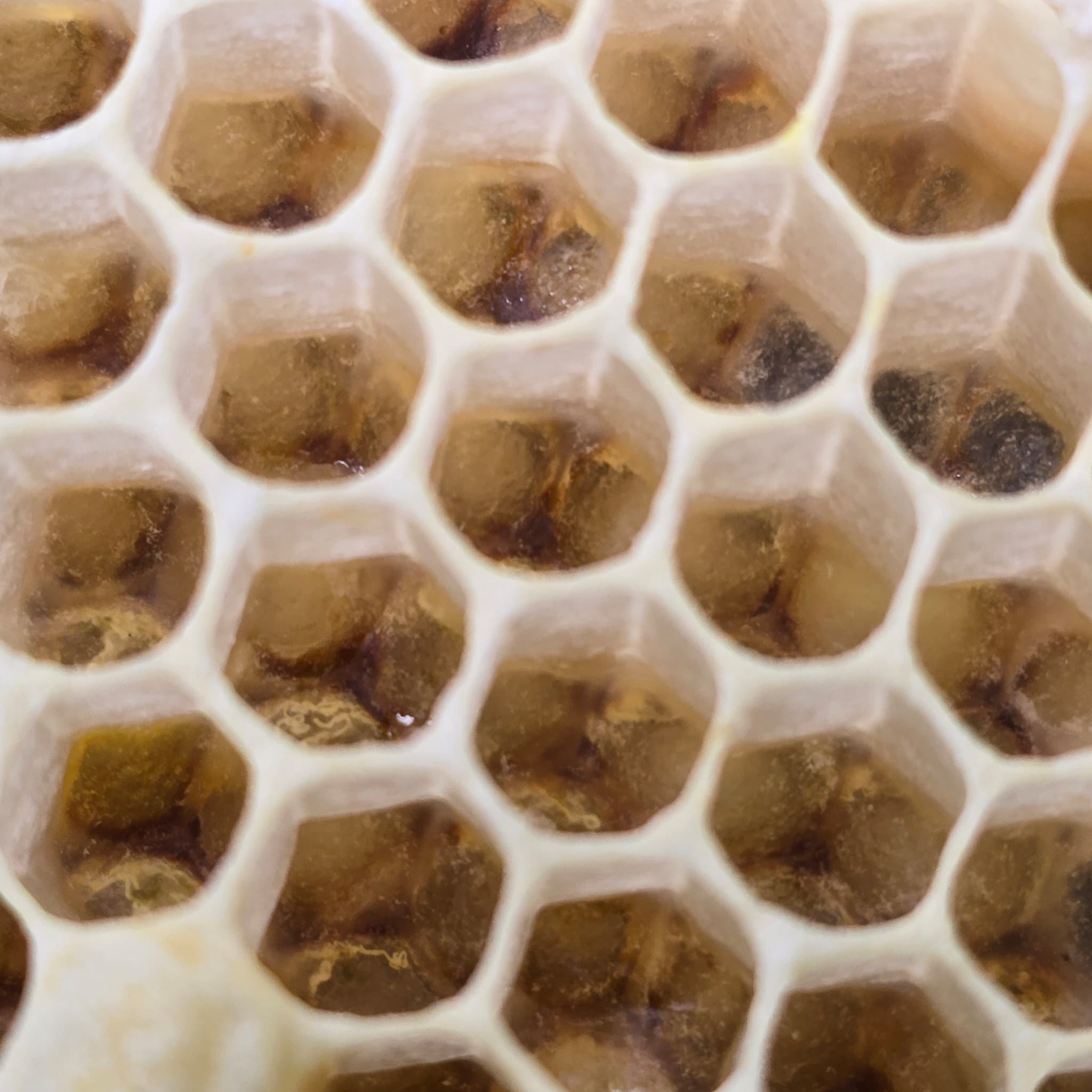
If you open a jar of Clear honey after a few months and find it has thickened, gone opaque, or turned grainy, that is crystallisation. It happens to all real, unprocessed honey eventually.
Honey is a supersaturated sugar solution - there is more dissolved sugar in it than the water content can hold indefinitely. Over time, glucose molecules naturally come out of suspension and form crystals. The speed at which this happens depends on the ratio of glucose to fructose in the honey, which varies by flower source.
My Ivy honey is a good example. Ivy honey sets hard and pale within weeks of harvest - that is just the nature of ivy as a nectar source, which is naturally glucose-heavy. The Clear honey takes longer. Heather honey crystallises naturally over time too, like any raw honey, at its own pace depending on the season’s flower mix.
Crystallisation does not mean the honey has spoiled. It has not. The flavour is unchanged, the honey is entirely safe, and many people prefer the texture of set honey spread on bread or stirred into porridge. Understanding why honey crystallises often changes how people feel about it entirely - it is a sign of real, unprocessed honey, not a fault.
How to soften set honey gently
If you want to return a crystallised jar to a pourable consistency, the method matters. The goal is to warm the honey just enough to dissolve the crystals, without damaging its character in the process.
The water bath method:
- Remove the lid from the jar.
- Stand it in a bowl or saucepan of warm water - around 35°C to 40°C is the right zone. Think comfortably warm to the touch, not steaming.
- Leave it for 15 to 20 minutes, stirring occasionally.
- The crystals will gradually dissolve.
That is it. No microwave, no boiling water, no direct heat on a hob.
The reason this matters is that honey’s delicate aromatic compounds begin to break down above roughly 40°C, and are significantly damaged above 50°C. Boiling water, or a microwave set too high, can push the honey well past that threshold in seconds. You will end up with runny honey, but some of what makes a single-origin raw honey taste of a specific place and season will be gone.
This is especially true of Heather honey. Its bold, aromatic character - that distinct dark richness from the Cooley mountain slopes - is particularly sensitive to heat. I always suggest using Heather honey without cooking it: on a cheeseboard, drizzled over something, stirred through cream. The no-cook uses let it speak for itself.
A note on shelf life
Raw honey does not have a “best before” in any meaningful sense. In the EU, jars are required to carry a best before date, and most beekeepers use two years from harvest as a reasonable guide. But that is a labelling convention, not a hard limit. Honey stored well will remain in excellent condition well beyond it.
What changes over very long periods is texture and, very gradually, colour. The flavour tends to deepen rather than deteriorate. If your honey has crystallised, softened it using the method above and it is right back where it started.
The one exception: if you see signs of fermentation (bubbling, a yeasty or vinegary smell), that means moisture got in at some point. It is uncommon with properly sealed raw honey, but it does happen if the honey was harvested before it was fully ripened, or if a damp spoon was used repeatedly. In that case, trust your senses.
Which jar you have changes how you use it
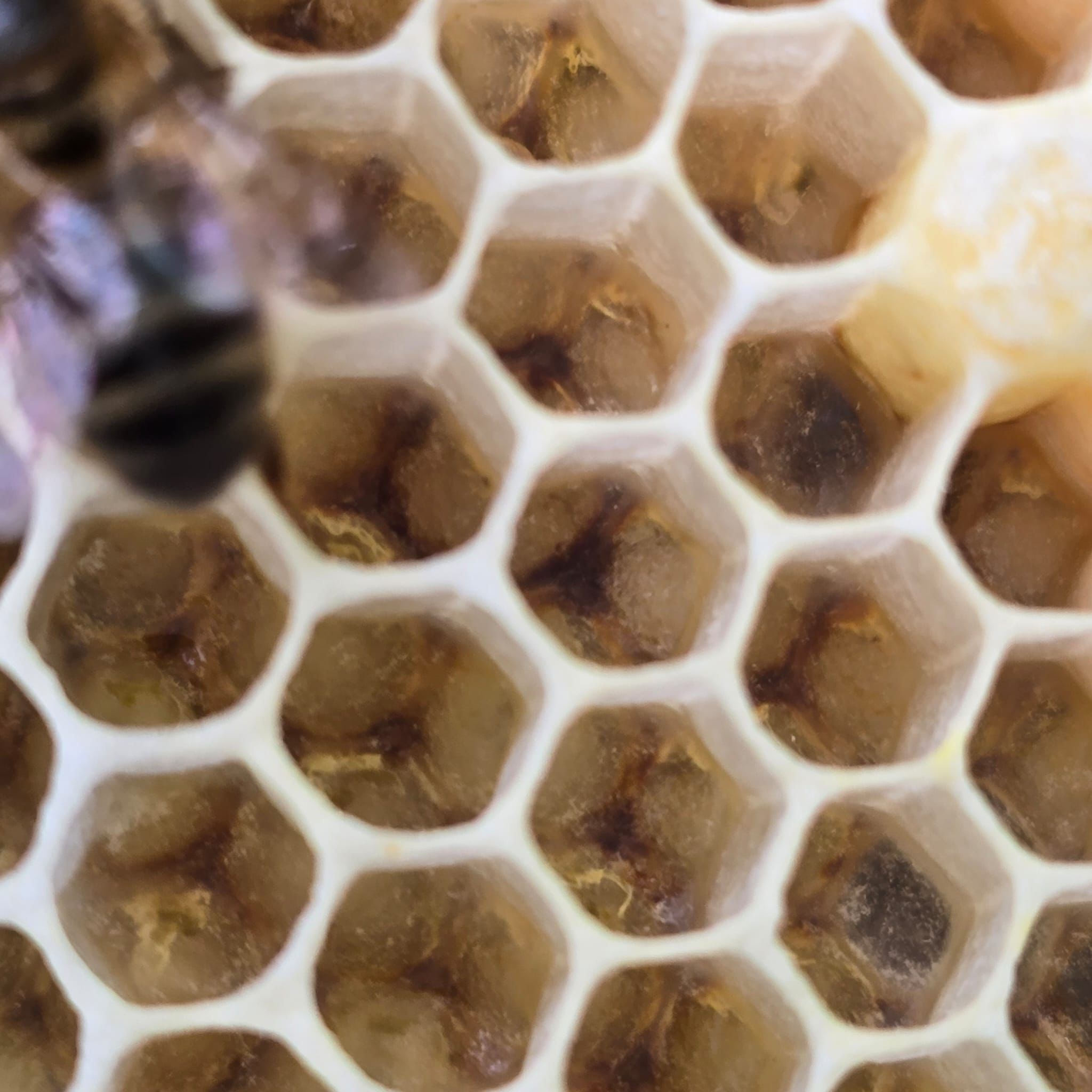
The four honeys I produce each behave slightly differently in storage, and it is worth knowing what to expect:
Clear honey - the everyday golden runny honey - will crystallise over time, as described above. The water bath method brings it back perfectly.
Soft Set has already been gently worked to give it a smooth, spreadable consistency. It holds that texture well at room temperature and does not need any warming.
Heather honey pours and spoons like normal honey and crystallises naturally over time, like any raw honey. Keep it at room temperature and avoid warming it, since heat dulls its bold aromatics.
Ivy sets hard and pale, usually within weeks of harvest. This is normal and correct. If you want to soften it slightly, the water bath method works, though many people simply spoon it straight from the jar as-is.
If you are not sure which honey to try first, the Clear is the most straightforward starting point, and the Soft Set suits anyone who wants something easy to spread without any preparation at all.
Questions people ask
Can I store honey in a plastic container?
Glass is better for long-term storage. Plastic can absorb odours over time and, with some plastics, there is a risk of leaching at higher temperatures. The jars Peninsula Honey comes in are glass for this reason. If you decant into something else, use a clean glass jar with a tight-fitting lid.
My honey has gone hard in the jar and I cannot get the lid off. What do I do?
Stand the jar (still sealed) in warm water for a few minutes. The warmth will loosen both the lid and the set honey near the rim. Once you get it open, you can continue softening the rest using the water bath method above.
Is it normal for different batches of the same honey to look different?
Yes, entirely. Raw single-origin honey changes with the season and the specific conditions of the year. A heather harvest from a drier summer may taste bolder or set differently than one from a wetter year. That variability is part of what makes each batch worth noting - which is why the harvest date is on every jar.
Does honey need to be stored differently in winter?
Not really. If your kitchen gets very cold (below about 10°C), crystallisation will speed up, but the honey itself will be fine. The water bath method is all you need to soften it again when you want it runnier.
If you would like to try a jar from the current harvest, Peninsula Honey is available for local collection at Mullabane, Carlingford, and at markets in the area. Every jar is batch-numbered so you know exactly which season you are tasting.