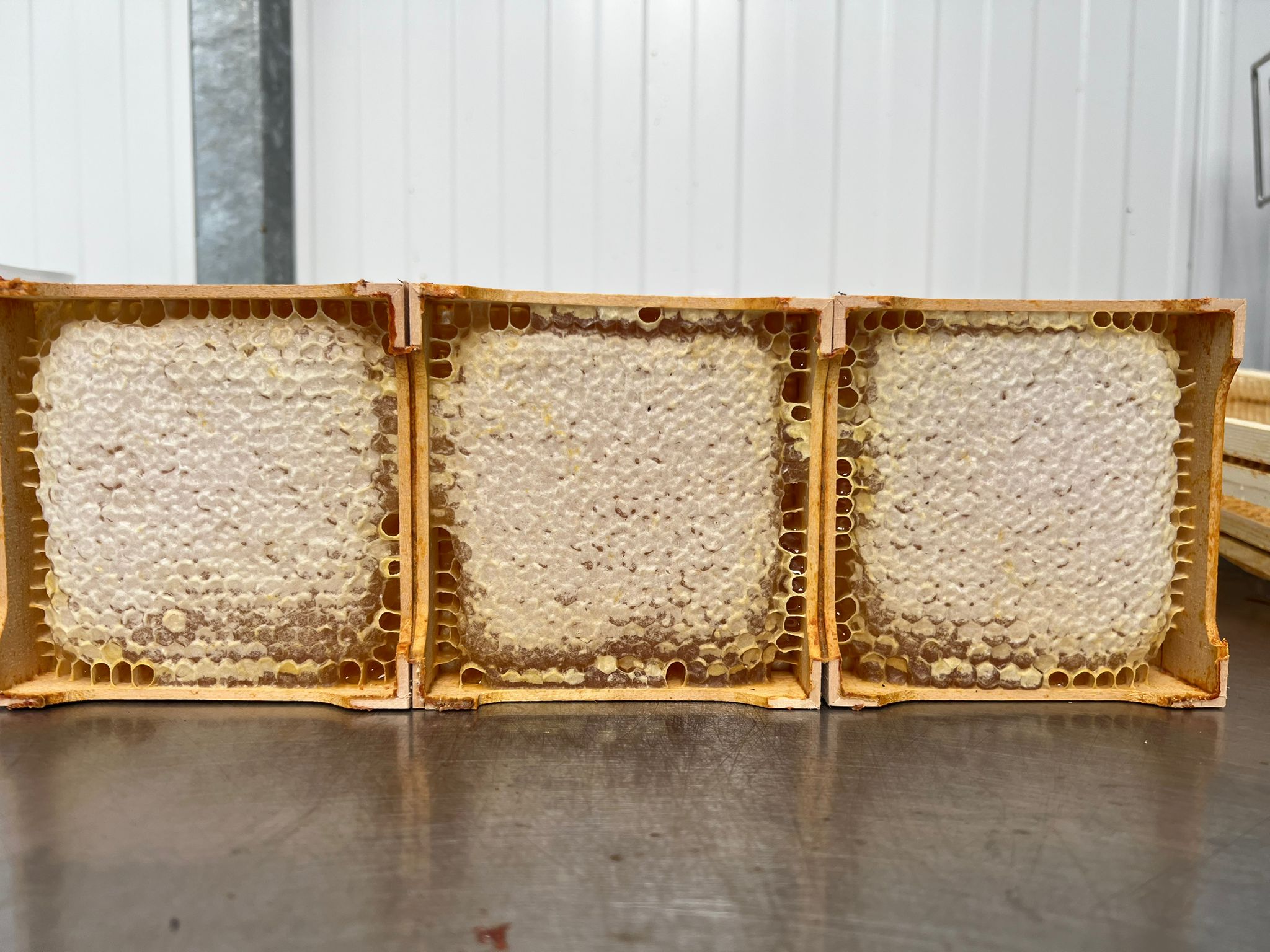
People at the Carlingford markets often pick up a piece of comb, hold it over a plate and ask the same thing: do you eat the wax too? Yes - the whole piece, wax and all. And how to eat honeycomb is really just a question of what you want to put it with, because it works in more ways than most people expect.
Yes, You Eat the Wax
The cells of a honeycomb are built from beeswax. When you eat a piece of comb, you are eating both the raw honey stored inside those cells and the wax that holds them. People have been eating it this way for thousands of years.
The wax does not melt or dissolve. Instead, it softens as you chew, a bit like a mild natural gum. Most people swallow it; some chew it out and set it aside - both are fine. It has no strong flavour of its own, just a faint, pleasant waxy note.
What you are tasting underneath the wax is raw honey in its most unaltered form. No processing, no heating, no filtering. Just what came out of the hive. If you have not read what raw honey actually is before, it puts comb honey in a useful context.
Starting Simple: Eat It Straight
The most direct way to eat honeycomb is straight from a piece cut to roughly a centimetre square. Put it in your mouth, let it sit for a moment, and chew slowly. The honey floods out first, then the wax gently firms up as the sweetness fades. The texture alone makes it different from eating honey off a spoon.
On Toast
This is probably the most common way people eat honeycomb at home, and it earns its place.
Toast your bread until it is properly done - not pale. Butter it while it is still warm. Then lay a piece of honeycomb on top and leave it for thirty seconds or so. The residual heat from the toast begins to release the honey from the cells, and it starts to spread of its own accord.
Eat it while it is still warm. Sourdough works particularly well because the tang sits against the honey rather than disappearing under it. A good thick slice of brown soda bread does the same job.
If you want to dress it up slightly, a thin spread of soft goat’s cheese under the comb is excellent. The creaminess softens the intensity of the honey and the wax becomes almost invisible against the richer texture.
On a Cheese Board
Honeycomb on a cheese board needs no explanation once it is there - it disappears faster than anything else.
A piece of comb alongside aged cheddar, a hard goat’s cheese, or a ripe brie will be eaten quickly. The honey contrasts with the salt and fat of the cheese, and the wax adds a texture that no jarred honey can replicate.
You do not need much. One or two pieces of cut comb placed on the board whole, or a small block of chunk comb in its container, is enough for several people. Let guests cut or break their own pieces - it is part of the appeal.
For vegetarian boards, pair it with walnuts and sliced pear as well. Oat crackers carry comb well without competing with the honey’s flavour.
Our heather honey has a bold, aromatic character that stands up to stronger cheeses especially well - though heather comb is rarer and more seasonal than the jarred version. For cheese boards, any comb honey from the Cooley Peninsula works beautifully.
With Yoghurt or Soft Cheese
Lay a piece of comb on top of a bowl of thick full-fat yoghurt. The honey drains down slowly as you eat and the wax stays at the top. Simple, and it works for breakfast as much as a dessert course.
Ricotta is another good base - spread it thickly on a slice of bread or a cracker, then press a piece of comb gently into the surface. The honey and the soft cheese become one thing as you eat.
Both of these suit our Soft Set honey in jarred form too, but if you have comb, the texture makes it more interesting.
Cooking With Honeycomb
Keep it cold and keep it raw. Honeycomb is not a cooking ingredient - heat destroys the delicate character that makes it worth buying in the first place, and the wax becomes unpleasant when it gets properly hot. Save the comb for cold preparations and the end of a dish, not for stirring into a sauce.
If you want to drizzle honey over something warm, use jarred raw honey for that job. If you want the full comb experience, serve it as it is.
A Note on Honeycomb Formats
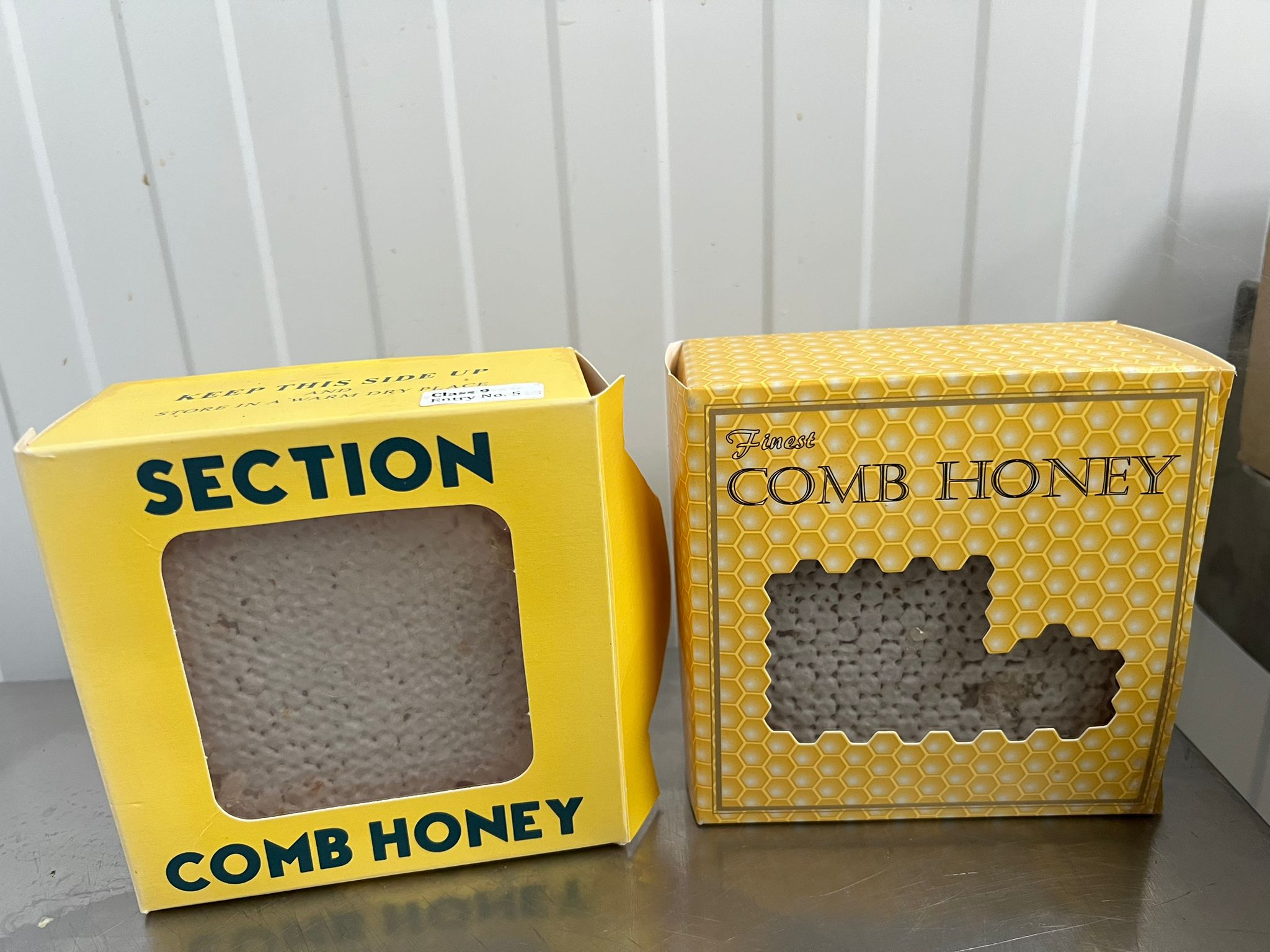
When I sell comb honey at the Carlingford markets, it comes in a few different forms. Sections are whole frames of comb in their own wooden or plastic containers. Cut comb is exactly what it sounds like - pieces cut from a frame and packaged individually. Chunk honey is a piece of comb sitting in a jar of liquid honey.
All three are eaten the same way. The difference is really just portion size and presentation. If you want to know more about how those formats differ, the full guide to comb honey types covers it clearly.
Frequently Asked Questions
Can you swallow the wax from honeycomb? Yes, most people do. Some prefer to chew it out and set it aside once the honey is gone - both approaches work fine. The wax softens as you chew and has almost no flavour of its own.
Does honeycomb need to be refrigerated? No. Keep it at room temperature, away from direct heat and out of sunlight. Cold temperatures can cause the honey to crystallise faster, which does not damage it but changes the texture. For storing honey correctly, the same principle applies to the jarred versions too.
Is honeycomb vegetarian? Yes. Honeycomb is produced by bees and contains no meat or animal flesh. It is suitable for vegetarians. Whether it suits a vegan diet is a matter of individual choice, but it is not a question with a single agreed answer.
If you are visiting Carlingford and want to pick some up, I sell comb honey at local markets and by arrangement at Mullabane. The full range is here, and if you have never tried comb honey before, this is a good season for it.