Late summer on the Cooley Mountains: the slopes turn a deep, brushed purple as the heather comes into bloom. If the weather has been kind and the bees have had a good summer, there is a narrow, precious window - a handful of weeks - when a beekeeper can bring home one of the most distinctive honeys made anywhere in Ireland. Miss it, and you wait another year.
Anyone who makes heather honey in Ireland will tell you the same thing: this is not a honey you can plan around with any certainty. It is earned, and it is seasonal, and that is most of what you need to understand before you go looking for a jar.
Ling heather and bell heather - not the same thing
Both grow on Irish hillsides, and from a distance it can be hard to tell them apart. But for a beekeeper, the difference matters.
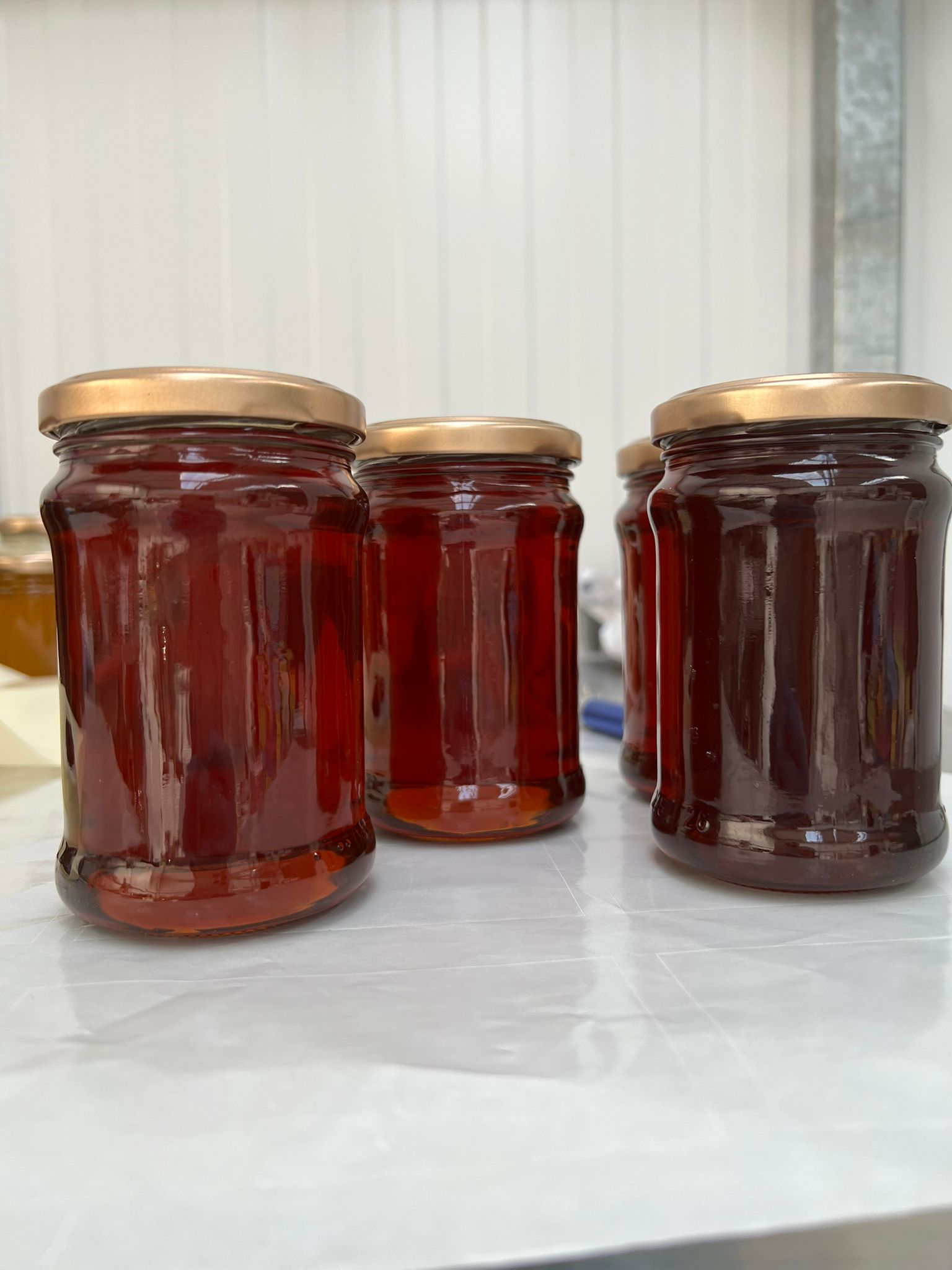
Bell heather (Erica cinerea) flowers from July, and produces a dark amber, port-wine coloured honey that flows and extracts like a conventional honey. This is the heather behind Peninsula Honey. Its distinctiveness is its flavour, not its texture: bold, aromatic, complex, with a slightly resinous, almost port-like depth and a long finish. It is the boldest jar in the range.
Ling heather (Calluna vulgaris) is the other heather, and the plant a lot of people mean when they talk about heather honey. It blooms from late July into September on upland bogs and moorland, and it is the one famous for a firm, gel-like set - a thixotropic honey that has to be pressed from the comb rather than spun. That is a different plant and a different honey. Peninsula Honey is bell heather, which behaves like normal honey: it pours, it spoons, and it crystallises naturally over time like any raw honey.
The character of the two honeys is quite different, and serious producers label them separately.
Why heather honey is so rare
Two things stack up to make it scarce.
The season is brutally short. Bell heather on the slopes blooms for only a few weeks in high summer. If the weather turns wet - and in Ireland, it often does - the bees may fly on fewer days than the beekeeper hopes. A poor summer can mean very little heather honey that year, or none at all. The narrow late-summer window is the single biggest reason it is hard to find.
The bees need the right ground. Not every beekeeper has access to heather slopes. In Ireland, it means the Cooley Mountains, the Mournes, parts of Wicklow, Donegal, Mayo, Connemara. Urban and lowland beekeepers rarely produce heather honey at all, and those who do often move their hives to the hills for the season, which adds complexity and cost.
All of which explains why a real jar of Irish heather honey costs more than supermarket honey and why, when it sells out, it is simply gone until the following summer.
What it actually tastes like
If you have not tasted bell heather honey before, nothing quite prepares you. It is bold - pungent almost - with a woody depth, a slightly resinous, almost port-like richness, and a long finish. People reach for comparisons: toffee, malt, dark caramel, something almost resinous. None of those are quite right, but they are all in the right direction.
The flavour is the whole point. This is dark amber honey, and it pours and spoons like any raw honey - you can drizzle it over a slice of cheese or a piece of warm bread, or stir it through cream. It is the boldest jar in the range, and its character comes straight from the bell heather on the slopes, not from any unusual texture.
If you are comparing honeys in the same range: my Clear honey is gentle and floral, very easy, the jar you reach for every day. Heather is the opposite. It makes a statement and it changes everything you put it with.
There is a full post on what heather honey actually tastes like if you want more detail before you commit to a jar.
How to use heather honey (no cooking required)
Heat is not its friend. The aromatics that make heather honey worth buying in the first place - those volatile compounds that carry the moorland character - are the first things to go when you apply warmth. So the best uses are all cold or room temperature.
- On a cheese board. This is where heather honey earns its place. Strong aged cheddar, a firm Irish goat’s cheese, any washed-rind - the intensity of the honey stands up to them all where a mild honey would get lost.
- Stirred through Greek yogurt or whipped cream. It distributes evenly and gives you something richer and more interesting than a plain sweetener would.
- On sourdough with good butter. Simple and right.
- Drizzled cold over soft blue cheese. A classic for a reason.
- In an unpasteurised dressing. Whisk with apple cider vinegar and a good olive oil. Keeps the character intact.
What you should not do is dissolve it in hot tea and expect to taste the heather. You will just taste sweetness.
What to look for when you are buying heather honey in Ireland
Not all honey labelled “heather honey” in Ireland is what it says it is. Pollen analysis of honeys sold as heather honey has found a significant proportion that do not qualify as genuinely unifloral - and blended and mislabelled honey is a real issue that affects shoppers across Europe.
Here is what genuine Irish heather honey should tell you on the label:
Named source. Where exactly did the bees forage? “Heather honey” with no location is a red flag. Look for named mountains, a county, or a specific townland.
A single beekeeper. A real heather honey comes from a small operation that can actually get hives to the uplands and process the comb. Volume and heather honey do not go together.
A harvest date or batch number. Heather blooms in high summer. If the jar was filled in spring, it is not heather honey.
The flavour. Genuine bell heather honey is dark amber and unmistakably bold - aromatic, resinous, port-like. If it tastes mild and generic, be suspicious. Texture is not the tell here: bell heather honey pours and spoons like normal honey, so do not expect a gel. (That gel set belongs to ling heather, a different plant.)
Raw and unfiltered. Processing destroys the character. Heavy heating and fine filtration strip out the aromatics and the pollen that would identify the honey under a microscope, leaving something far blander than the real thing.
Knowing how to tell if honey is real is useful groundwork before you buy any honey, heather or otherwise.
Cooley Peninsula heather honey
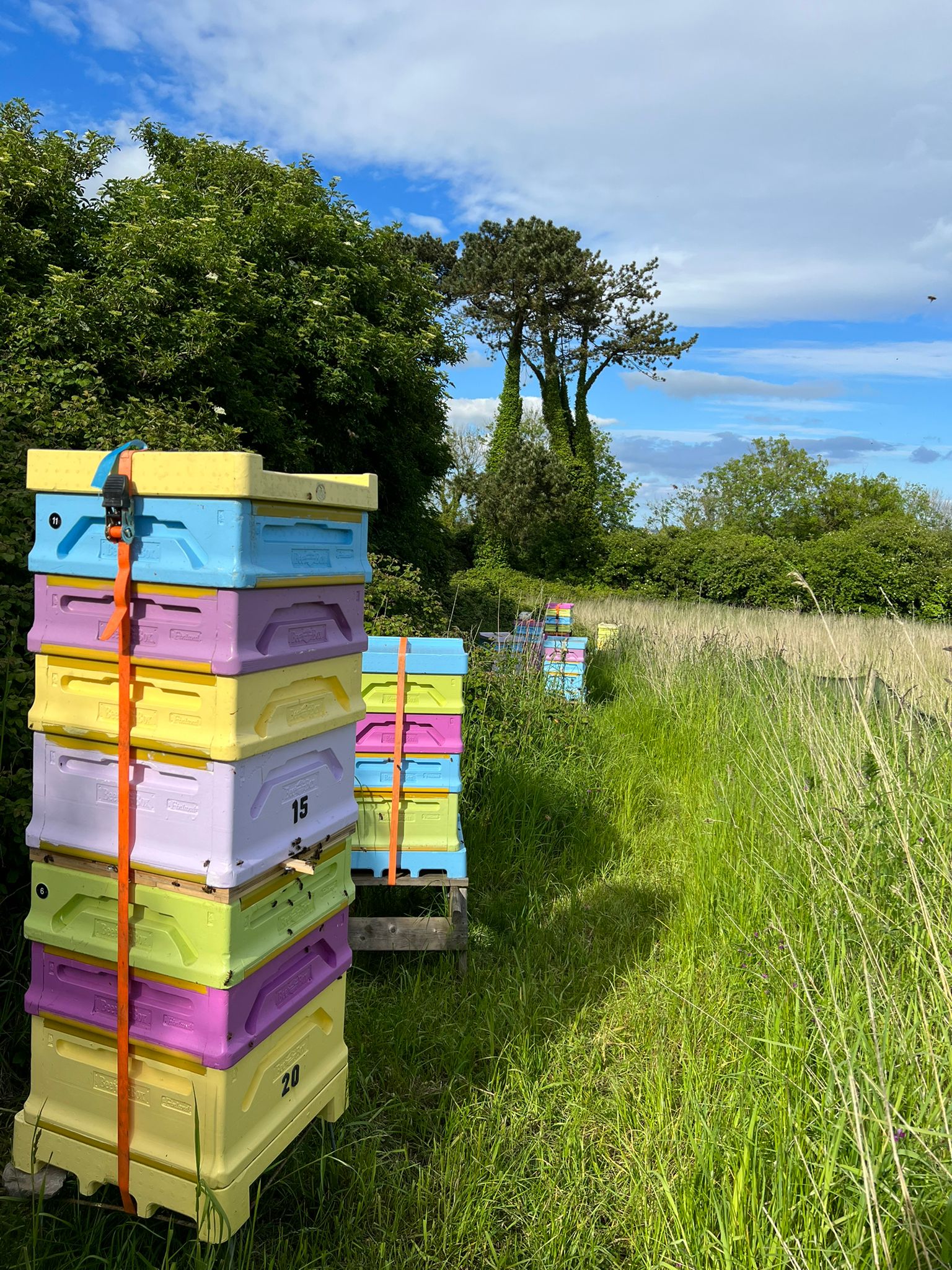
The slopes above Mullabane face south-west over Carlingford Lough. Bell heather grows across these slopes, and my Heather honey comes from the bees working it through the summer. Ling heather takes over higher at altitude, but the jar I sell is the bell heather one. My hives work this ground from when the heather breaks until the season closes.
Because the window is short, heather is always the honey I have least of. Some years it is plentiful; some years the rain keeps the bees grounded and the crop is thin. I do not top it up with anything, blend it with another harvest, or heat it to make it easier to jar. It spins out of the comb and pours into the jar like any of my other honeys. Every batch is numbered and dated so you know exactly which season you are opening.
It won some peer-judged ribbons along the way - including two first places at the 2021 County Dublin Beekeepers Association Honey Show - which I mention not to boast but because it confirms that other experienced beekeepers have tasted it and found it right.
Heather sells out every year. If you are interested and you are in the Carlingford area, the best approach is to get in touch directly or look for me at local markets before the autumn stock goes.
Frequently asked questions
Can I order heather honey online and have it shipped to me? Not from Peninsula Honey. I sell direct, for local collection at Mullabane or at Carlingford-area markets. No national shipping. If you are visiting the area, Co. Louth is worth the trip for food alone.
Is heather honey the same as manuka honey? No. Manuka comes from the manuka tree in New Zealand and Australia; Peninsula Honey’s heather honey is Irish, from bell heather on the Cooley slopes. They taste quite different - manuka is thick, dark, and earthy with a slightly medicinal bitterness; bell heather honey is aromatic, woody, and port-like. They are not interchangeable.
Should my heather honey be runny or set? Bell heather honey pours and spoons like any raw honey when fresh, and crystallises naturally over time like the rest. It does not have the firm gel set that ling heather honey is known for - that is a different plant. So runny when fresh is exactly right, and a gradual set later on is normal too.
How should I store it? Same as any raw honey: room temperature, out of direct sunlight, lid on. Do not refrigerate it.
Heather honey is one of those foods that rewards knowing something about it before you open the jar. The season, the landscape, the bell heather on the slopes, the bold port-like flavour - all of that is in every spoonful.
If you are near Carlingford and want to try a jar, get in touch and I will let you know what is available.