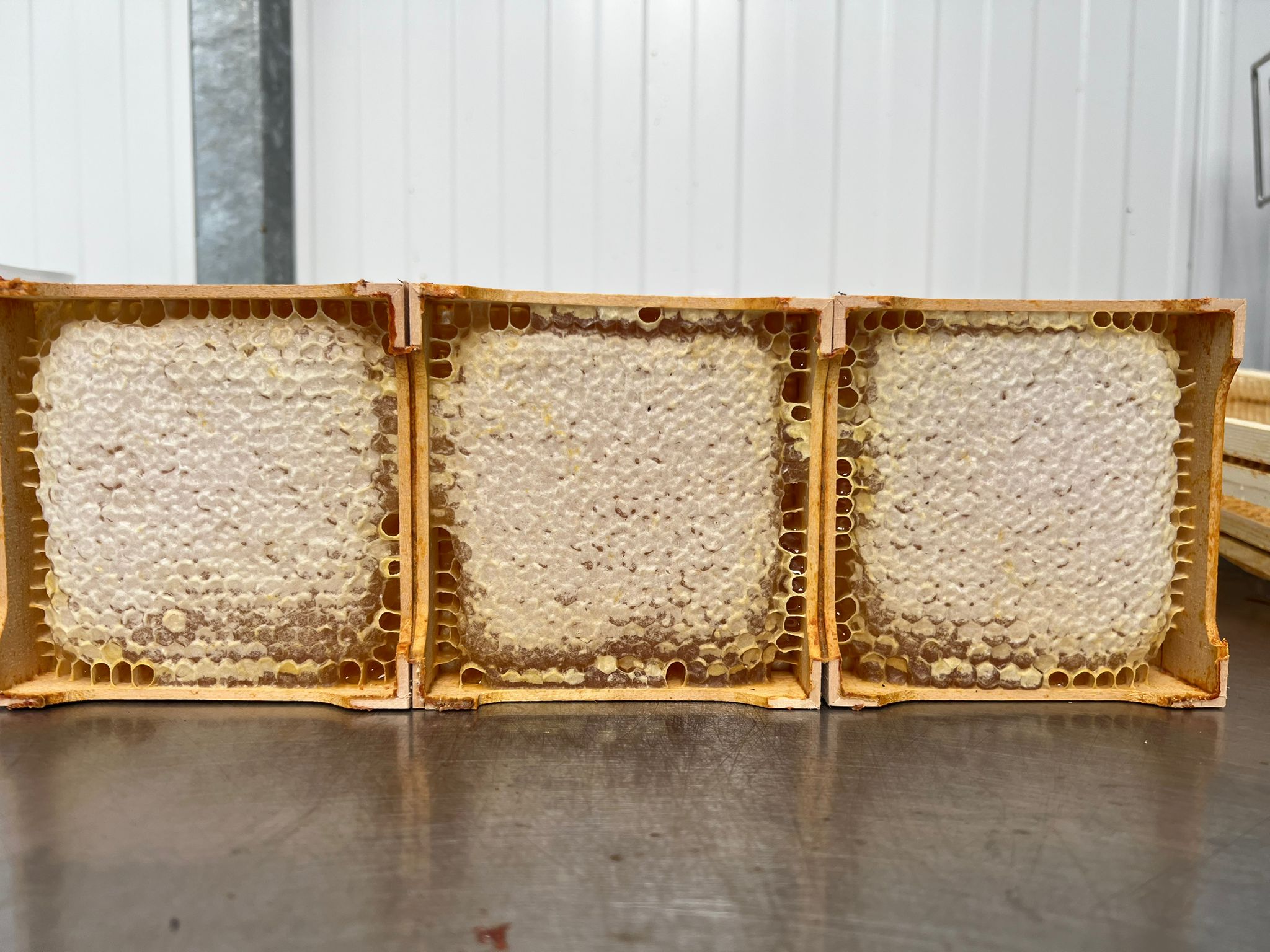
The jar that people reach for first is usually the clear one. It sits on the table, pours without fuss, and tastes like somewhere rather than nothing. That is the Clear honey from Peninsula Honey - the everyday golden jar from my hives at Mullabane, above Carlingford Lough.
It is not a specialty honey the way the Heather is. It does not have Ivy’s sharp, pale set or Heather’s bold aromatic punch. What Clear honey has is balance: a clean, rounded sweetness with a gentle floral note that changes slightly batch to batch, depending on what was in flower when the bees were working. It is the one I use most in my own kitchen, and the one I suggest to anyone who has not tried Peninsula Honey before.
If you are wondering which jar to start with, the which honey to try first guide walks through the whole range.
What clear runny honey actually is
Clear runny honey - the kind that pours easily at room temperature - gets its character from its sugar composition. Honey is roughly equal parts glucose and fructose, but the balance shifts depending on which flowers the nectar came from. Fructose is the more soluble of the two sugars and resists forming crystals. Honey made from nectar rich in fructose stays liquid longer and pours cleanly without any warming.
The blossom sources for my Clear honey are the mixed wildflowers, hedgerow plants and spring blossoms that grow in the lower fields and hedgerows around the peninsula - hawthorn, white clover, sycamore, blackberry, and whatever else is in season. These are fructose-leaning sources. The result is a honey that stays runny for months in the jar without any heating or processing to keep it that way.
This matters because a lot of supermarket “clear” honey has been heated to a high temperature to dissolve crystals and pour easily. That changes the flavour and strips out the character that makes raw honey worth seeking out. The Peninsula Honey Clear is raw - never heated above hive temperature, never blended, never filtered beyond a coarse strain to remove wax. What pours out of the jar is what came out of the hive.
For a full look at what raw means and why it is worth seeking out, this guide to raw honey covers it well.
What it tastes like
The colour shifts between harvests - deep amber in a year when clover was heavy, lighter and almost gold when hawthorn dominated. The smell is clean and floral, not perfumed. The taste is rounded, slightly complex, with a gentle sweetness that does not sit heavy. It lingers without being cloying.
It is what good Irish honey tastes like before someone processes the character out of it.
My Clear honey is not trying to be a showpiece variety. It is trying to be the best possible version of what most people think of when they think of honey - and it is all the better for not having been messed with.
How it differs from the other jars in the range
The four Peninsula Honey jarred varieties each have a distinct character:
Clear - golden, runny, light floral, all-rounder. Pours at room temperature. The everyday jar.
Soft Set - creamy, spreadable, same blossom base as the Clear but processed slowly to a smooth, buttery texture. Will not drip from a knife. Good for toast or as a filling.
Heather - bold, aromatic, dark amber. From bell heather on the mountain slopes. Pours and spoons like normal honey and crystallises naturally over time. Heat reduces the aromatics, so it is best used cold or at room temperature. The specialist jar.
Ivy - pale, firm, sets hard. Mild, slightly aromatic, harvested in autumn. Needs a knife rather than a spoon. The unusual one.
The difference between soft set and runny honey is worth reading if you are not sure which texture suits you best.
Why it crystallises eventually - and why that is not a problem
All raw honey will crystallise over time, including the Clear. Glucose separates from the water in the honey and forms crystals. It is a sign that the honey has not been heavily processed. In my Clear honey, the fructose-rich blossom mix means it takes longer than many raw honeys - usually several months in a cool cupboard - but it will happen.
When it does: sit the jar in a bowl of warm water (not boiling, just warm from the tap) for twenty minutes and stir. It will return to a runny state. Do not microwave it or pour boiling water over it - high heat will dull the flavour. If you store it somewhere reasonably warm and out of direct light, it will stay clear and pourable for a good while.
There is a longer piece on why honey crystallises if you want the science behind it.
Using it in the kitchen
Clear runny honey is the most versatile jar in the range. Because it flows easily, it is the obvious choice anywhere a liquid sweetener is useful.
Drizzling - over natural yogurt, porridge, fresh ricotta, good bread with butter, or fruit. The floral note comes through cleanly when it is not competing with heat.
Dressing - one part honey to three parts cider vinegar, good olive oil, a little mustard. Shakes to an emulsion and holds. Works well on bitter leaves or roasted roots.
Baking - swapping some of the sugar in a loaf or cake for honey gives a moister crumb and a more complex sweetness. A simple honey and oat loaf with rolled oats, wholemeal flour, honey and a pinch of salt works particularly well. The honey caramelises gently in the oven and gives a slightly deeper crust.
Tea and hot drinks - a teaspoon stirred through green tea, lemon water, or hot milk. The flavour holds reasonably well at drinking temperature.
Glazing vegetables - tossed over carrots or parsnips with a little butter before roasting. The honey catches in the pan and gives a sticky, golden edge.
One note on cooking: heat does reduce the more delicate flavour compounds in raw honey. For anything where the honey taste is the point - a drizzle over cheese, a dressing for a salad - use it cold or barely warm. For baking where honey is a background sweetener, the temperature is less critical.
A note on Cooley and what it puts into the jar
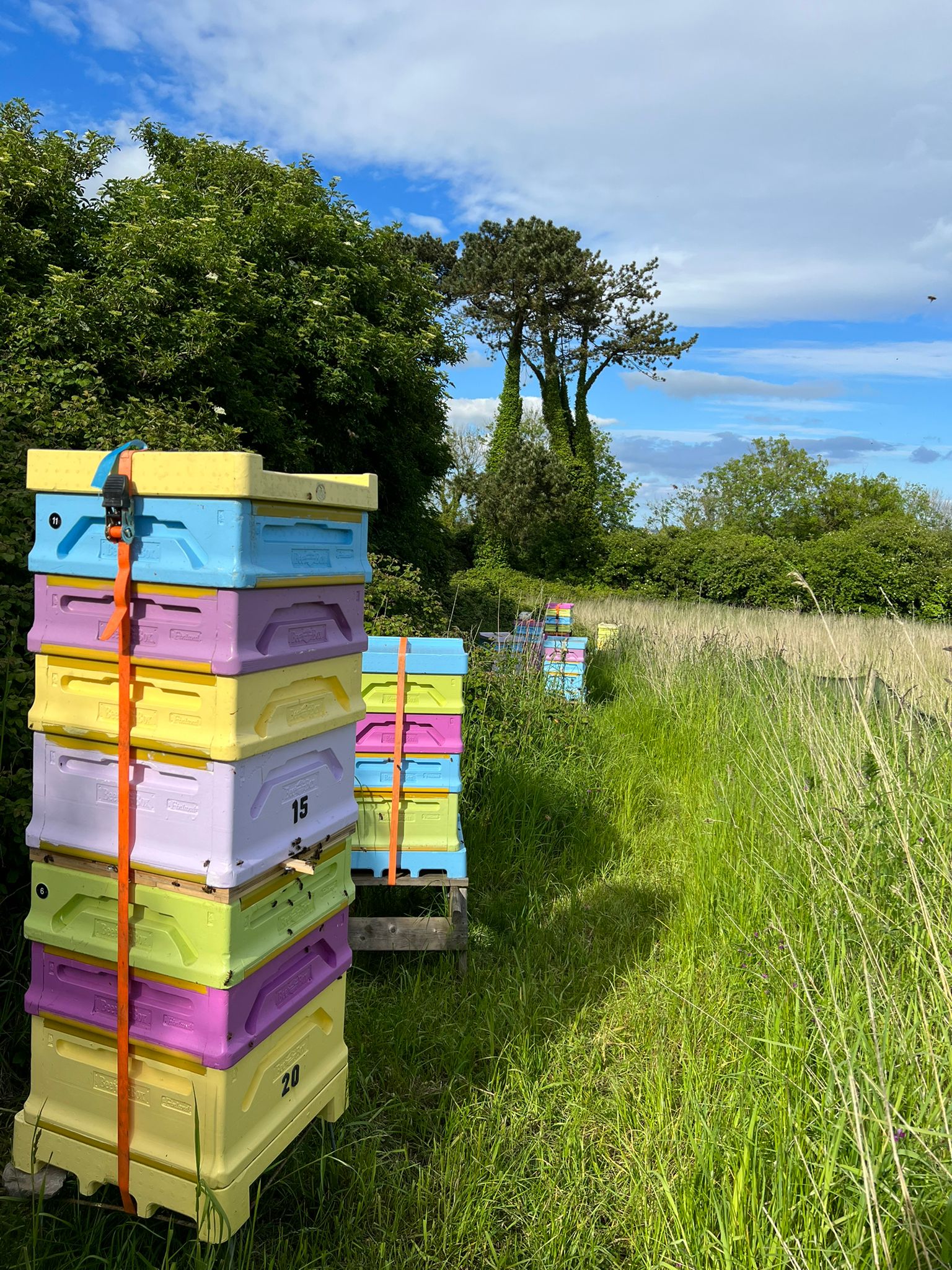
Mullabane sits at the foot of the Cooley Mountains, above Carlingford Lough. The landscape below the heather line - the valley fields, the hedgerows, the sheltered ground near the lough - is where the bees work for the Clear honey. This is mixed, diverse terrain. There is no monoculture. The bees are working hawthorn in May, white clover through June and July, blackberry blossom into August, with sycamore and other hedgerow species filling in around them.
That diversity is what gives the honey its rounded character. There is no single flower pushing one note too loud. The flavour shifts slightly year to year - a wetter spring means less hawthorn, a warm June means more clover - which is why every jar carries a batch number and a harvest date. Two jars from different seasons will taste similar but not identical. That is not inconsistency. That is what real honey tastes like.
For more on how the Cooley landscape shapes everything Peninsula Honey produces, this piece on what makes Cooley honey different covers the territory in detail.
Frequently asked questions
Is clear honey the same as raw honey? Not automatically. Clear honey simply means it is liquid rather than set. Commercially produced clear honey is often heavily heated or ultra-filtered to stay clear on a shelf indefinitely. Peninsula Honey Clear is raw - unheated, unblended, and naturally clear because of the fructose-rich blossom sources the bees worked. The label will say “raw” and carry a batch number and harvest date.
Will it crystallise? Is that bad? It will crystallise eventually - all raw honey does. It is not bad honey and it has not gone off. Glucose in the honey separates from the water over time and forms crystals. Sit the open jar in warm water and stir gently to bring it back. It takes fifteen to twenty minutes and works every time.
How is the Clear different from the Soft Set? Both start from the same blossom honey. The difference is texture and use. Clear is fully runny and pours from the jar. Soft Set has been seeded and slowly stirred to a smooth, spreadable cream - it holds on a knife and does not drip. If you want to spread it on bread, Soft Set. If you want to drizzle or bake with it, Clear.
Does it taste like the blended honey from a supermarket? Not really. The supermarket jar is typically a blend of honeys from multiple countries, heated and filtered to a consistent colour and flavour. Peninsula Honey Clear has a more complex, rounder taste that changes slightly between harvests. Most people who try it find the difference immediate.
The Clear honey is available at Carlingford-area markets and for local collection at Mullabane. See how to order or collect a jar.