People ask me often enough where to find the best raw honey in Ireland that it feels worth writing down what I actually look for myself. This is not a product roundup. It is a straight guide to the things that separate genuine, single-origin honey from the rest - and how to read past labels that are technically honest but practically useless.
Why the label matters more than you might think
Walk the honey aisle in any Irish supermarket and you will see two things on most jars: a cheerful bee illustration, and the phrase “blend of EU and non-EU honeys.” That phrase is not an accident. Until very recently, it was the legal minimum - a producer could buy honey from six countries, blend them together, and the label only had to say where the blend generally came from, not the proportions. An October 2024 Irish Times investigation found that almost half the honey in Irish shops was likely sourced from countries not identified on the label.
This matters because honey is not a commodity. Real, single-origin honey tastes of a specific place and season. Blended honey is made to taste the same every time, which requires heating, ultra-filtering, and buying from wherever that season’s cheapest supply came from.
If the label says “blend of EU and non-EU honeys” and there is no named beekeeper, no harvest date, and no batch number, that is your answer. It is not bad product necessarily - but it is not the thing you are looking for.
If you want to go deeper on what that labelling actually means, this post on EU and non-EU honey blends spells it out.
The five things worth looking for
1. Named maker, named place
A good jar of raw honey gives you an address. Not just “Co. Louth” or “West of Ireland” - an actual named producer and location. This matters because it tells you the honey came from one set of hives, not a consolidated tank. A named maker is also accountable in a way a corporate blender is not. They live near the bees. They know what was flowering.
2. Raw means unheated
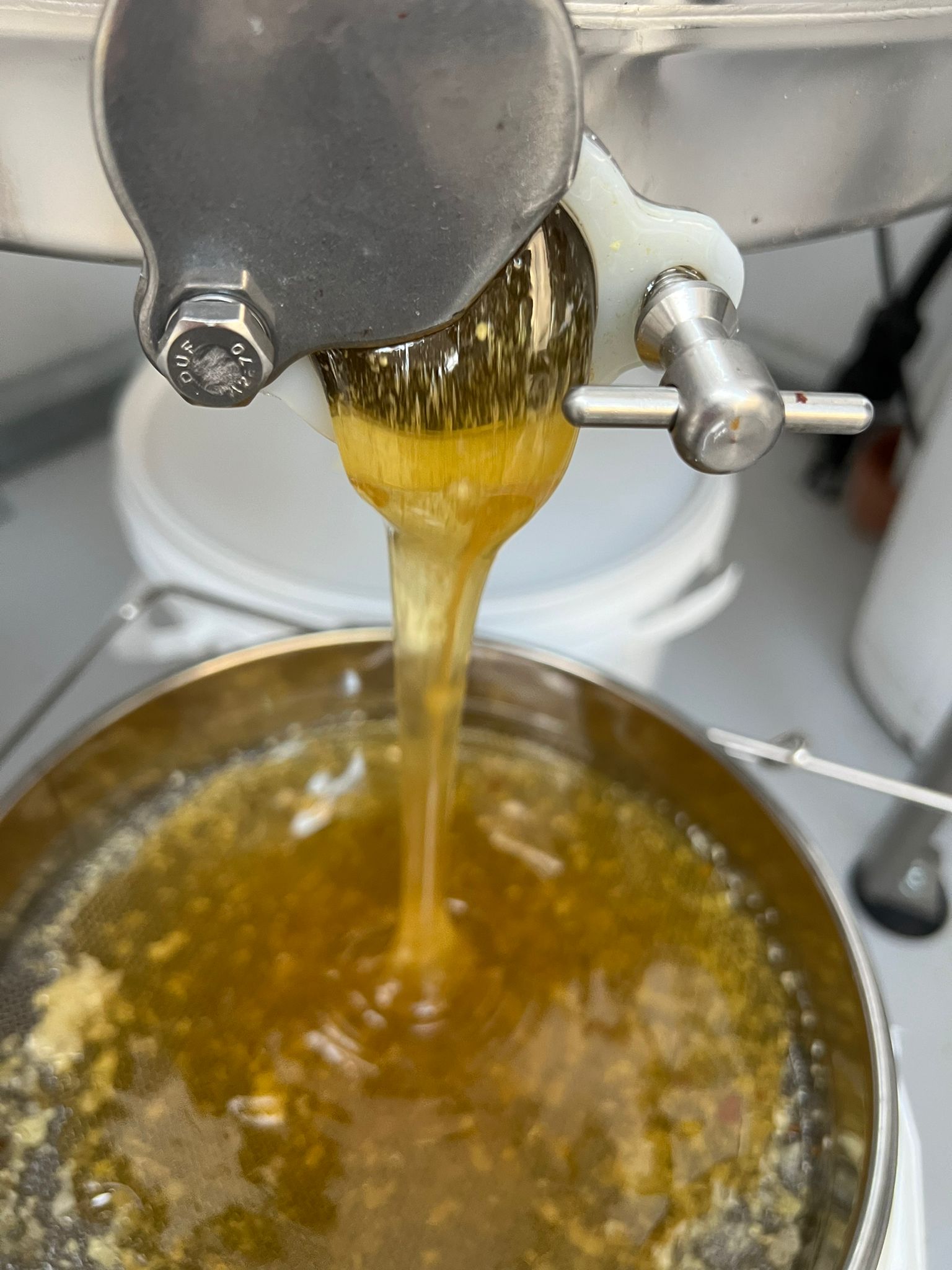
Raw honey has not been pasteurised. It has been strained to remove wax and debris, but not forced through ultra-fine filters that strip pollen, and not heated above the temperature of a warm summer hive (around 35-40°C). When honey is heated beyond that, the aromatic compounds that make heather taste like heather - and ivy taste like ivy - begin to break down.
You will sometimes see “raw” and “unpasteurised” used interchangeably. Neither term is tightly regulated in Ireland. What you want to see alongside “raw” is a cloudiness or natural opacity in the jar, and a beekeeper who can tell you their process. Crystallisation is a sign, not a flaw - processed honey is kept liquid by heat, and Irish raw honey left at room temperature will set firm or soft depending on the flower source.
If you want to understand what raw actually means versus the filtered golden jars most people grew up with, this plain-language guide to raw honey is the place to start.
3. Single origin, not blended
Single-origin honey is from one beekeeper’s hives, in one place, in one season. The jar of clear honey and the jar of heather honey come from the same apiary, but they taste nothing like each other because different flowers were in bloom when each was harvested.
That variation is not a quality problem - it is the whole point. Honey reflects what is growing around the hive. Blended honey irons all of that out.
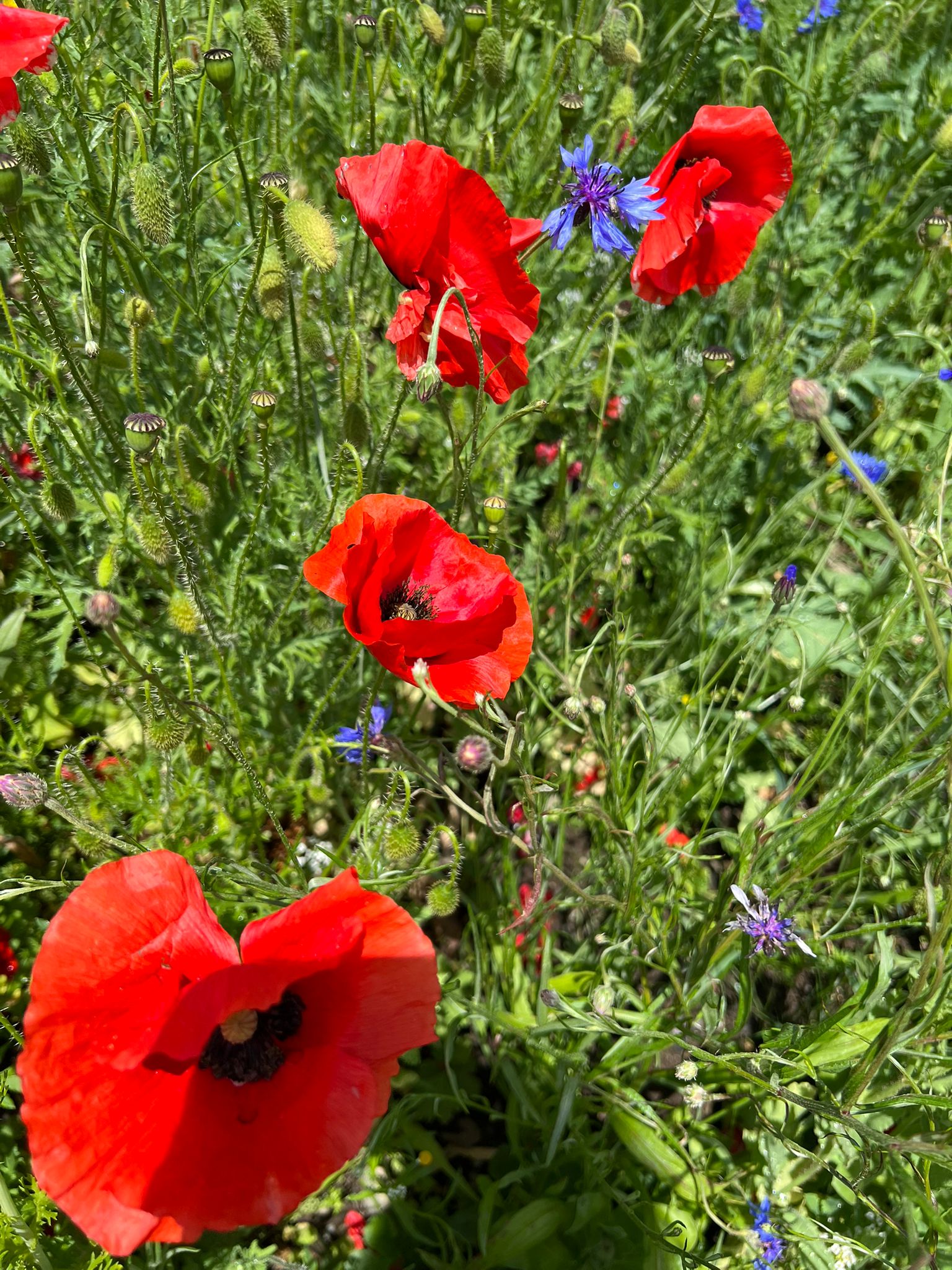
In Ireland, single-origin is most meaningful when the beekeeper has a specific landscape. Mountain heather produces a very different honey to lowland wildflower meadows. A jar from the Cooley Peninsula, where bell heather grows on the upper slopes and ivy, blackthorn, and clover are worked by the bees in the hedgerow fields below, is going to taste different from honey from a farm in the midlands. Neither is better in the abstract - but one has a character you can trace to a real place.
If you are choosing between varieties, it helps to understand what separates monofloral from wildflower honey - the difference matters more than most labels make clear.
4. A harvest date or batch number
This is simple and easy to check. A harvest date tells you when the honey came from the hive. A batch number tells you the producer can trace any jar back to a specific extraction. Both are signs of a small-scale operation that is keeping track of what it produces.
A jar with neither could still be decent honey - but a beekeeper selling their own product almost always labels it this way, because they are proud of the season it came from and they know they may need to trace it.
5. Peer-judged awards from within the beekeeping community
Irish county honey shows are judged by qualified honey judges appointed by associations like the Federation of Irish Beekeepers’ Associations. Judges assess on clarity, aroma, viscosity, and taste - and the exhibitors’ names are kept from the judges until placings are decided. It is honest, peer-level competition.
This matters differently from a food industry award bought as an entry fee. When a beekeeper wins at a county honey show, other beekeepers decided they made the best honey in the room.
What to ignore
“Pure” and “natural” - these words carry no legal definition in the honey aisle. Pure honey is required to contain only honey, but pure does not mean raw or unfiltered.
Very high clarity in a runny jar - ultra-clear liquid honey has usually been heated and ultra-filtered to prevent crystallisation and look appealing on a shelf. A genuinely raw honey will often be slightly hazy. The exception is ivy honey, which sets hard and pale from the jar and has a naturally lighter colour - but that is a very different thing from a glass-clear liquid jar.
“Organic Irish honey” - there is currently no organic certification available for honey in Ireland, because bees range over a radius of several kilometres and cannot be guaranteed to avoid non-organic land. Some Irish beekeepers follow sound practices, but the label itself cannot be formally certified here.
Why Irish honey in particular
Ireland’s beekeeping landscape is small and fragmented in a good way. There is no industrialised honey production. Most Irish beekeepers sell at local markets, through farm gates, or directly to people they know. That means when you find good Irish honey, you are genuinely buying from the person who kept the bees - not from a packer who sourced it in bulk.
Irish summers are short and variable, which means the flowering season is compressed. A beekeeper who watches the landscape closely and harvests at the right moment captures something specific to that year and that place. What honey is produced in Ireland goes into the main varieties you are likely to encounter if you are buying from Irish producers directly.
What I do at Peninsula Honey
I keep bees at Mullabane, above Carlingford Lough, on the Cooley Peninsula. Every jar I produce is raw, unblended, and unheated. Each one has a batch number and harvest date on the label, and I sell direct - either for collection at the apiary or at local markets around Carlingford.
The range is four jarred honeys: heather, ivy, clear (the everyday runny golden jar), and soft set. Heather is dark amber with a bold, aromatic, almost port-like character; it comes from bell heather and pours and spoons like any raw honey. Ivy sets hard and pale with a mild, slightly menthol character. The clear and soft set come from the wildflower-rich hedgerow fields below the mountain.
In 2019 I won the Most Points shield at the Louth Honey Show. In 2021 I took two firsts, a second, and two thirds at the County Dublin Beekeepers Association Honey Show. Both are peer-judged competitions within the beekeeping community - which is the kind of recognition I find meaningful.
If you want to know more about how the landscape here shapes what ends up in the jar, a beekeeper’s year on the Cooley Mountains gives the full picture.
FAQ
Does raw honey crystallise? Yes - and it should. Crystallisation is a natural process that happens when glucose separates from water and forms crystals. It does not mean the honey has gone off or been stored badly. If you want it runny, place the jar in warm (not boiling) water for a few minutes and stir. Heather honey crystallises naturally over time just like the rest - that is the flower and the season, not a flaw.
How do I know if honey is really from Ireland? Look for a named beekeeper with a named address, a harvest date, and a batch number. Buying direct from a beekeeper at a market or farm gate is the most reliable route. The “Produce of Ireland” label on a jar from a named producer with a verifiable apiary address is a strong signal. “Blend of EU and non-EU honeys” with no further detail means the honey could be from anywhere.
What is the difference between raw honey and regular supermarket honey? Commercial honey is typically heated to stay liquid and extend shelf life, then ultra-filtered for appearance. Raw honey is strained but not heated, which preserves its natural character and means it will crystallise over time. Raw honey versus supermarket honey covers this in more detail.
Is all Irish honey monofloral? No. Most small Irish beekeepers produce wildflower honey - a blend of whatever was in bloom near the hives during the main nectar flow. Monofloral varieties like heather honey come from bees that have primarily worked one dominant flower source, usually because the hives were placed near extensive heather moorland at the right time of year.
If you are in the Carlingford area and want to try what is in the hive this season, you can find out what is available and arrange collection over at the Peninsula Honey home page. Local collection only - no national shipping.