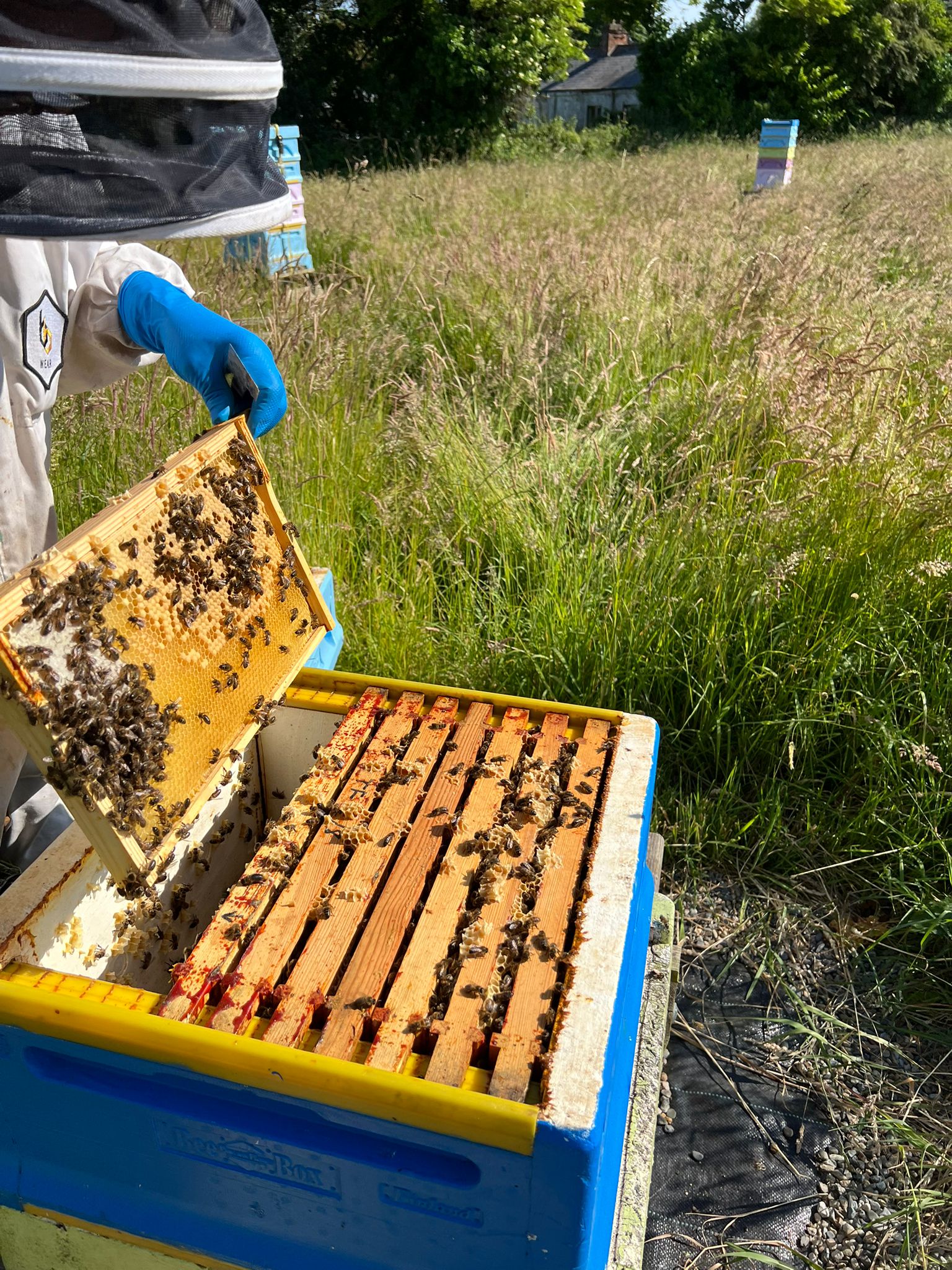
A beekeeping year in Ireland is rarely what you plan for. You map the seasons, you know the flowers, you watch the forecast - and then a wet July holds the heather back by two weeks, or a warm October means the ivy keeps going longer than expected. Every year is its own thing.
What stays the same is the ground itself. Mullabane, in the foothills of the Cooley Mountains above Carlingford Lough, gives the bees a layered landscape to work through from March to November. Open moorland at altitude. Sheltered hedgerow fields in the valleys. The lough to the south. Each habitat flowers in its own time, and each one puts something different into the jar.
Here is what that looks like, month by month.
February and March: the colonies wake up
The hives have been quiet since November. In January I heft each one - pick up the back edge a few inches and feel the weight - to check the stores are holding. A light hive in January needs fondant, immediately. I have never lost a colony to starvation, but I have come close enough to take it seriously.
By late February, on a calm day above 10 degrees, a few bees will start flying. They are not foraging yet, not really - they are cleansing flights, orientation runs, a slow reactivation. Snowdrops are the first thing they find, and the first crocus, and neither gives them much. But dandelion is the real signal. When dandelion opens in March, the colony shifts gear. Dandelion pollen is a deep orange-yellow and you can see it packed into the bees’ corbiculae - the small baskets on their hind legs - as they come home. It is one of those things you never get tired of watching.
March is the month when Irish beekeeping is most precarious. The colony is growing fast - the queen is laying at pace because the days are lengthening - but there is not much to eat yet. A cold snap can kill a colony that was perfectly healthy at Christmas. So I check stores regularly, I feed diluted syrup if a hive feels light, and I wait for April.
April and May: the hedgerow flow
The landscape below Mullabane changes fast in April. Blackthorn flowers before its leaves, covering the hedgerows in white against bare wood. Hawthorn follows in May, heavy-scented and thick with nectar. Sycamore comes into flower and produces nectar generously in warm, still conditions - though the bees tend to use most of it to fuel brood rearing rather than building surplus.
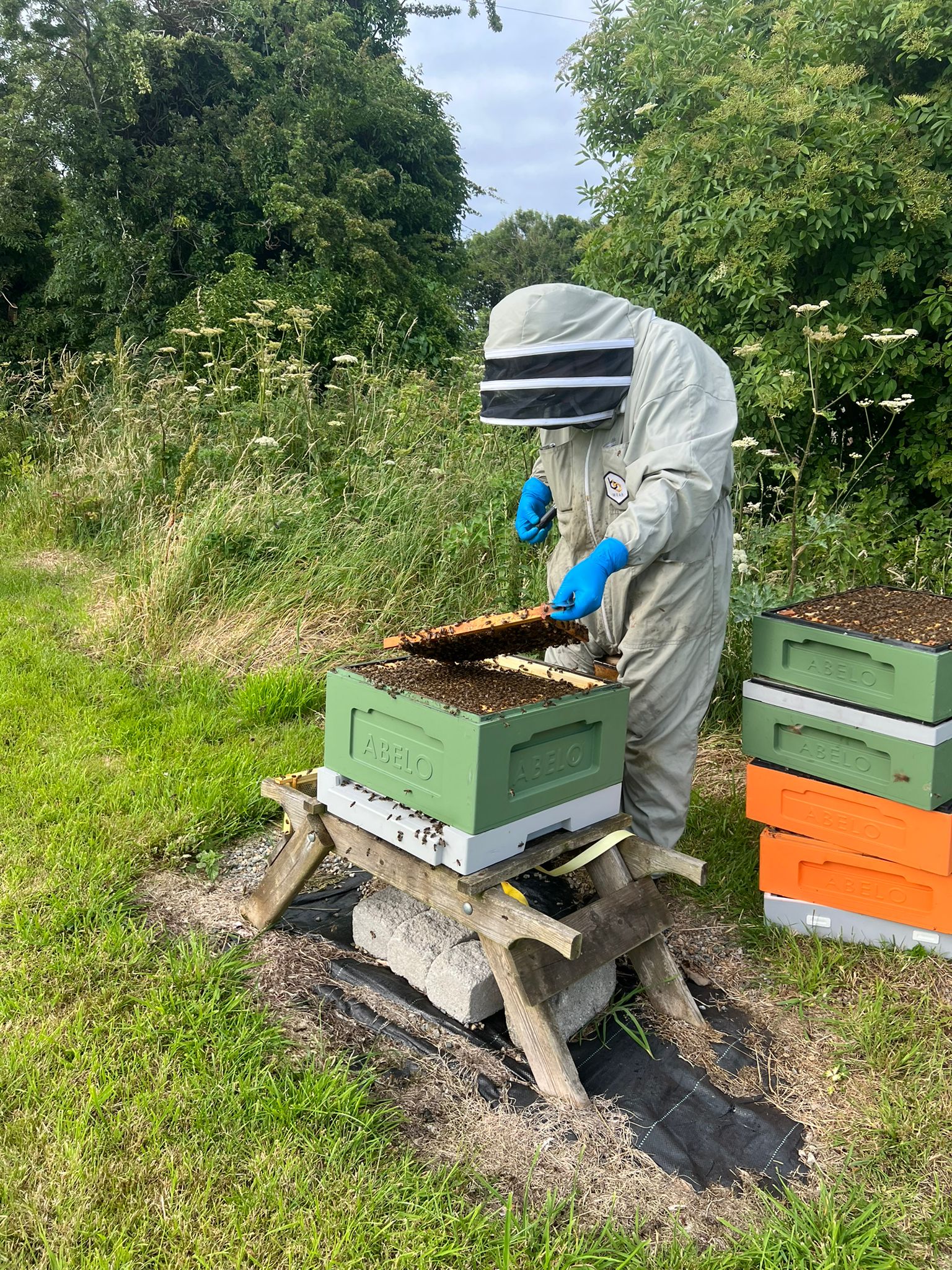
This is the spring build. The colony is expanding rapidly, the queen is laying into every available cell, and supers - the shallow boxes above the brood chamber where honey is stored - go on in April or early May as the bees start to fill the main box. Swarm season runs through May and into June. I inspect every seven or eight days on good weather days, looking for queen cells, judging whether the colony needs more space. A swarm is not a disaster, but losing half your bees before the summer flow is a significant set-back, so you manage for it.
The honey that comes from this period - wildflower honey from the hedgerow fields - goes into what I sell as Clear, the everyday golden runny jar. It is lighter in flavour than the heather or ivy harvests, more floral, more delicate. The story of how clear honey behaves differently to other varieties is worth knowing if you have ever wondered why some jars pour easily and others set solid.
June: the gap
June has a reputation among Irish beekeepers, and it is deserved. The spring flow from hawthorn and sycamore tails off. The clover and bramble that will carry the summer flow have not fully opened yet. There is a week or two - sometimes longer - where the bees are working hard but the nectar income drops. The colony has a large population to feed. In a bad year you can watch the weight drop off the hives.
I do not always need to feed in June, but I keep an eye on it. The Cooley Peninsula has enough sheltered field margins and roadside flowers to carry the bees through in most years. Clover starts showing in the lower fields by mid-June and that helps. By the end of the month the bramble is building, and the anxiety passes.
July: summer into the mountain
July is the month I think of most when I think about the year. The bees are at full strength, the countryside is in full flower, and on a good day you can stand at the hives and hear the colony before you see it. The sound of a colony in full honey-making mode is extraordinary - a deep, purposeful vibration, nothing like the defensive buzz people associate with bees.
White clover is the main July driver in the fields below. Bramble flowers through July and into August and gives a reliable, generous nectar flow. On the mountain itself, bell heather - Erica cinerea - comes into bloom, typically from July onwards. Bell heather is what gives my Heather honey its character: dark amber, bold, aromatic, with an almost port-like depth and a long finish.
Heather honey has a flavour unlike anything else in the range. It pours and spoons like any raw honey, but it does not suit heat - warmth dulls the aromatics. On a cheese board, or stirred through cold cream, or on warm bread, it is remarkable.
I take the first heather supers in late July or August, depending on the season.
August and September: the heather harvest
The heather season runs from when the bell heather opens in July through into the late summer, and this is the harvest I plan the whole year around. Ling heather - Calluna vulgaris - also flowers from August into September on the higher Cooley slopes, painting the mountain that familiar purple-brown, but my Heather honey is bell heather honey, from Erica cinerea on the slopes lower down.
Getting to the heather requires timing. The bees need the main flow to be on, the weather needs to be kind, and the colonies need to be strong enough to work the mountain effectively. Bell heather honey extracts normally - it spins out of the comb in a standard extractor and pours and spoons like any other raw honey. That sets it apart from ling honey, the other heather a few weeks later, which is the one famous for the thick gel-like set that has to be pressed rather than spun. My jar is the bell heather one, and it behaves like normal honey; its distinctiveness is all in the flavour.
I take the heather supers off in late August or early September, once they are well capped. The aroma as you open a heather super is unlike anything else - dense, almost medicinal in the moorland sense, ancient. It is the smell of the mountain slope.
It is worth understanding what it means for a honey to come from a single plant rather than a mixture of sources - the flavour is not a blend but a direct record of one flower in one place at one time.
October and November: ivy, then winter
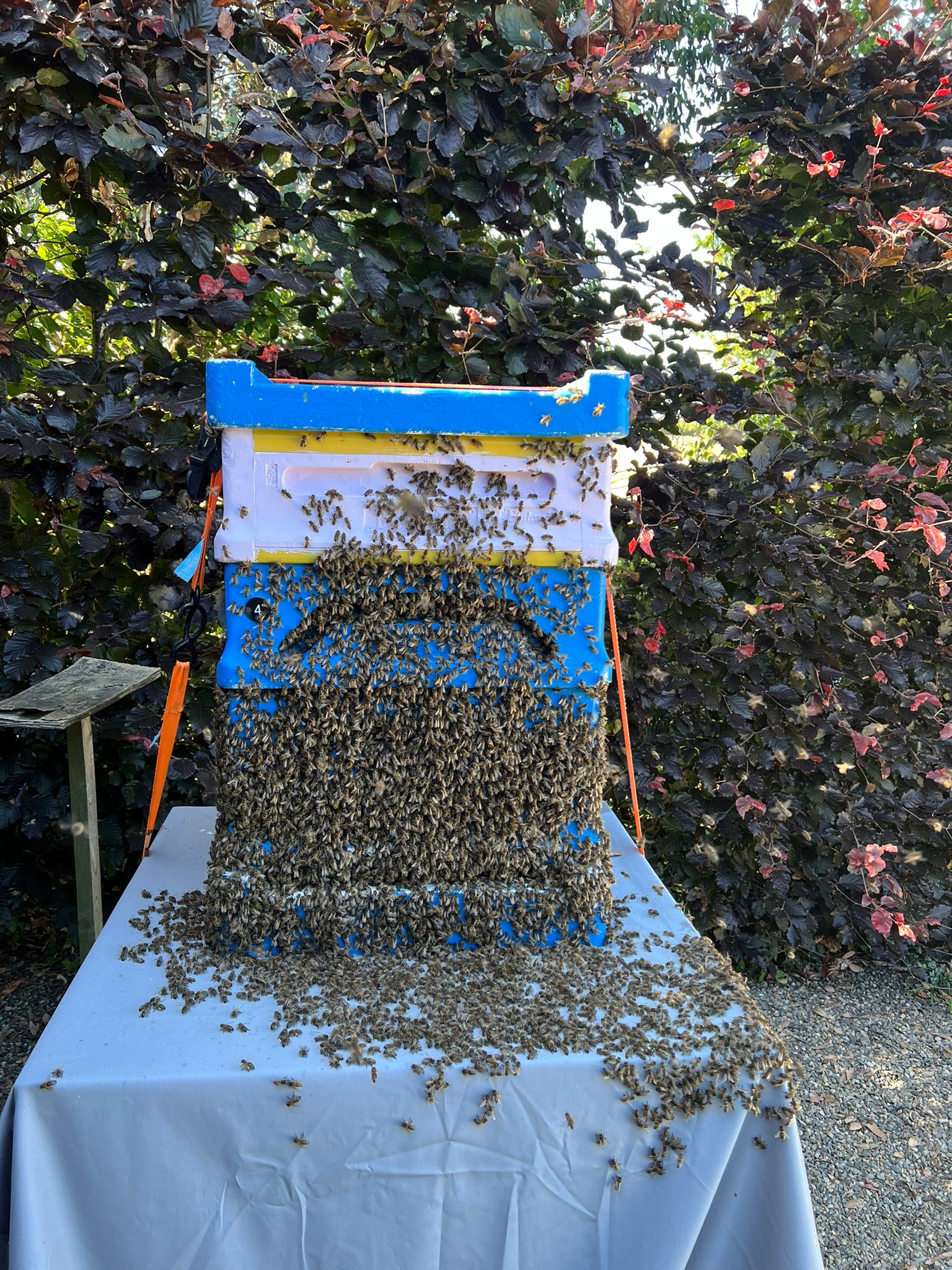
Ivy is the last major nectar flow of the Irish year, and it is a strange, underrated thing. Common ivy - Hedera helix - flowers in October and into November, long after everything else has finished. On a warm October morning the ivy in the hedgerows hums with bees, wasps, hoverflies, the last butterflies. It is a genuinely important late season resource.
Ivy honey sets hard and pale very quickly - sometimes within days of being capped in the comb. This is why ivy honey sets the way it does: the glucose content is high relative to fructose, and it crystallises fast. The flavour is mild, slightly aromatic, with a faint menthol quality. It is a quieter honey than heather, and the pale colour surprises people who expect honey to be golden.
I extract the ivy harvest carefully and early, before it sets solid in the comb and becomes impossible to handle. What I cannot extract in time, the bees keep as winter stores - which is exactly what ivy was designed to be.
By November the supers are off, the entrances are narrowed against mice, mouse guards are fitted, Varroa treatment is done. The hives are ready for winter. I heft them again, check the weight feels right, and step back. The year is over.
FAQ
When is Irish honey harvested?
There is no single answer because different honeys come at different times. Wildflower honey from the hedgerow fields is typically harvested in July, heather honey in August and September, and ivy honey in October. Each harvest is a separate extraction and is batch-dated on the label.
Does the Cooley Peninsula produce more than one type of honey?
Yes. The layered landscape - hedgerow fields at lower altitude, open moorland above - means the bees work different plants in different seasons. The range includes Clear (everyday wildflower), Heather (bold, dark amber, from bell heather on the mountain slopes), Ivy (pale, firm, autumn harvest), and Soft Set, as well as comb honey. There is no Spring honey as a labelled product - the spring flow goes into the Clear harvest.
How does heather honey differ from other Irish honeys?
Heather honey stands out for its flavour: dark amber, bold, aromatic, with an almost port-like depth from the bell heather on the mountain slopes. It pours and spoons like any raw honey, but its character is far bigger than anything from the wildflower fields. Best enjoyed cold or at room temperature, since heat dulls the aromatics.
Why does ivy honey set so fast and hard?
Ivy nectar is naturally high in glucose, which triggers rapid crystallisation. This is not a flaw - it is what ivy honey does. It crystallises faster and firmer than most, and the set is as hard as wax within a fortnight of capping.
The journal here covers more on what makes the Cooley Peninsula landscape produce such distinctive honey, and if you want to know what to try first, this guide on choosing between the honeys in the range is a good place to start. If you would like to pick up a jar, collection is from Mullabane, Carlingford - see the current harvest on the homepage.